Politics
With No Easy Fixes in Sight, Debate Over Chicago’s 2026 Spending Plan Reaches Tipping Point
Members of the Chicago City Council vehemently opposed to Mayor Brandon Johnson’s plan to bridge a portion of the city’s massive budget gap by taxing large firms had hoped a consultant’s report could give them a way to reject the tax — while avoiding deeply unpopular cuts.
But a marathon session before the City Council’s Budget and Government Operations Committee on Monday made it clear there is no easy way to bridge the city’s $1.19 billion projected shortfall, leaving alderpeople across the political spectrum frustrated as the budget debate hits a tipping point.
Even as departmental budget hearings are set to wrap up Thursday, there is no clear consensus on the bulk of Johnson’s proposal to impose $617 million in new taxes on the wealthiest Chicagoans and largest firms. That makes it likely negotiations over the city’s spending plan will once again stretch past Thanksgiving, forcing alderpeople to scramble to meet a Dec. 31 deadline.
An effort to put the mayor’s finance team on the hot seat fizzled Monday as Adam Chepenik, the principal author of a report from consulting firm Ernst & Young designed to help Chicago officials root out inefficiencies, declined to tell committee members that the Johnson administration had failed to implement the bulk of the cuts and efficiencies recommended by the report.
“I think the options in the report identify options and opportunities to capture what is not currently captured,” said Chepenik, who told the committee the report was neither an audit designed to identify waste, fraud and abuse nor an evaluation of the merits of Johnson’s budget proposal. “The report was designed to provide as many options as possible, and in terms of how things are implemented and the timeline that they take to implement, it is in the city’s discretion.”
Budget Director Annette Guzman, sitting beside Chepenik, fielded most of the questions about the mayor’s budget proposal and repeatedly assured alderpeople that she and Chief Financial Officer Jill Jaworski were using the report as a “roadmap to structural balance for the city.” Guzman reminded alderpeople that the city’s financial woes have been decades in the making and cannot be solved in a single year.
“The city didn’t get here overnight, and the structural reform won’t happen overnight, but you have to begin somewhere,” Guzman said.
Potential Savings, New Revenue
The Ernst & Young report, which cost the city $3.2 million, identified between $530 million and $1.4 billion in potential savings and new revenue.
But Johnson’s spending plan includes just $80 million in cuts identified by the report, with the bulk of those savings coming from a year-long hiring freeze to be imposed on every city department except for those focused on public safety or revenue collection.
However, the changes lay the groundwork for more significant changes in future years, Guzman said, including $100 million by consolidating the city’s vast real estate holdings and selling vacant land sales. Another $100 million could be saved by consolidating how the city contracts with private firms to buy goods and services, according to the report.
Millions more could be saved by changing the structure of the city’s workforce to reduce the number of managers and ensuring that the city’s fleet of vehicles are used and maintained efficiently, according to the report.
But none of those technocratic changes can be made quickly enough to have a significant impact on the city’s 2026 budget, which remains structurally unbalanced, with expenses outpacing revenues, as officials scramble to pay soaring pension bills and find an additional $100 million to cover the cost of employee health care, Guzman said.
Many of the changes that would have the biggest impact on the city’s bottom line would require changes to Chicago’s agreements with the labor organizations that represent 90% of the city’s more than 32,400 employers, Guzman said. The Ernst & Young report will allow officials to make the case to labor leaders for changes by pointing out what other big cities are doing, Guzman said.
But few members of the City Council’s Budget Committee appeared to take Guzman at her word, an indication that Johnson’s relations with the City Council, which were badly damaged by last year’s budget debate, remain fraught.
“It’s kind of frustrating to hear with so much work being done and so much money being spent that an additional analysis would be needed in terms of how to act,” Ald. Matt Martin (47th Ward) said. ”I think what you’re hearing from a lot of people is that we need to move more quickly on a lot of this work.”
Martin was one of two members of the Progressive Caucus who voted against last year’s budget, giving Johnson only the slimmest of margins of victory.
Guzman appeared to be deeply frustrated at times that alderpeople did not appear to believe her commitment to structurally reforming the city’s budget was genuine. Nor did many alderpeople appear to accept her assertion that only so many changes with significant financial impact could be made immediately.
‘Put More Skin in the Game’
Much of the debate over Johnson’s 2026 spending plan has centered on his proposal to impose a $21 per month per employee tax on large companies to generate $100 million to fund violence prevention and youth employment programs.
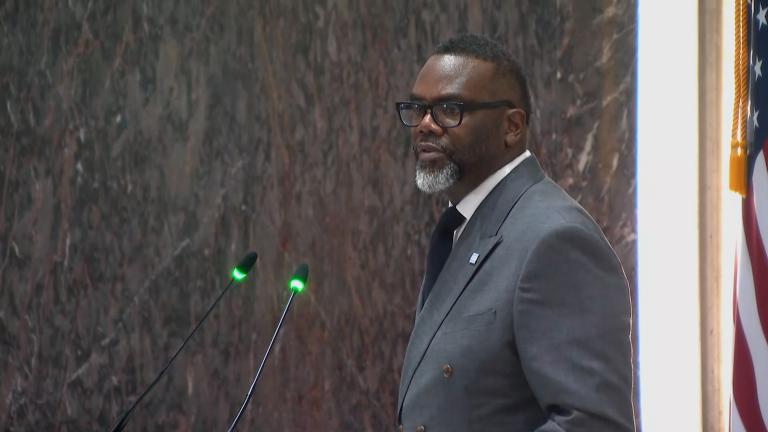
Johnson has steadfastly campaigned for the tax, noting that business leaders have told him his highest priority should be public safety. Johnson has said it only makes sense for Chicago’s largest companies to “put more skin in the game” in order to allow the city to “double down” on efforts that are working.
The mayor has also downplayed the size of the head tax, noting that it is the equivalent of big firms buying their employees lunch once or twice a month.
That proposal immediately triggered outrage in the city’s business community, which blasted that proposal as a job killer.
Gov. JB Pritzker joined that chorus, saying he is “absolutely, four-square opposed” to the imposition of the head tax, and called on city officials to make enough cuts to offset the need for the head tax.
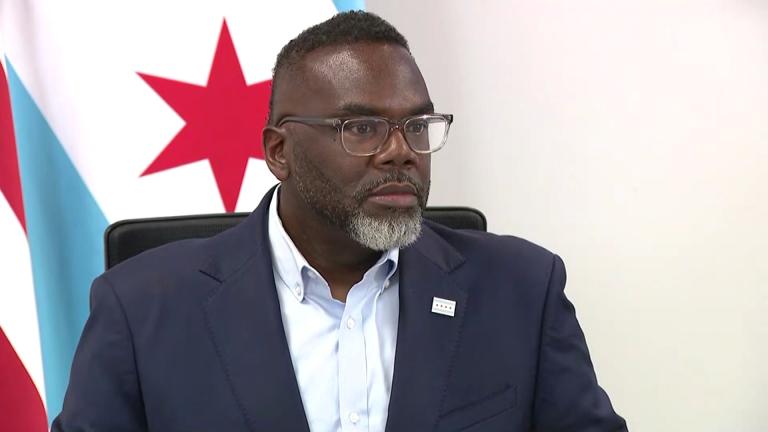
Before the hearing, Johnson said it was time for those who oppose his plan to make their own proposal, and reckon with what it would mean to residents who rely on city services.
“We hear a lot of calls for cuts, and people like to refer to them as efficiencies, but folks get real quiet when we ask them to provide some of the specifics,” Johnson said, just hours after the season’s first snowfall. “Chicagoans do not want to see our snow plowing reduced. They do not want to see less workers out there working in the night so their mornings can be better.”
No one, including the mayor, has proposed reducing the $2.1 billion proposed budget for the Chicago Police Department in 2026. CPD’s budget accounts for one-third of the city’s $6 billion corporate fund, which the City Council has wide discretion to spend.
Guzman said the Johnson administration was committed to expanding the number of non-sworn positions in CPD to reduce costs.
Non-sworn members of the police department do not have to attend the police academy and are usually paid less than officers, resulting in eventual budget savings.
While approximately 20% of CPD’s members do not have police powers, 35% of the New York Police Department and 30% of the Los Angeles Police Department are civilians, Guzman said.
In addition, Guzman vowed to save money by reducing the number of officers on medical leave and long-term disability, which has become an increasing source of frustration for city officials, by implementing the results of an audit.
Officials are also rolling out a new timekeeping system for officers that will allow managers to better control overtime spending, even as CPD’s budget to pay officers for working extra hours is set to double to $200 million.
In all, the budgets for the Office of Public Safety Administration, the Chicago Police Board, the Office of Emergency Management and Communications, the Chicago Fire Department, the Civilian Office of Police Accountability and the Community Commission for Public Safety and Accountability have a combined budget of $3.2 billion, or more than half of all of the discretionary funds the City Council has authority to spend.
Johnson’s spending plan proposes to borrow to cover the cost of “extraordinary and one-time” expenses, including the massive cost of resolving police misconduct lawsuits and paying Chicago firefighters and paramedics the $185 million retroactive pay they are owed after working without a contract for four years.
The city needs to borrow $156 million to pay the firefighters what they are owed, after using the money set aside in previous years’ budgets to cover other, more pressing bills, Guzman said.
Through Nov. 1, Chicago taxpayers have spent at least $267.8 million to resolve lawsuits alleging a wide-range of misconduct by CPD officers, according to a WTTW News analysis.
The City Council agreed to pay an additional $90 million to 180 people who spent a combined nearly 200 years in prison after being wrongfully convicted based on what they allege was fabricated evidence gathered by former CPD Sgt. Ronald Watts, who was convicted in 2013 of taking bribes, and other officers. Those payments are due in 2026.
Despite that, city’s proposed 2026 spending plan sets aside just $82.5 million to cover the cost of resolving police misconduct lawsuits, the same amount as in the 2025 budget.
Debate Reaches Inflection Point
With budget hearings set to end Thursday, the mayor and City Council will soon have no choice but to make a series of hard decisions.
Several community groups and employee unions blasted Johnson’s proposal to cut 69 vacant positions at the city’s 81 public libraries and slash the Chicago Public Library’s budget to purchase books, materials and subscriptions in half to $5 million.
Although the mayor has said those cuts won’t result in a reduction in services for Chicagoans, two of Johnson’s staunchest allies on the City Council demanded those cuts be reversed, complicating Johnson’s path to winning at least 26 votes on the City Council.
The lack of progress toward a budget deal during the three and a half weeks since Johnson unveiled his proposal contributed to the decision by S&P, one of a handful of major ratings agencies, to revise its credit rating outlook for Chicago from stable to negative.
The ratings agency was alarmed by Johnson’s decision to make an additional payment of just $120.8 million to the city’s four underfunded pension funds. That additional payment is more than 55% smaller than the additional payment made in 2025, records show.
In August, the city had planned to make an additional payment to the city’s four pension funds of $219.4 million, records show.
The city faces a nearly $2.76 billion pension bill in 2026 in order to comply with a state law that requires two of Chicago’s pension funds be funded at a 90% level by 2055 and the other two by 2058.
S&P downgraded Chicago’s credit rating in January, making it more expensive for the city to borrow money, much like an individual’s credit score.
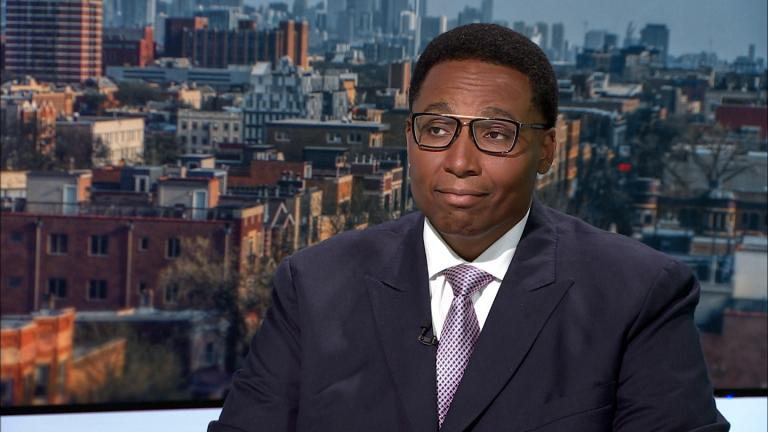
A second consecutive credit rating downgrade would be catastrophic, warned Joe Ferguson, the president of the Civic Federation, a nonpartisan fiscal watchdog group, who has been fiercely critical of Johnson’s financial stewardship of the city.
Ferguson and other critics of the mayor have blasted Johnson for crafting a spending plan that fills the city’s budget gap with one-time measures, rather than making changes that reduce the city’s expenses or increase its revenue.
Even though a task force charged by Johnson with finding solutions to the city’s fiscal crisis urged the City Council to automatically hike property taxes annually to keep pace with inflation, Johnson ruled out such a proposal and no one on the City Council has proposed reviving it.
Unless the city’s largest revenue source starts to keep pace with inflation over time, officials will have no choice but to cut city services or hike other taxes, according to the interim report from the Chicago Financial Future Task Force.
Increasing the city’s property tax to keep pace with inflation would generate $56 million in 2026, according to the task force’s report.
Johnson’s initial 2025 budget proposal, which included a $300 million property tax hike, was unanimously rejected by the City Council.
Alderpeople have also given Johnson’s proposal to declare $1 billion in property taxes earmarked to fight blight to be “surplus” a cool reception, warning that could thwart badly needed economic development projects on the South and West sides.
Although Chicago mayors have routinely eased the city’s fiscal woes with massive infusions from the city’s tax increment financing districts, known as TIFs, it is unclear how long officials can rely on TIFs as a source of ready cash.
Johnson’s budget relies on $157.6 million in TIF surplus to help fill the city’s budget gap. An additional $550 million would flow to Chicago Public Schools, which is also facing its own financial crunch.
The CPS budget approved by the Chicago Board of Education for the 2025-26 academic year counted on getting $379 million in TIF funds in order to close a $734 million budget gap.
That means the surplus declared by the mayor will give CPS an additional $173 million, enough to cover the $175 million payment that Johnson has asked the school district to make into the pension fund controlled by the city that pays for the retirement of some CPS employees.
The Chicago Board of Education approved a measure to make that payment for 2025, assuming the TIF surplus is approved by the City Council.
That would close the $146 million deficit the city is facing by the end of 2025, officials said.
Interim CPS CEO Macquline King sent an email to CPS families Friday urging school families to ask their alderperson to support Johnson’s $1 billion TIF surplus plan “to prevent mid-year cuts.”
Alderpeople have also questioned Johnson’s plan to generate $31 million by taxing social media companies with a tax of 50 cents per month for every active user after the first 100,000 users, under the city’s amusement tax authority.
That money would be used to fund the city’s public mental health clinics and crisis response program, according to Johnson’s proposed budget.
Several alderpeople said they were skeptical that the first-of-its-kind tax, assessed under the city’s amusement tax authority, would withstand a legal challenge, but Guzman said the lawyers for the city were confident it would be upheld.
Chicago’s 2026 budget does not count on that tax immediately flowing into the city’s coffers, anticipating a legal challenge, officials said.
It is also unclear whether Johnson’s attempt to regulate intoxicating hemp products will generate $10 million in tax revenue for the city.
The agreement to reopen the federal government after a shutdown of nearly a month and a half would ban the sale of products that contain less than 0.3% delta-9 tetrahydrocannabinol, the main intoxicating compound in cannabis better known as THC, in one year.
Chicago Department of Public Health Commissioner Dr. Olusimbo “Simbo” Ige said Johnson’s proposal to regulate the sale of the products, and add a $2 per item city tax, are needed to protect Chicago’s children.
The proposal would ban the sale of delta-8 and other hemp-derived snacks, drinks and products to those younger than 21 years old while prohibiting the sale of all products designed “to resemble a branded candy, cookie, chip or other snack food” in an attempt to stop the items from attracting the attention of children looking for a treat, according to the proposal.
While the U.S. Senate has passed that legislation, the U.S. House must act and President Donald Trump must sign it before it becomes law.
Note: This article was published Nov. 12, 2025, and updated with video Nov. 13, 2025.
Contact Heather Cherone: @HeatherCherone | (773) 569-1863 | [email protected]