Politics
‘Just Violence, Confusion’: Federal Immigration Raids Also Bring Fear to Suburban Streets
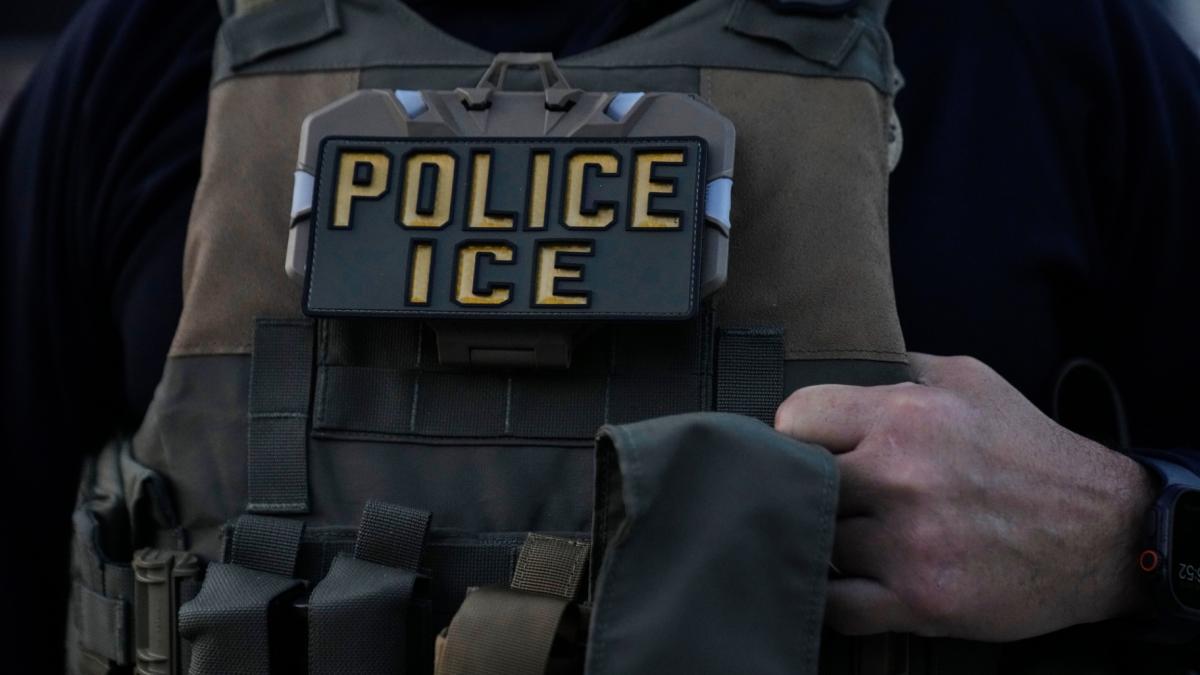 A U.S. Immigration and Customs Enforcement agent takes part in an early morning operation in Park Ridge, Ill., Friday, Sept. 19, 2025. (AP Photo / Erin Hooley)
As headlines centered on Chicago, federal immigration agents have also fanned out across the suburbs, conducting a wave of coordinated enforcement under Operation “Midway Blitz” that brought the government’s immigration crackdown to residents’ doorsteps.
Controversial arrests have impacted the suburbs for months, including recent incidents involving pepper spray and traffic crashes. Lawsuits include an ongoing federal case related to use of force by immigration agents, and a case related to those in U.S. Immigration and Customs Enforcement custody.
Illinois Gov. JB Pritzker told reporters on Tuesday that some U.S. Border Patrol officers, and their chief, Greg Bovino, may be soon leaving the Chicago area, but President Donald Trump is still working to expand “his onslaught against Americans” to other cities. Meanwhile, immigration enforcement activities are expected to continue in the area.
“I would not say that we’re now going to be free of these terrorized neighborhoods because ICE and CBP probably will still be here, though they will have fewer people, and we’ll have to continue to protect our neighbors and our friends and our families,” Pritzker said.
To better understand how suburbs are dealing with concerns around immigration enforcement activities, WTTW News reviewed public meeting minutes, official communications and news reports about raids across the area.
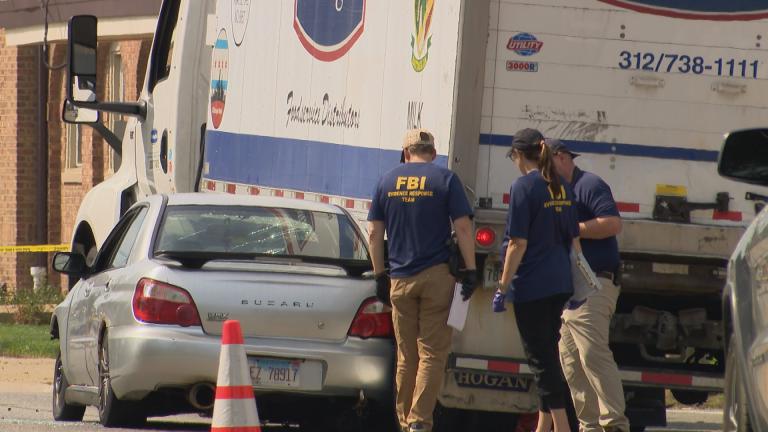
Just days after “Midway Blitz” launched, Chicago’s suburbs became the center of national conversation when a traffic stop turned deadly on Sept. 12 in Franklin Park, where about three out of five residents are Hispanic.
After the fatal shooting of Silverio Villegas-Gonzalez during a traffic stop in the suburb near the northwest edge of Chicago, local officials, including Pritzker, called for an investigation into the case, which involved what they characterized as a changing narrative with a lack of transparency from the U.S. Department of Homeland Security and related agencies.
Those concerns about reliable narratives have come to define many of the most high-profile incidents in recent months.
“Midway Blitz” was launched in September by DHS. It was announced as a plan to crack down on sanctuary policies in Chicago and Illinois, and was said to target those with criminal records. The operation involves multiple agencies including ICE and U.S. Customs and Border Protection.
Leaders from around the Chicago area often complain about a lack of communication about activity from federal officials and the difficult situations it can create.
Recently, many suburbs have introduced or passed policies to limit access to government property for those working in immigration enforcement. Residents expressed fears at government meetings, and many reached out to local leaders.
While the high-profile incidents draw attention, many suburban residents feel constant stress.
‘Keep Folks Safe in This Deranged Environment’
Federal officers have hit the suburbs since this operation kicked off in September. Activity has been reported in suburbs of Cook, DuPage, Kane, Lake, McHenry and Will counties. Recent reports also describe detentions in southern Illinois in addition to the flurry of activity across Chicago.
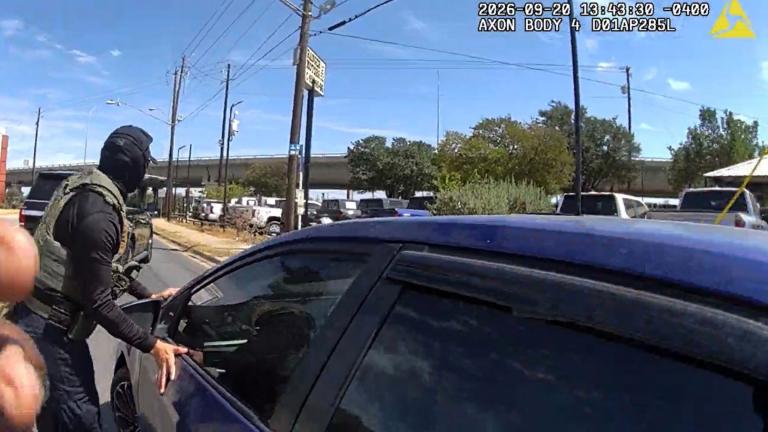
In Evanston, video of an arrest where a man was pinned down and struck in the head following a traffic crash while crowds were threatened with pepper spray generated controversy.
When citizens find a problem with their daily lives, they often reach out to their local government. During “Midway Blitz,” the impact is easy to identify from the local meeting minutes.
On Oct. 27, Evanston Mayor Daniel Biss identified what a regular concern this had become in his community. Biss is currently running in the Democratic primary for the 9th Congressional District in Illinois.
“Last week was a really traumatic week in the city of Evanston with a series of abductions of our residents on the part of masked anonymous individuals representing themselves as federal agents,” Biss said. “We have a responsibility to keep our residents safe. While we certainly would never interfere with the appropriate exercise of federal law enforcement entities’ duties, we have in many instances had no evidence whatsoever or any indication even that that’s what was going on.”
During the meeting, Biss pointed residents to a statement from Evanston explaining how the city will respond to the actions of federal agents.
“We continue to stand ready to work with community partners to do literally anything people think of that might help keep folks safe in this deranged environment,” Biss said.
‘Just Violence, Confusion and the Threat of Death for Simply Caring’
Following constantly aggressive enforcement across the area, many suburbs passed or considered policies to limit federal access. Evanston passed legislation in October designating city property as being an ICE-free zone. Wheeling passed a resolution Nov. 3, and a committee in Aurora approved a similar measure earlier this month that will be considered by the whole City Council Wednesday evening.
Aurora, the second-largest city in Illinois with a diverse population where more than two of five residents are Latino, heard about 80 minutes of input from residents Oct. 28.
City Council was applauded by those in attendance when a motion to extend public comment was passed. Speakers included two U.S. citizens who reported they were detained in the west suburb in October.
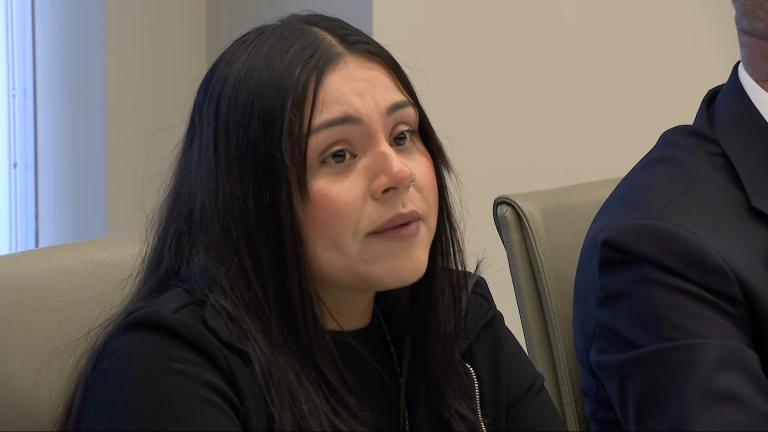
Ruben Morales recounted a traumatic encounter with unidentified ICE agents, emphasizing the fear, violence and lack of transparency he experienced in October.
Morales reported he was working with another person, Jessi Olazaba, who was also detained, documenting immigration-related activity in the Aurora area.
“I was slammed to the ground and beaten while handcuffed,” Morales said. “No uniforms, no badges, no body cameras, just violence, confusion and the threat of death for simply caring enough to check on my neighborhood.”
Morales said he was taken to FBI headquarters before he was released. He expressed support for Aurora to pass laws limiting federal immigration authorities’ access to city property, along with other residents.
Reporting by ProPublica identified more than 170 U.S. citizens across the country who were detained by immigration agents at raids and protests.
ICE and the DHS did not respond to questions about the detention of these two Aurora citizens. Both also did not provide updated figures about how many people had been arrested in the suburbs of Chicago.
Some speakers were members of the Aurora Rapid Response Team, which provides information and support to immigrant and refugee neighbors in the area. The city and other area communities have similar organizations.
Speakers highlighted damage to local businesses because of the operation, and expressed concern about the treatment of members of their community.
According to Aurora, a U.S. citizen and Aurora resident was hit with pepper-spray projectiles through her car on the city’s east side while her children were present on Oct. 29.
The incidents involving Aurora residents and ICE have greatly concerned the mayor’s office, according to a statement. “We are committed to keeping our residents safe, protected, and informed about ICE operations in Aurora and will always have the backs of our people.”
Imagine ‘It Will Be the Last Time You See Them’
The topic of ICE bans also came up at an October village meeting in Addison, where Census data show about 45% of the population is Hispanic. During the board meeting in suburban DuPage County, some residents reluctantly provided their names when signing up to comment, expressing fear of pushback from federal officials.
Addison residents were concerned about the recent detention of a woman at a grocery store in late October.
Residents expressed concern about what they saw in their community, as well as at the processing facility in Broadview, where some of the most active protests have been taking place.
“People who look like me were led out in handcuffs. Among them was a small Latina girl who looked just like me. Her wrists were bound and her eyes filled with confusion and fear,” a woman said during the public comment period. “Imagine being a parent who drops your children off each morning wondering if it will be the last time you see them.”
Enforcement activity has been common in Cicero, too. The town, where Census data show about 90% of residents are Hispanic, takes pride in being one of the first communities in the area to pass a “safe space” resolution.
Cicero announced a partnership with the Mexican Consulate in Chicago to be funded by the town to provide dedicated support for families affected by immigration detainment activity.
Cicero also developed an education campaign in Spanish and English for residents to know their rights regardless of immigration status.
Concerned by Silence
Communication by local governments shows the public supporting immigrants, disagreement on the best way to inform the public, and evidence of local police leaders meeting with immigration officials.
An October email sent to members of the West Suburban Chiefs of Police Association shows Riverside Director of Public Safety Matthew Buckley informing members of the organization that Russell Hott left his post as field director for ICE in Chicago following his being ordered to appear in court to answer questions about the continued use of tear gas in and around Chicago.
An email mentions a meeting with Hott and WSCOP members in Lyons. Records show that meeting was scheduled to take place Oct. 7 at the Lyons Police Department.
Emails also show coordination with the team of Illinois State Police, Cook County Sheriff’s Department and local agencies in assisting Broadview police when requested at the ICE facility.
Buckley confirmed the meeting with Hott, and said it was informative about the planned length of the operation. He said his department has been called upon to assist the unified command at Broadview.
“I’ve been out there a few times personally,” Buckley said. “Yes we’ve seen agitators, but most of what I’ve witnessed has been peaceful.”
Multiple members of WSCOP attended the meeting in Lyons, Buckley said.
Emails from Elmwood Park also show multiple residents urging Mayor Angelo “Skip” Saviano to speak up about immigration enforcement in the area.
Saviano was previously elected to the Illinois General Assembly as a Republican, and has been mayor of Elmwood Park since 2013.
The village said it was unaware of any immigration enforcement in Elmwood Park, and said it follows all applicable laws, including those in Illinois that prohibit it from assisting with civil immigration matters.
Emails asked Saviano to follow the lead of Oak Park and River Forest with a public statement about ICE. Saviano and his staff did communicate with the constituents about their concerns, records show.
“I believe a public statement from your office remains both necessary and urgent,” one email read. “Many in our community, regardless of immigration status, are deeply concerned about what federal enforcement activity might mean locally. A clear message from village leadership shared publicly would go a long way toward reaffirming trust.”
A second message was delivered Oct. 7 with the subject line, “Concerned Nurse and Resident on Public Health and Safety.”
“I urge you to lead by issuing a clear statement that reaffirms Elmwood Park as a place where all residents feel safe accessing healthcare, attending school, and utilizing essential services without fear,” the final paragraph of the email read. “Protecting the health and safety of every resident and child is not a political issue, it is our fundamental responsibility.”
Further north in Lake County, agents reportedly pulled weapons on Waukegan Ald. Juan Martinez Friday.
More than 60% of residents in Waukegan are Hispanic, according to Census data.
Mayor Sam Cunningham in a statement Monday night said federal agents didn’t come to help, and accused them of trying to escalate chaos, provoke confrontation and spread fear.
“While Waukegan families are simply trying to live, work, and survive, Mr. Bovino and these Border Patrol agents are laughing and playing games with people’s lives,” Cunningham said.
Contact Jared Rutecki: @JaredRutecki | [email protected]