Science & Nature
2 Comets and a Meteor Shower Are About To Reach Peak Viewing. Here’s What To Look for in Chicago and When
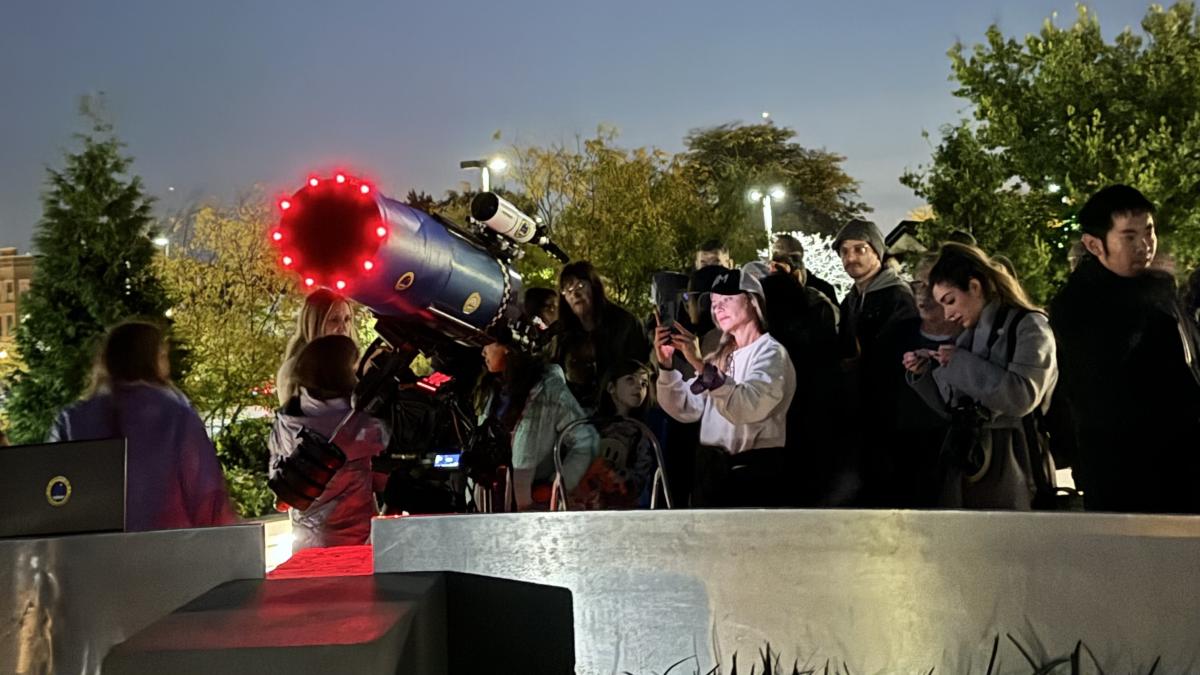 Chicagoans gathered on the 606-Bloomingdale Trail in 2024 to get a look at Comet Tsuchinshan–ATLAS. (Patty Wetli / WTTW News)
Want more local nature coverage? Sign up for WTTW News’ weekly Urban Nature newsletter.
A pair of newly identified comets are jointly appearing in the October sky, and it’s possible to see both — if you know where to look and when.
“They are findable,” especially with binoculars and under a dark sky, said Michelle Nichols, director of public observing at Adler Planetarium.
Comet Lemmon, discovered in January, and Comet SWAN, first spotted in September, are both making their closest passes to Earth in the coming days. Monday and Tuesday nights are expected to be the best for catching a glimpse of the two interstellar travelers, aided by the lack of moonlight.
Look for SWAN in the southwest and Lemmon in the northwest, with Lemmon likely being the easier of the two to locate, according to Nichols.
“Just follow the curve of the handle of the Big Dipper,” she said. Lemmon is positioned between the end of the handle and the star Arcturus, one of the brightest in the sky.
Prime time for viewing is roughly an hour after sunset.
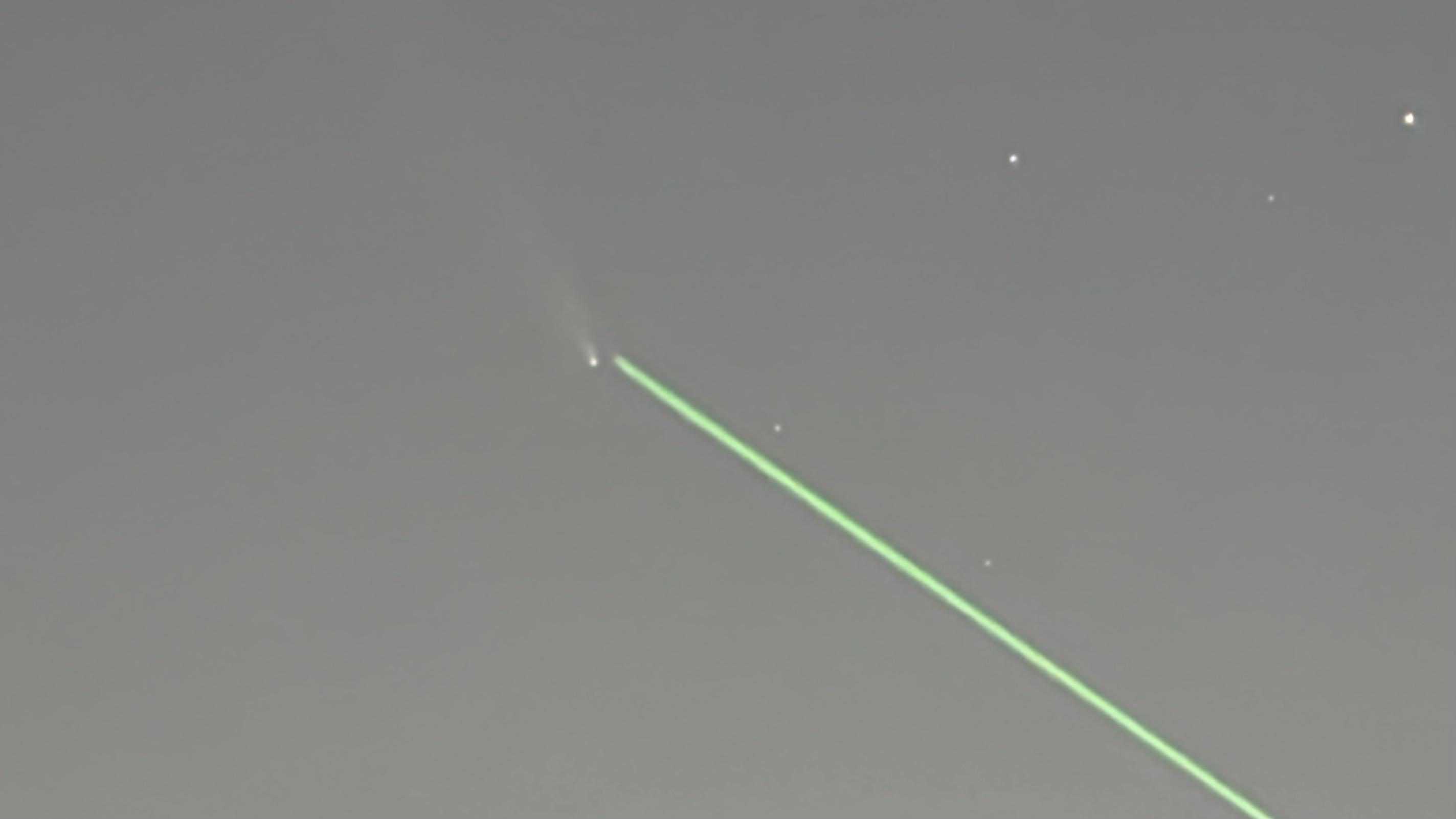 Here’s what Comet Tsuchinshan–ATLAS looked like in the sky over Chicago, with an assist from an iPhone camera and laser pointer. The images published by astrophotographers are typically far more dramatic. (Patty Wetli / WTTW News)
As with any celestial event, Chicago’s light pollution will make a naked-eye sighting all but impossible. The Adler isn’t even hosting a watch party, because the comets are “right out over the worst part of our light pollution,” Nichols said.
Her advice is to get to the darkest place possible, with the least obstructed view of the western horizon. For those stuck with less-than-ideal conditions, binoculars and a phone camera could come in handy.
Phone cameras are more sensitive and take longer exposures — 3 to 10 seconds — versus the eye, which fires every 30th of a second, Nichols said.
Keep in mind that comets are fuzzy balls of ice, and they don’t blaze across the sky, she added.
In October 2024, Comet Tsuchinshan–ATLAS was visible from an observation point on the 606-Bloomingdale Trail. And given how long it’s taken for Lemmon and SWAN to fly by, it’s worth taking a chance on a once-in-a-lifetime sighting.
“Comets are small and usually dim and they have to get close for us to see them,” Nichols said. “To have two in the sky at the same time is rare.”
The cherry on top of the comet two-fer is the Orionid meteor shower, which is also peaking Monday night into early Tuesday morning, particularly after midnight.
The Orionids — “medium-strength” meteors, according to Nichols — appear to radiate from the constellation Orion.
“In general, there’s no one ‘best place’ to look. Just get to a place where east is dark,” Nichols said. “Face east, look up.”
Meteor showers are great for amateur sky gazers, she said, because no telescopes or binoculars are required — in fact they’d be a hindrance instead of a help.
“The only thing you need is patience,” said Nichols.
Contact Patty Wetli: [email protected]