Science & Nature
Illinoisans Catch Glimpse of Meteor That Dazzled Midwesterners Tuesday, Exploded Over Ohio
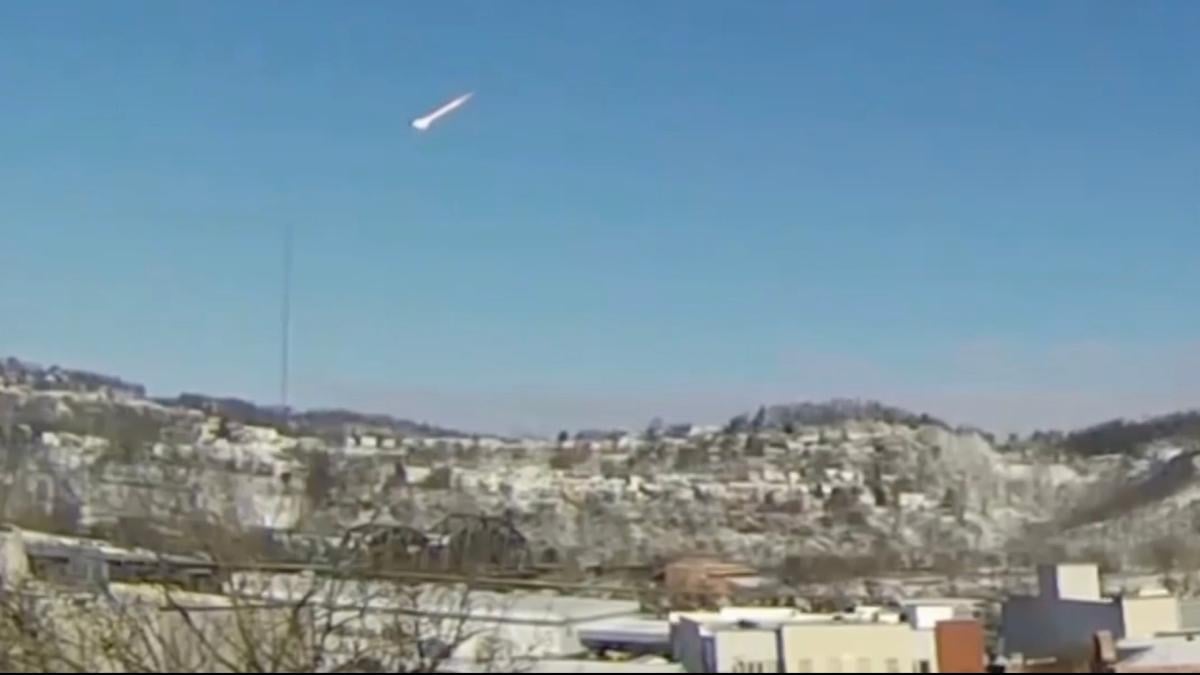 This image taken from video shows a suspected meteor falling through the sky in the greater Pittsburgh, Pa., area on Tuesday, March 17, 2026. (Jared Rackley via AP)
NASA has confirmed a meteor sighting across the Midwest Tuesday and plenty of folks in the Chicago region caught a glimpse of the space rock in the early morning, according to reports from the American Meteor Society.
The bright daylight fireball was visible across a large swath of the U.S., from Illinois to Maryland to New York, at approximately 7:55 a.m. Central time. It was also detected on satellite and cameras, including security cameras.
Folks who live in the vicinity of Cleveland, Ohio, reported hearing a loud blast and “sonic boom.” According to NASA, the asteroid unleashed an energy equal to 250 tons of TNT when it fragmented, resulting in a pressure wave that caused the explosive sound.
One of our employees, Jared Rackley, caught this morning's meteor on camera from the Pittsburgh area. pic.twitter.com/2LdqOpChti
— NWS Pittsburgh (@NWSPittsburgh) March 17, 2026
NASA estimates the asteroid was 6 feet in diameter, weighed 7 tons and traveled at 40,000 miles per hour, streaking across Lake Erie and fragmenting over Medina, Ohio.
The American Meteor Society has gathered eyewitness accounts, including reports from Tinley Park, South Holland, Crete and Matteson in the metro Chicago area.
Illinois Storm Chasers has also gathered a number of reports from people who said they saw something they thought was a missile or rocket.
After NASA released a map of where potential meteorites may have fallen, people flocked to the area in search of space rocks. Multiple individuals have reportedly collected specimens, though verification is still needed.
Meteors typically fall somewhere in the U.S. about once a day, while smaller pieces of space dust might fall 10 times an hour, according to astronomer Carl Hergenrother, executive director of the American Meteor Society.
Scientists track meteors through a network of special cameras that help capture the night sky, but more members of the public are catching them on cellphones and security cameras of their own.
“Now we’re seeing them, and there’s dozens of videos popping up all the time,” Hergenrother said.
The Associated Press contributed to the report.
Contact Patty Wetli: [email protected]