Science & Nature
Chicago ‘Rat Hole’ Debunked. Scientists Say Viral Sensation Was ‘Windy City Sidewalk Squirrel’
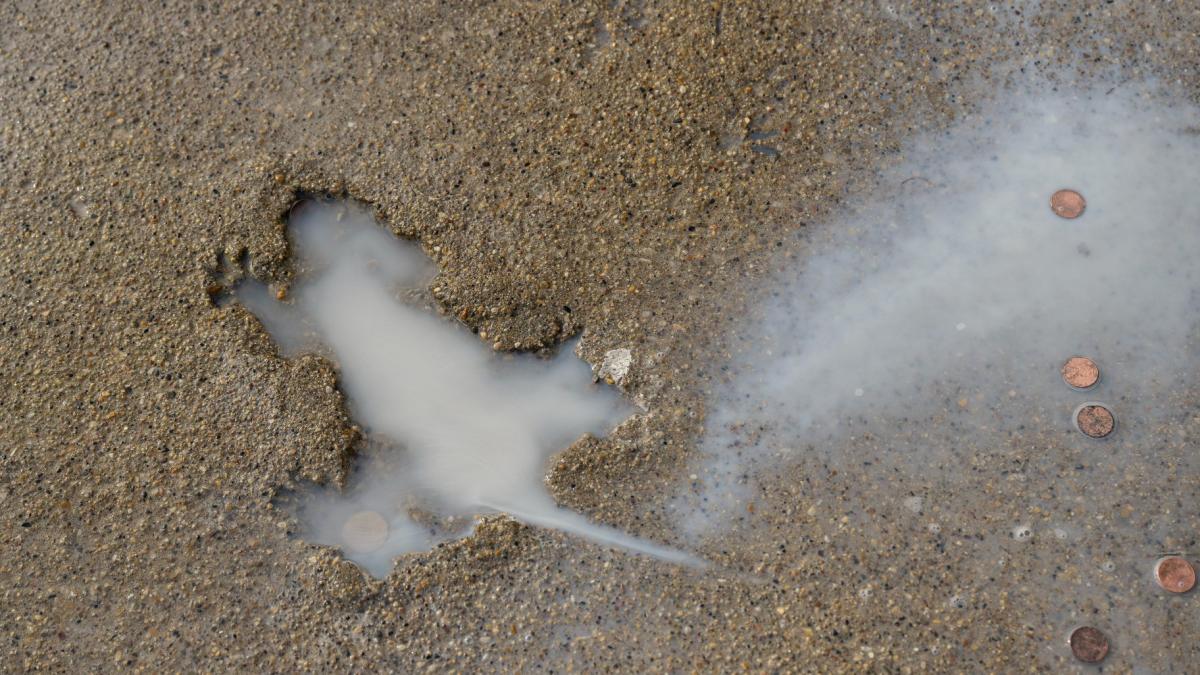 Chicago’s iconic Rat Hole along the 1900 block of West Roscoe Street in the Roscoe Village neighborhood is seen, Jan. 19, 2024, in Chicago. (Tyler Pasciak LaRiviere / Chicago Sun-Times via AP, File)
A team of researchers has all but definitively answered one of the less pressing questions of our time: Was the famous “Chicago Rat Hole” really made by a rat?
In short: No. Or probably not, with a 98.67% likelihood that the sidewalk impression — which became a viral sensation in 2024 — is that of a squirrel.
The case of mistaken identity was revealed in a scientific paper published Wednesday in the Royal Society journal Biology Letters.
While the study’s lead author Michael Granatosky, an evolutionary biomechanist at the University of Tennessee Knoxville, acknowledged the “playful spirit” of the investigation, his team went to significant lengths to ID the crater causing critter in question.
Why? Because … science.
The original assumption of rat wasn’t “based on the proper application of the scientific method,” Granatosky said, and applying those methods might just pique interest in quantitative studies.
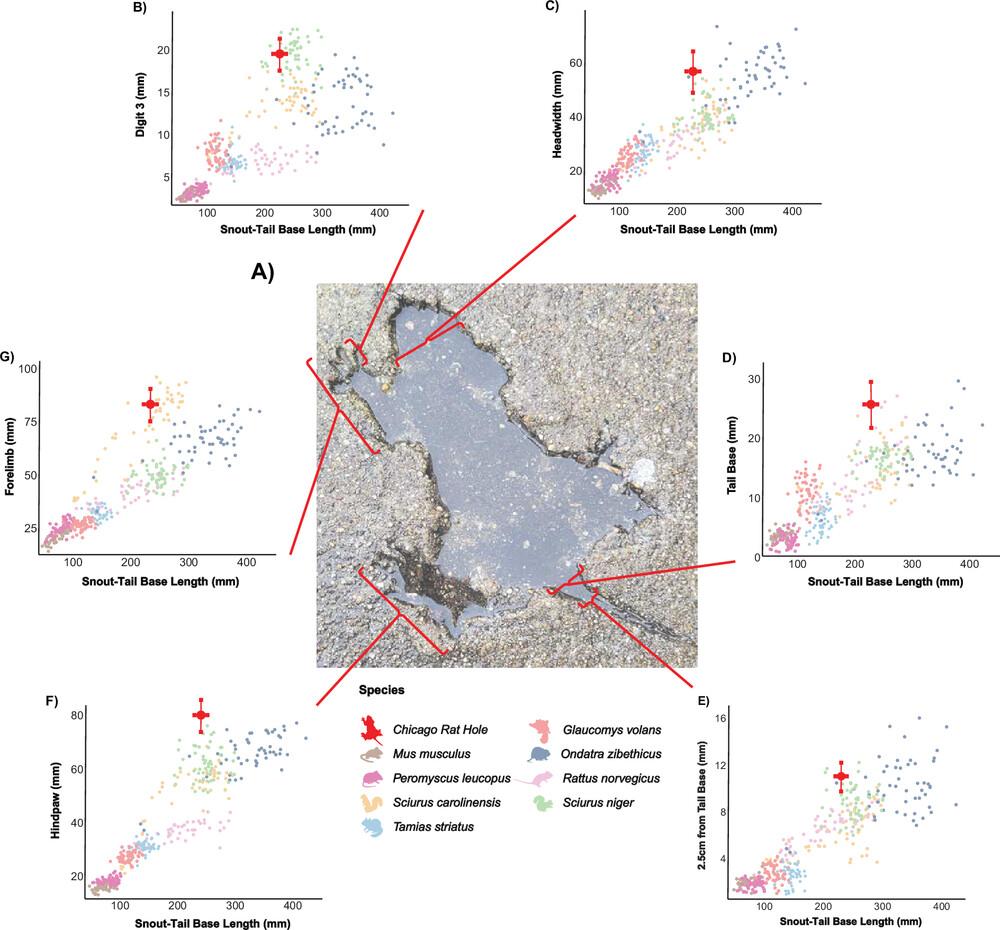 (Royal Society journal of Biology Letters)
Though the researchers weren’t able to personally examine the “rat hole” — its section of concrete having been removed from its longtime home on Roscoe Street back in April 2024 — they drew on all available images to construct “virtual specimens.”
Many measurements were taken and comparisons were made with scores of likely mammal suspects in the collection of the American Museum of Natural History. Charts and graphs were assembled. Conclusions were drawn.
“Our analyses offer little support for the hypothesis that the ‘Chicago Rat Hole’ was made by a brown rat,” Granatosky wrote. “The specimen’s relatively elongated forelimbs, third digits and hindpaws exceeded the measurement ranges observed in the brown rat.”
The measurements do match those of eastern gray squirrels, fox squirrels and muskrats, the study noted, and researchers settled on eastern gray squirrel given its abundance in Chicago.
“We therefore propose that the specimen be rechristened the ‘Windy City Sidewalk Squirrel,’” the study said.
But hold on: What of the rat hole’s tail, specifically its lack of squirrel-like bushiness?
The researchers had an answer: Sidewalk concrete sets too quickly and “lacks the fine-grained texture” needed to capture intricate details like hair.
“It would actually be quite surprising if a bushy tail had been preserved,” according to the study.
So there you have it, Chicago. Kind of sounds like confirmation of the theory that squirrels really are rats with cuter tails.
Contact Patty Wetli: [email protected]