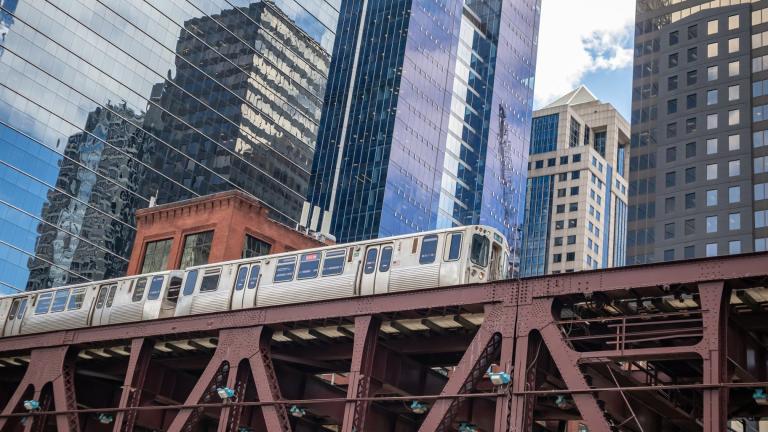
Arts & Entertainment
CTA Brings Out 1920s Vintage Railcars to Celebrate Transit Agency’s 78th Anniversary
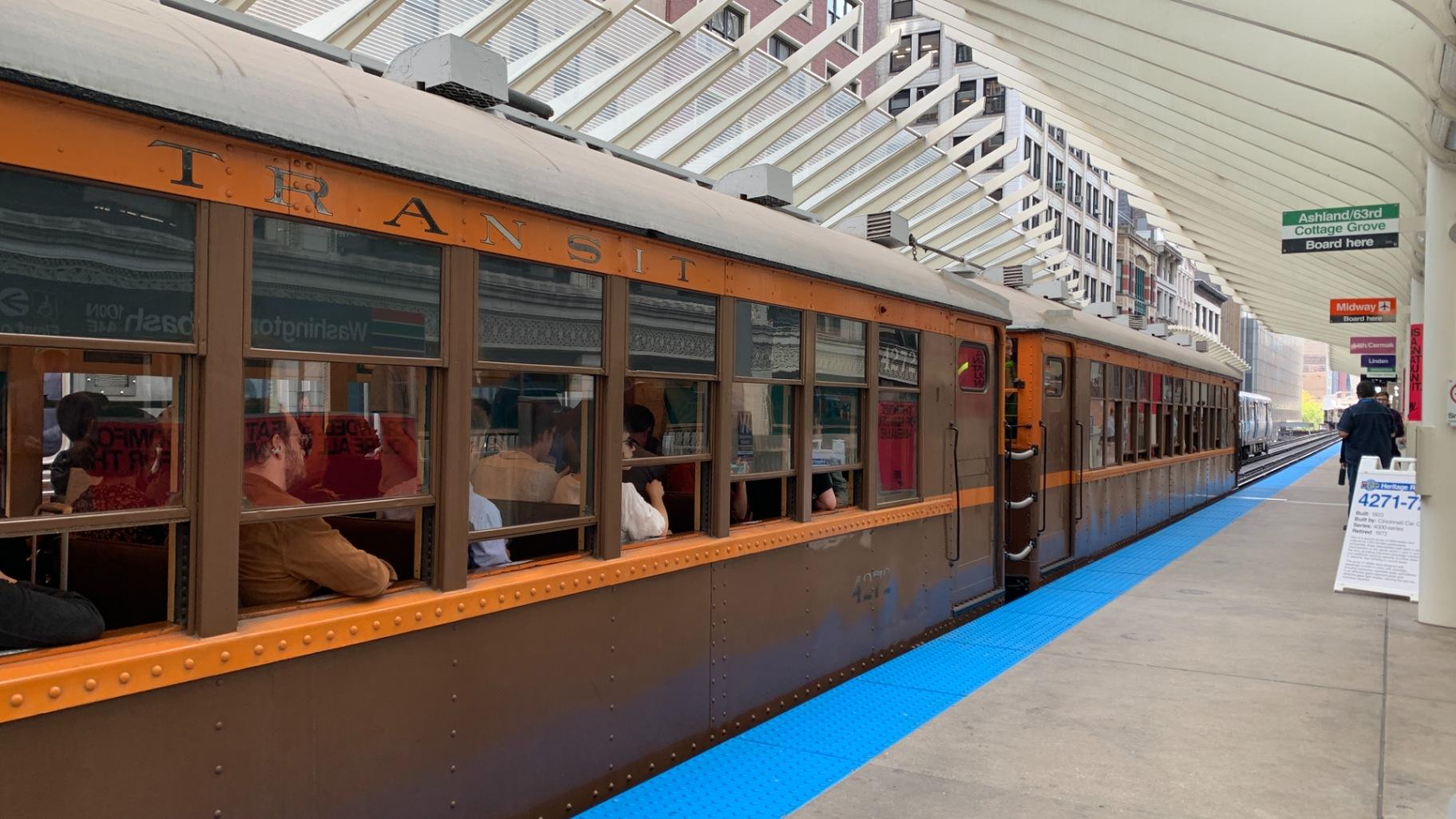
 The Chicago Transit Authority brought out the oldest trains in its vintage fleet to celebrate the agency’s 78th anniversary. (Eunice Alpasan / WTTW News)
As Anna Jattkowski-Hudson rode around the Loop in a vintage CTA rail car Wednesday, it brought back childhood memories of riding the same train downtown with her mother.
“It reminds me of my mom, who’s not with me anymore, because she couldn’t drive, so we would have to take the train everywhere,“ said Jattkowski-Hudson, who would ride the Brown Line downtown with her mom at least once a week. “It’s so funny because now it looks old to me. Back then, it was the coolest thing ever.”
The Chicago Transit Authority brought out the oldest trains in its vintage fleet to celebrate the agency’s 78th anniversary. The CTA, created by state legislation, began operating on Oct. 1, 1947, after it acquired the properties of the Chicago Rapid Transit Company and the Chicago Surface Lines, according to the agency’s website.
The 4000-series rail cars that commuters and train enthusiasts rode through the Loop around noon Wednesday were built in 1923 by the Cincinnati Car Company. As part of the special occasion, some CTA employees and retirees were seen sporting Chicago Rapid Transit Company uniforms, a nod to CTA’s predecessor.
The 1920s-era rail cars ran on the CTA until they were retired in 1973.
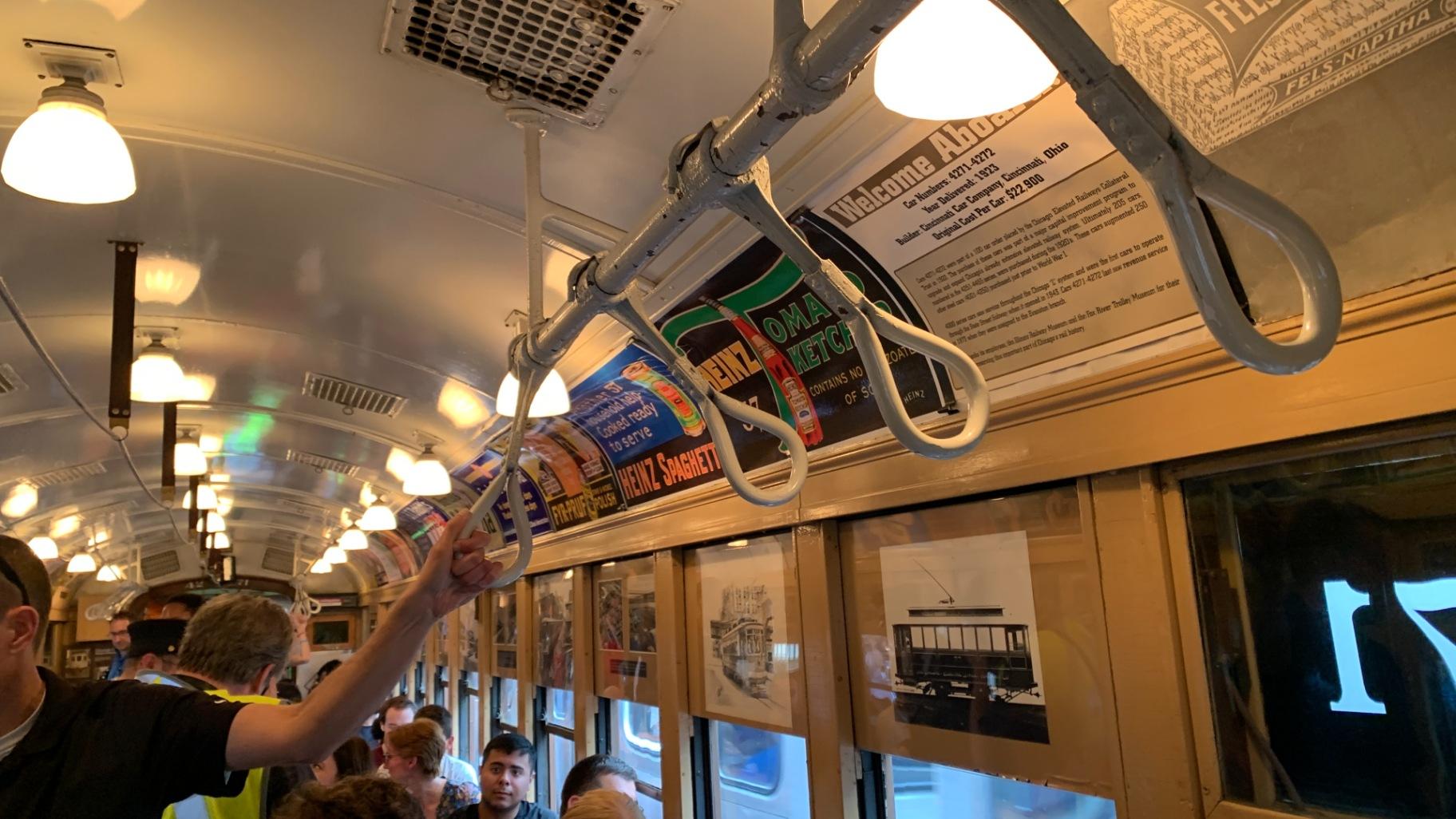
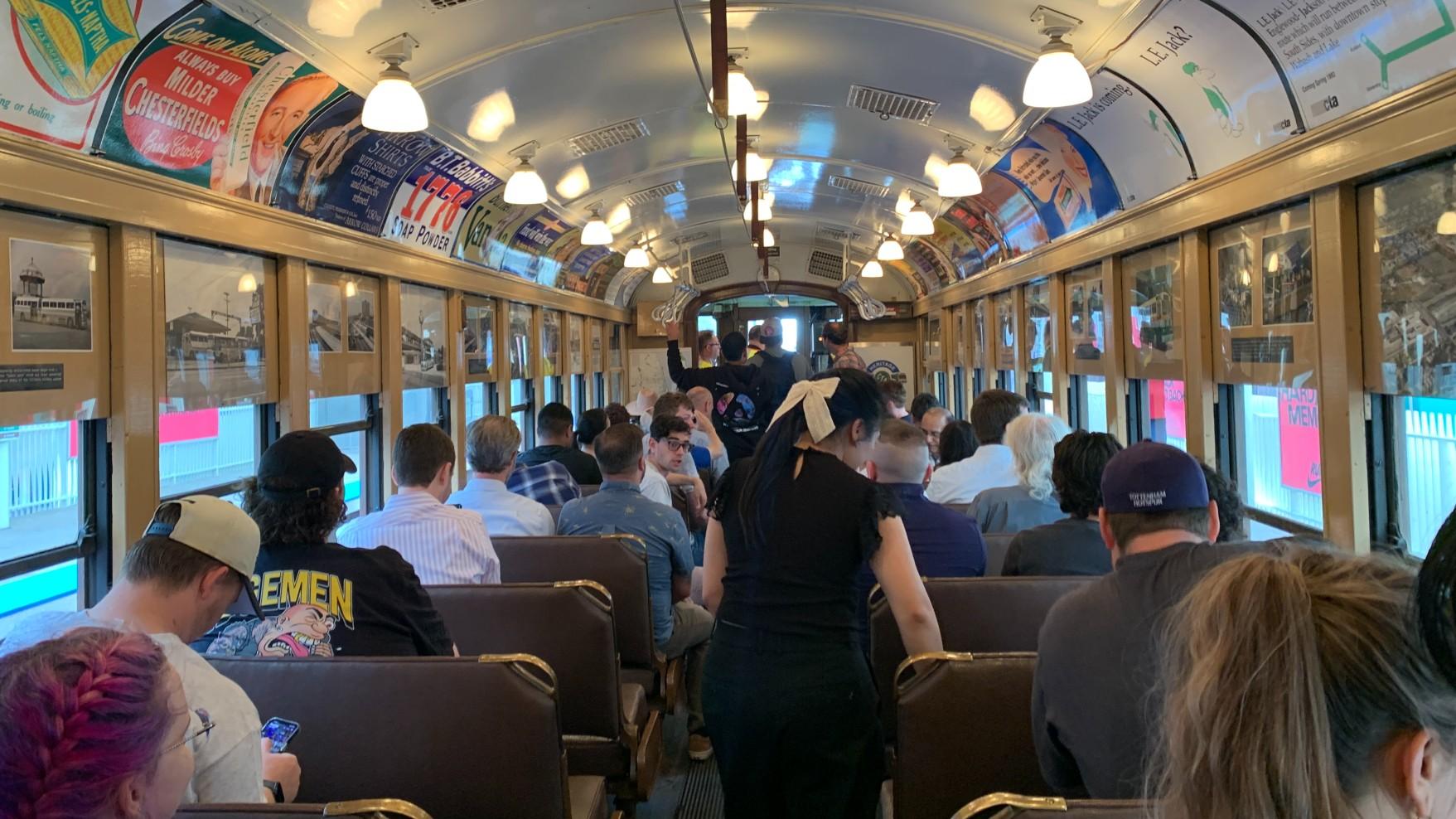
Jattkowski-Hudson particularly enjoyed the open windows and “more comfortable” seats on the vintage rail cars, which originally had plush seats before later being replaced with cushioned brown vinyl.
 (Eunice Alpasan / WTTW News)
“During the summer, I always remember we’d always try to get a window seat so we would get some air,” Jattkowski-Hudson recalled, given the rail cars did not have air conditioning.
She wasn’t the only one who enjoyed the open windows on Wednesday — with CTA employees needing to remind riders to keep heads and hands inside the train car.
The steel-bodied vintage rail cars also featured wooden interior floors, incandescent lights that would occasionally flicker while the train was moving, along with air braking systems. The two-car-long train was decorated with vintage-style ads along the railcar’s upper interiors.
“The reaction is always impressive because everybody smiles, and I wish I got a nickel for every picture that was taken because that would help pay for all of the expenses that we have incurred to take care of this,” retired CTA design engineer Fred Lonnes said.
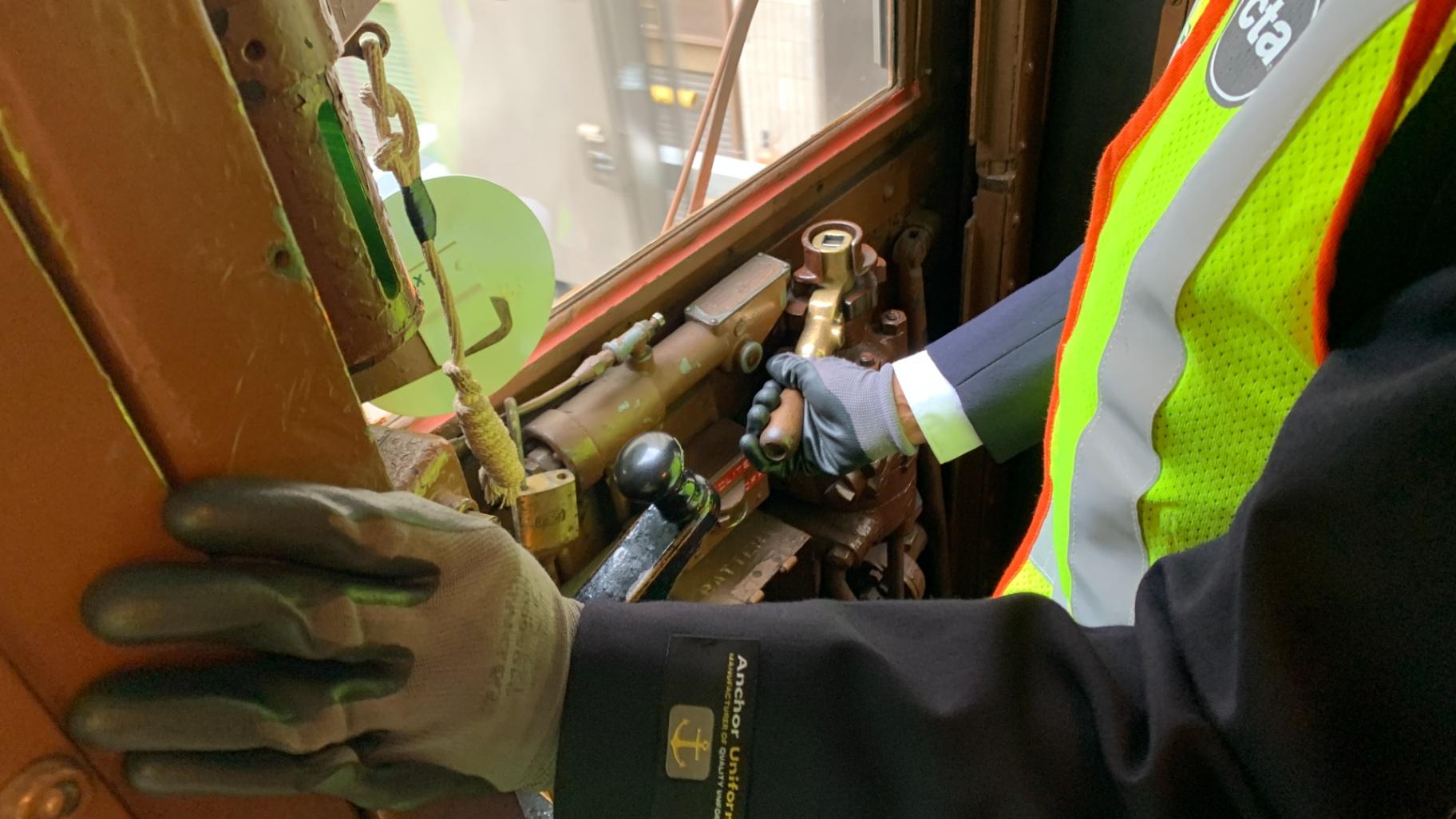
South Loop resident Justin Zhang, a self-proclaimed casual enjoyer of public transit, sat near the front of the train. The vintage railcar had no divider between the rail operator’s control car and the railcar’s main cabin — with a door also located next to the train’s controls that allowed for riders to enter and exit the train.
Zhang said he could imagine the trains still running regularly today.
“I love being able to see out the front of the train, being so close to the front, actually seeing the interchange on the tracks,” Zhang said. “These trains are a little more small and a little more cramped, and I guess less safe for the operator because you pass right by them when you walk in, but besides that, I can see these running right now.”
 (Eunice Alpasan / WTTW News)
 (Eunice Alpasan / WTTW News)
The vintage train is part of the agency’s Heritage Fleet program, which aims to preserve and celebrate retired railcars and buses. The CTA typically tries to bring out its vintage fleet for service to the public for special anniversaries and events, according to Graham Garfield, who manages CTA’s Heritage Fleet program.
Baseball fans stepped back in time when the CTA brought out its 1970s-era 2400-series railcars during this summer’s Crosstown Classic games.
CTA’s anniversary comes as Chicago-area transit systems face a $770 million fiscal cliff next year that could lead to drastic service cuts on the CTA, Pace and Metra. This summer, $74 million in funding was reallocated to the CTA, which is projected to hit its fiscal cliff first, in an effort to delay service cuts, according to the Regional Transportation Authority.
CTA Acting President Nora Leerhsen was in attendance during Wednesday’s vintage fleet event, but would not answer questions about the fiscal cliff. Garfield also refused to comment on whether the fiscal cliff would impact the Heritage Fleet program.
State legislators, who failed to pass a transit funding bill during their previous legislative session, are expected to try again in the fall. Gov. JB Pritzker told reporters in July he’s confident legislation will pass to address the fiscal cliff facing Chicago-area transit agencies.
 (Eunice Alpasan / WTTW News)
Contact Eunice Alpasan: [email protected]