Politics
Plan to Legalize Coach Houses, Granny Flats Across Chicago Would Still Give Alderpeople Final Say
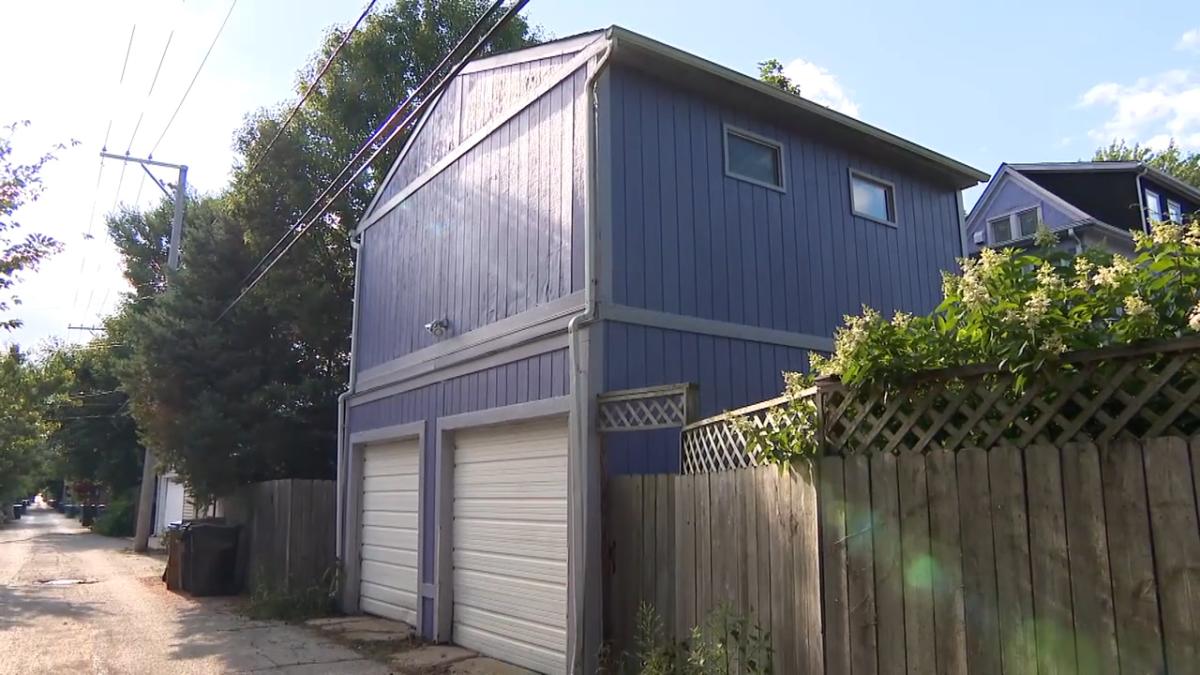 A Chicago coach house. (WTTW News)
A compromise proposal to allow Chicagoans to build basement, attic and coach house dwellings across the city would still give alderpeople the final say over whether the tiny homes could be built in their wards, officials said.
The agreement, announced Tuesday morning, would also require homeowners to use contractors that participate in apprenticeship programs recognized by labor organizations, records show. That requirement does not apply to the construction of any other type of housing in Chicago.
The compromise paves the way for the City Council to approve the measure at its meeting scheduled for Thursday, ending more than two years of behind-the-scenes negotiations about what the city officially calls accessory, or additional, dwelling units and resolve a public deadlock that prevented the measure from getting a final vote in July.
The proposal would reverse the city’s 68-year ban on tiny homes, but create a patchwork of regulations that could significantly differ from ward to ward in order to uphold the decades-old tradition known as aldermanic prerogative.
Read the full proposed ordinance.
By comparison, the version of the ordinance endorsed by the City Council’s Zoning Committee on a 13-7 vote in July would have allowed the granny flats to be built across the city without obtaining special permission from city officials.
Mayor Brandon Johnson endorsed the version of the ordinance that won the approval of the Zoning Committee, calling it a way to chip away at Chicago’s massive shortage of affordable housing.
Johnson told reporters Tuesday that he was “grateful” there had been progress on the issue and remained committed to “doing everything in our power to build more affordable units” but stopped short of explicitly endorsing the latest version of the ordinance.
Only once in recent years has the City Council approved a high-profile project over the objection of the local alderperson. That development, in the Far Northwest Side’s 41st Ward, was never built.
It is unclear whether a majority of the City Council would vote to buck the tradition that calls on them to mind their own business and defer to the colleague whose ward it impacts.
Although Ald. Bennett Lawson (44th Ward) touted the measure that won the approval of the Zoning Committee as a “compromise,” it was fiercely condemned by supporters of aldermanic prerogative, who tout it as the best way to ensure that Chicago residents live in neighborhoods governed by one of their own: someone who lives near them, understands their issues and is not only accessible — but also accountable to them on Election Day.
A federal probe found that aldermanic prerogative fuels segregation in Chicago and violates the civil rights of Black and Latino residents by limiting the creation of affordable housing.
Ald. Marty Quinn (13th Ward) blasted Lawson’s proposal as an “attack” on Chicago’s working class that would cause residents to leave his Southwest Side ward, which is made up of single-family bungalows and other homes in a ward that prides itself on its suburban-like vibe.
Quinn joined forces with Ald. Gregory Mitchell (7th Ward) to block a vote on the measure in July, punting the issue until after the City Council’s August recess.
Earlier this month, Quinn introduced a measure that would require the granny flats be built by workers who belong to a union. Voting to reject such a provision would have been politically perilous for City Council members, who rely on union support.
Lawson did not immediately respond to a request for comment from WTTW News about the changes.
In 2021, the City Council approved the creation of coach houses and granny flats in five areas of the city, with the approval of those areas’ alderpeople.
City officials declared that the pilot program had been a roaring success, but efforts to allow tiny homes to be built citywide faced intense opposition from alderpeople who represent wards that have a majority of single-family homes.
To address those concerns, the ordinance approved by the Zoning Committee would have allowed no more than three new units to be built each year on each block in areas zoned for detached, single-family homes and required owners of single-family homes who want to add a second unit to their property would have to also live on the property.
The revised measure would permit the tiny homes to be built without restriction in wards with the alderperson’s approval, including in commercial areas, records show.
It would also give alderpeople who do not want to green light the tiny homes a menu of options to choose from to give them the ability to install “guardrails,” including the requirement that the property owner live in the main unit as well as limits on how many units could be built per block.
The alderperson could also require each granny flat to be approved by city zoning officials, which would add another layer of review to the construction of the units.
Contact Heather Cherone: @HeatherCherone | (773) 569-1863 | [email protected]