Politics
Uncertainty for Chicago’s Venezuelan Community as Trump Administration Seeks to End Temporary Protected Status
Tens of thousands of Chicago-area Venezuelans are in legal limbo as the Trump administration attempts to end temporary protected status (TPS).
These deportation protections were granted to Venezuelans in 2021 and 2023, and were originally set to expire in October 2026. The Trump administration tried to cut them short earlier this month, but a federal judge blocked that effort, allowing the protections to continue.
The U.S. Department of Homeland Security (DHS) has said it plans to challenge the ruling.
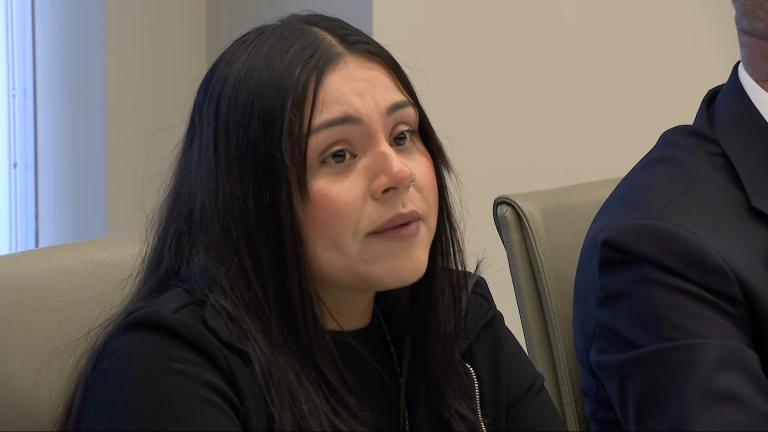
Claire Doutre, an immigration attorney with McEntee Law Group, said the sudden and quick change leaves many beneficiaries of these protections scrambling amid the uncertainty.
“People don’t have time,” Doutre said. “They are working; they are living their lives. They don’t have time to pack up and move again. It already took a lot to find a way to see safety and once again. They find themselves back to zero.”
This comes after DHS attempted to end the 2023 designation for Venezuelans in April. It was also blocked then, allowing the protections to continue until Sept. 8.
The ongoing legal battle brings extra uncertainty for immigrant communities as federal agents ramp up deportations.
Jeannetth Camilo, development assistant at social services agency Centro Romero, said many families are at risk, especially those that have work visas and other benefits that are tied to their legal status.
“Overall, there’s a lot of fear and anxiety,” Camilo said. “It’s important to know a lot of these people have families that are of mixed status — meaning they may have children that have citizenship.”
DHS said it is ending the designation because it has been “abused, exploited, and politicized as a de facto amnesty program.”
“While these injunctions delay justice and undermine the integrity of our immigration system, Secretary Noem will use every legal option at the Department’s disposal to end this chaos and prioritize the safety of Americans,” DHS said in a statement to WTTW News. “Under God, the people rule. Unelected activist judges cannot stop the will of the American people for a safe and secure homeland.”
DHS has also said that conditions in countries like Venezuela have improved and that it is against the country’s best interest to allow these protections to continue when they are meant to be temporary.
Camilo said that isn’t the case and that many Venezuelans don’t feel safe returning.
“It’s important to remember that these families are leaving because it is not safe for them,” Camilo said. “By saying, ‘Oh, you can go back,’ doesn’t necessarily guarantee that if they go back, it’s going to be OK for them.”
Other countries like Nicaragua and Honduras have had TPS for more than 25 years because of long-term crises such as climate disasters and political instability. Protections for people from those countries were also cut short earlier this month.
Doutre said it’s important for those who are impacted to seek help from an attorney to see whether they are eligible for some other legal status.
“People who qualify for TPS should also look into asylum,” Doutre said. “People should look at their family members and see if there’s anything there with relatives who are U.S. citizens. There are potentially employer-based avenues, which might be limited. It’s important to find a way to have something pending, if at all possible and if it makes sense for their case.”