Arts & Entertainment
Chef Curtis Duffy Tracks Tragedy, Success in New Memoir: ‘It Was Very Therapeutic’
Decorated chef Curtis Duffy has made his mark on Chicago’s food scene over the past 25 years.
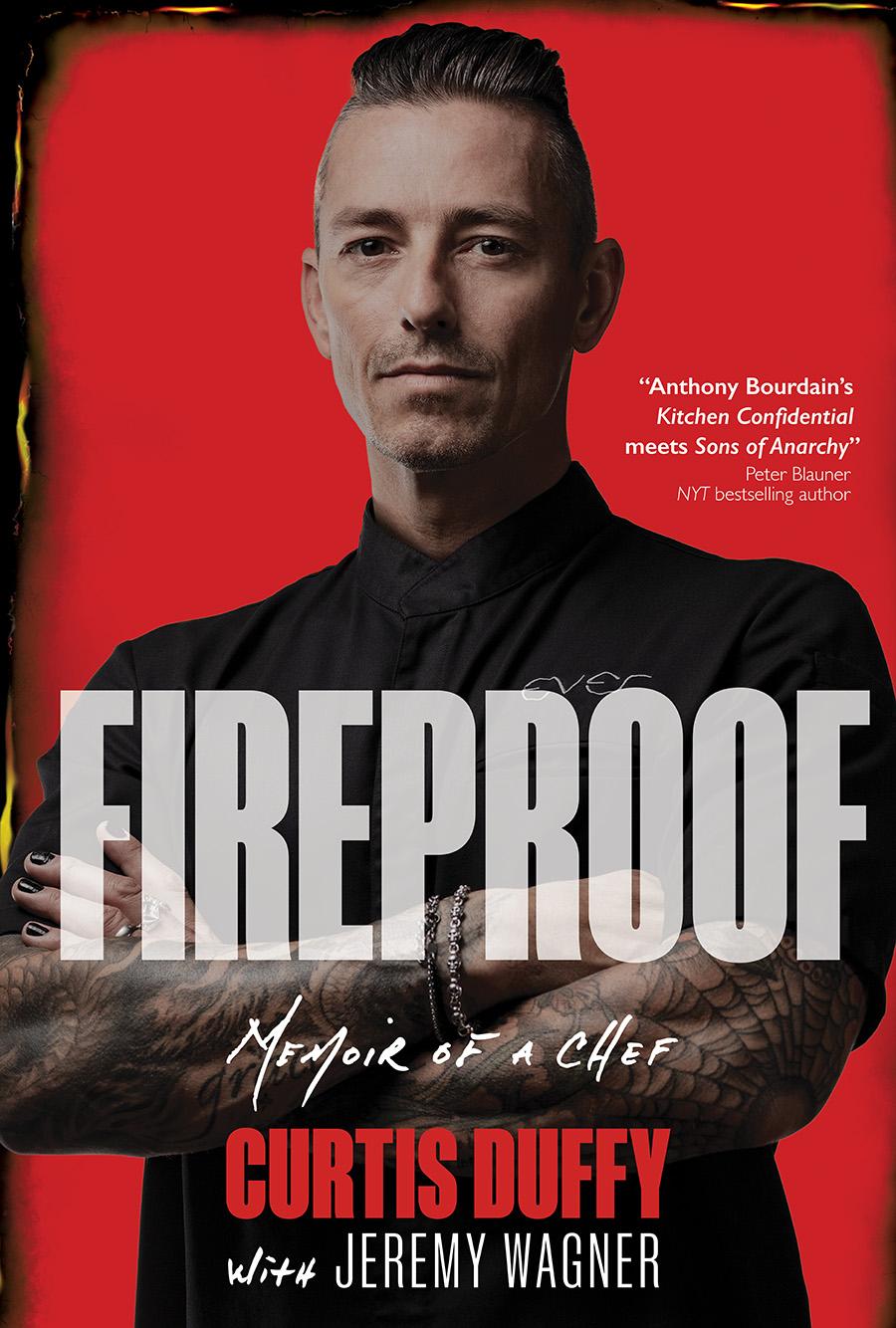
Now he’s sharing a little more than fine dining. His new book, “Fireproof: Memoir of a Chef,” outlines his rise to success and dives deep into challenging and traumatic events he faced throughout his childhood.
In 2015 he released a documentary, “For Grace,” that also touched on his personal story while showcasing the journey of opening his first restaurant, Grace. But Duffy felt those featured moments in the film only scratched the surface of his story. Working on his memoir with co-writer Jeremy Wagner gave him an opportunity to further explore his life.
“Every story led to something new, some new discovery, something that I put away for many years, kind of shuffled under the carpet as we all do,” Duffy said. “It was very therapeutic in that sense.”
To learn more about Duffy and his remarkable journey, click here.
Read an excerpt from the book below:
“We’re calling with some amazing news,” the woman from the Michelin Guide said. It’s the fall of 2014. I had her on speaker. Muser and I, and the rest of the staff hung on her every word. “In the new edition, you’re being awarded three Michelin Stars for Grace. Congratulations!”
I was over the moon. The press was on site with us, taking photos and videos as the call came in. Muser and I were barely able to contain our joy. The staff cheered and hugged. French Champagne was flowing…
I considered three Michelin stars a huge win, not just for myself and Grace, but also for Chicago. The Second City had now been recognized by Michelin as home to two of the world’s best restaurants—Grace and Alinea. Michelin Guide’s international director Michael Ellis named Chicago as one of the most dynamic and exciting places to dine.
I took comfort knowing my team and I put genuine love and emotion into all Grace did. I was able to innovate, creating such dishes as strawberry, kaffir, and balm; or the Alaskan king crab, calamansi, cucumber and lemon mint; or the pig tail, endive, cauliflower, oxalis; or the Miyazaki beef. It was me, not Dolos, whom Michael Ellis of the Michelin Guide mentioned in an interview with the Chicago Tribune, saying that I created “contemporary seasonal tasting menus that are both intricate and elaborately structured.”
It’s not easy to get out from under the shadow of my youth; to let old ghosts rest.
Deep down, I’m ecstatic. I mean, it was an incredible achievement for me to be considered one of only twelve three-Michelin-starred chefs in the U.S. and one of fewer than a hundred worldwide at that time. That’s pretty damn crazy. I wanted it. I worked so hard for it.
But when it happened, I didn’t feel worthy. It’s an internal struggle with impostor syndrome.
A tool I’ve been using to help me through this type of thing is what I call an “accountability board.” It’s in my bedroom. I have a list of things written on it. At the top is a reminder to make sure that I’m forgiving of the past and accepting that I deserve good things, that I can be present at all times and enjoy and appreciate the wonderful things in my life.
I owe that to my family—my wife, Jen, and the kids.
And I owe it to myself—to the kid who grew up being told by the people who should’ve been his biggest supporters that he would never become anything.
My board changes when I feel something is out of balance. I put my problem on it to see if I can come up with a solution that restores the balance. That way, it’s right there in my face, every single day, and not dancing in my head without resolution.
Some of the things on my board are goals, ways to better myself: “Stop to observe.”
“Read more books.”
“Laugh and play more.”
“Get better at public speaking.”
“Enunciate better.”
“Eat fewer sweets.”
The top of the list, however, is reserved for more foundational exhortations and affirmations:
“Forgiving of the past.”
“Deserving.”
To be able to forgive the past is to allow myself to enjoy and appreciate things in my present, right? It’s hard for me to forget that my father had told me I’m not worthy of anything, but the hurdle I’ve cleared is knowing that those words are not fact—that I am worthy of the success I achieve.
Being awarded three Michelin stars at Grace was something I’ll cherish forever. No one can take that pride and joy of having earned them away from me.
While I respect the Guide with all my heart, I never understood why its only focus is on the food when it rates a restaurant. I’ve always felt strongly that everything inside the restaurant that makes the food shine is also important.
My food is combined with an accumulation of everything that supports it—my four pillars—Cuisine, Service, Ambience, and the Wine program.
Grace, like any three-Michelin-starred restaurant, was an experience.
Excerpted from the book Fireproof: Memoir of a Chef by Curtis Duffy with Jeremy Wagner. Copyright © 2025 by Curtis Duffy with Jeremy Wagner. Reprinted with permission of Dead Sky Publishing. All rights reserved.