Education
CPS Banking on TIF Funding, Pension Contingency to Keep Cuts Out of Classrooms in Latest Budget Plan
Chicago Public Schools officials are planning to rely on non-classroom cuts, additional revenue streams and a contingency that puts off a $175 million pension payment in order to close a budget gap of more than $700 million.
District leaders on Wednesday published their proposed spending plan for the 2026 fiscal year, which they say will avoid a high-interest loan that would have sent CPS on a “downward spiral” of credit downgrades, higher interest rates and steeper cuts to staff, programs and services.
“The choices we have are difficult ones,” CPS chief budget officer Mike Sitkowski told the Board of Education, “and it’s very difficult for us to be able to make cuts of this magnitude and keep the impact off of our schools.”
CPS officials said this proposal will fully protect school budgets while avoiding classroom cuts or staff furloughs during the school year and preventing risky borrowing that would negatively impact the district’s financial future.
Students are set to return to their classrooms next week, even as the district’s budgeting process continues to play out.
The proposed budget does not include a short-term, high-interest loan that Mayor Brandon Johnson has reportedly pushed for against resistance from former CPS CEO Pedro Martinez and a previous iteration of the board. Those board members resigned en masse last year, and Johnson’s handpicked replacements later fired Martinez.
If CPS did plan to borrow, but then was unable to do so, it could lead to mid-year classroom cuts, according to Sitkowski. He said borrowing at current rates would also send CPS into a “downward spiral” that would have serious negative impacts on the district’s financial future.
The district’s budget gap had ballooned to $734 million, officials said, though that total had already been trimmed after CPS cut hundreds of custodial, lunchroom worker and crossing guard positions.
A CPS spokesperson said the district “remains steadfast in its commitment to protecting classroom instruction and putting students first.”
“No cut to public education is ever made lightly,” the spokesperson said. “Every dollar we save centrally helps protect students, teachers, and classrooms from deeper disruption.”
District officials said the following cuts and revenue would be used to balance the budget:
- $126 million in savings away from classrooms: including central office staff reductions and a hiring freeze on those positions; streamlining business, data and professional development staff; and delaying some IT projects
- $149 million in additional available revenues: including $45 million from evidence-based funding above initial projections; $25 million in projected grant carryover; and a $79 million increase in TIF revenue assumption, bringing the total TIF funding expected from the city up to $379 million
- $29 million in accelerating debt refunding
- $90 million in one-time funding sources: including repurposing $65 million from the debt service stabilization fund and leveraging $25 million in existing philanthropic funding
CPS will also defer a $175 million municipal pension payment to the city, unless additional state funding, TIF surplus revenue or other local resources above budget assumptions are identified.
Sitkowski said the district could not make that payment, as is, without “short- or long-term impacts to our schools.”
‘We’re dreaming here’
The board did not take any official action in regards to the budget Wednesday. It is expected to vote on that proposal later this month.
Some board members lauded CPS for keeping the cuts out of the classroom.
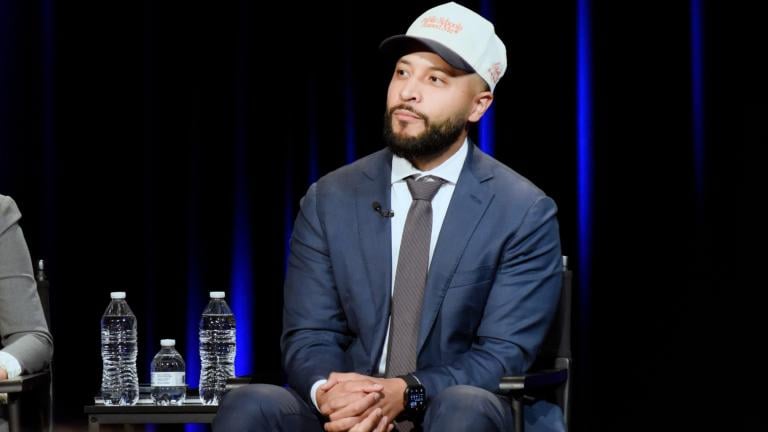
“I’m hearing a lot about politics here and not a lot about children,” member Che “Rhymefest” Smith said. “And I want to thank the superintendent for creating a budget that prioritizes not only children, but prioritizes what she heard — what we heard — in community gatherings.”
But others expressed doubts about whether the spending plan is realistic, particularly around the TIF funding and pension payment.
Michilla Blaise, who was appointed to the board by Mayor Johnson, called the proposal “foolhardy,” saying that avoiding the pension payment would not make CPS a good partner to the city, which also needs to balance its own budget.
“I don’t understand how this is collaborative,” she said, “I don’t understand how this makes sense, I don’t understand why we’re not paying for our employees’ pensions.”
Emma Lozano, also a Johnson appointee, said that in avoiding the pension payment, this proposal is destined to “fail.”
“We’re dreaming here,” she said. “That’s not the way things work and I’m hoping there’s another budget report that’s going to add the (pension) payment because I don’t see how this is gonna work.”
The budget proposal comes a day after interim CPS CEO Macquline King joined leaders from the city and the Chicago Teachers Union in briefing alderpersons and state legislators on the district’s spending plan at City Hall.
Speakers at Wednesday’s meeting called on the board to avoid any classroom cuts in closing the budget gap, saying it wasn’t students and parents who caused that shortfall, and it shouldn’t be on them to fix it.
“I did not move back to Chicago to be concerned about whether or not the school near us would be open or the teachers in it would look like them,” said Alexis Waddell, a mother to three young children. “I moved back so that I can create that opportunity for them, build that pride in them and allow them to contribute to their community as the great learners that they already are.”
Waddell said the city for too long has disinvested in its schools in Black and brown communities to a point where “we’re looking at this $734 million deficit as if it’s our problem.”
Johnson this week said “all options will be on the table” to resolve the district’s budget gap, but he reiterated that until CPS gets the $1.6 billion in necessary state funding, public education in Chicago will continue to be threatened.
After feuding for months with Martinez — who said he rejected the mayor’s call for him to resign last year — Johnson said he’s not worried about another similar situation playing out, saying King is “certainly qualified to lead in this moment.”
Martinez officially left CPS in June, and the board remains in the process of selecting a permanent replacement.
“As we ensure that our vision for public education comes to fruition,” Johnson said at a press event Tuesday, “it’s going to be incredibly important that we make the necessary investments to ensure that every single child across the city has a fully-funded school which allows them to reach their potential.”