Crime & Law
Top Prosecutor Calls Program Allowing CPD Officers to Directly File Felony Gun Charges ‘Overwhelming Success.’ Critics Renew Objections
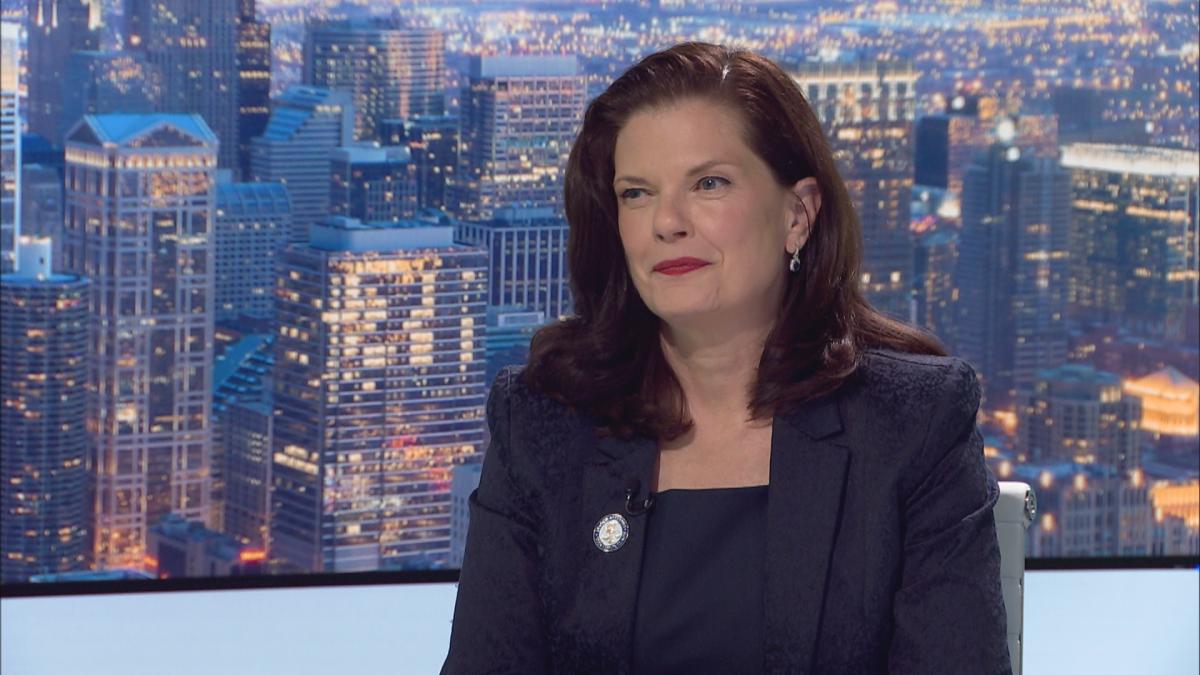 Cook County State’s Attorney Eileen O’Neill Burke appears on “Chicago Tonight” on May 27, 2025. (WTTW News)
Even as the Cook County state’s attorney declared a pilot program that allows Chicago police officers to file felony gun charges without first getting approval from a prosecutor an “overwhelming success,” critics renewed their objection to the effort, saying it creates a “two-tiered system of justice” in Chicago.
The Felony Review Bypass Pilot Program, which has the support of Mayor Brandon Johnson and Chicago Police Supt. Larry Snelling, allows Chicago police officers to charge those arrested in two South Side police districts with unlawful possession of a weapon, unlawful possession of a weapon by a felon and aggravated unlawful possession of a weapon — which are felonies — without getting the approval of an assistant state’s attorney after a CPD lieutenant signs off.
The pilot program has been in effect for nearly seven months in the South Side’s Englewood (7th) Police District and for nearly five months in the Calumet (5th) Police District. In all other parts of Chicago and Cook County, an assistant state’s attorney must sign off before felony gun possession charges are filed.
Officers assigned to the Englewood District used the pilot program to charge 68 people with gun possession between January and July, according to data provided to WTTW News by the State’s Attorney’s Office.
In the Calumet Police District, officers charged 24 people with gun possession between April and July, according to the State’s Attorney’s Office.
Seventy-nine of those 92 cases have resulted in an indictment by a grand jury or a finding of probable cause by a judge, allowing a trial to proceed, officials said. Eight cases have resulted in charges but are pending; charges have yet to be brought in three cases; and in two cases the initial felony charges were downgraded to misdemeanor complaints, according to the State’s Attorney’s Office.
That data is not publicly available and is not updated regularly.
“These numbers demonstrate the program is working, that the extensive training protocol is paying off, and that CPD is using the tool judiciously,” said Matt McGrath, a spokesperson for Cook County State’s Attorney Eileen O’Neill Burke. “By every measure, the program has been an overwhelming success, and broader expansion within Chicago and to suburban jurisdictions is being planned.”
Allowing police officers to directly file gun possession cases frees up assistant state’s attorneys to focus on the most serious crimes while preventing officers from spending hours waiting for charges to be approved, O’Neill Burke and Snelling have said.
But Cook County Public Defender Sharone Mitchell Jr. called the pilot program “really dangerous” and reiterated his call for it to be scrapped in an interview with WTTW News.
“It is incredibly problematic to remove a layer of due process,” Mitchell said. “It is especially problematic because of Chicago’s history of police misconduct.”
Mitchell said he was concerned that the pilot program was operating without transparency, with the only data on its implementation and execution coming from the State’s Attorney’s Office, rather than an oversight agency.
The program creates a “two-tier system of justice” that does not offer those arrested in communities where a majority of Black Chicagoans live the same level of protections against police misconduct as those arrested in predominantly White neighborhoods, Mitchell said.
“It is a really scary thing to have different systems of justice for different communities,” Mitchell said.
More than 85% of the residents of the two police districts where the pilot program is in effect are Black, according to city data.
O’Neill Burke made no changes to the pilot program after a coalition of 136 organizations and people, including the American Civil Liberties Union of Illinois, the Chicago Appleseed Center for Fair Courts, the Better Government Association and the Rainbow PUSH Coalition, sent her a letter in May urging her to halt the program.
“It undermines fundamental principles of equal justice and due process, erodes public trust, and poses serious risks to communities who are already overpoliced,” according to the letter. “Lack of independent review at this stage increases the risk of unconstitutional arrests being taken to court and shaky legal cases proceeding to prosecution, and it undermines accountability and trust within the legal system.”
O’Neill Burke never responded to that letter, according to Stephanie Agnew, the co-executive director of the Chicago Appleseed Center for Fair Courts.
Through the end of June, the number of homicides in Chicago dropped 30% in 2025, as compared with the same period in 2024, according to Chicago police data. The number of shootings is also down 30%, according to police data.
The five alderpeople who represent Englewood said in April they shared many of Mitchell’s concerns.
Johnson told WTTW News in April that the problem will allow officials to see “if we can expedite the process that one, solves crime, but it doesn’t impede officers from returning back to the people.
Contact Heather Cherone: @HeatherCherone | (773) 569-1863 | [email protected]
WTTW News coverage of policing and police reform is supported by The Joyce Foundation.