A Safer City
Federal Court Monitor: Expand Consent Decree to Include Traffic Stops, But Give Chicago Police Oversight Board Some Control
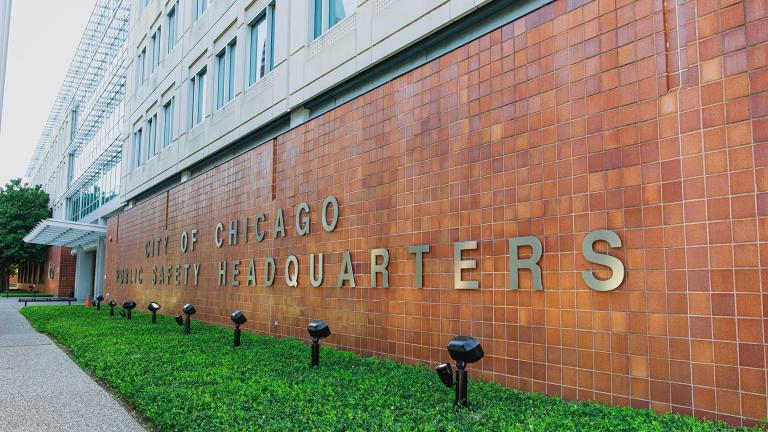
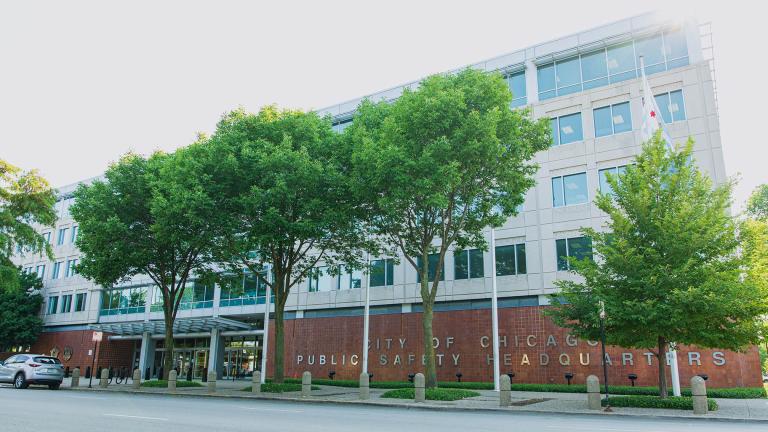
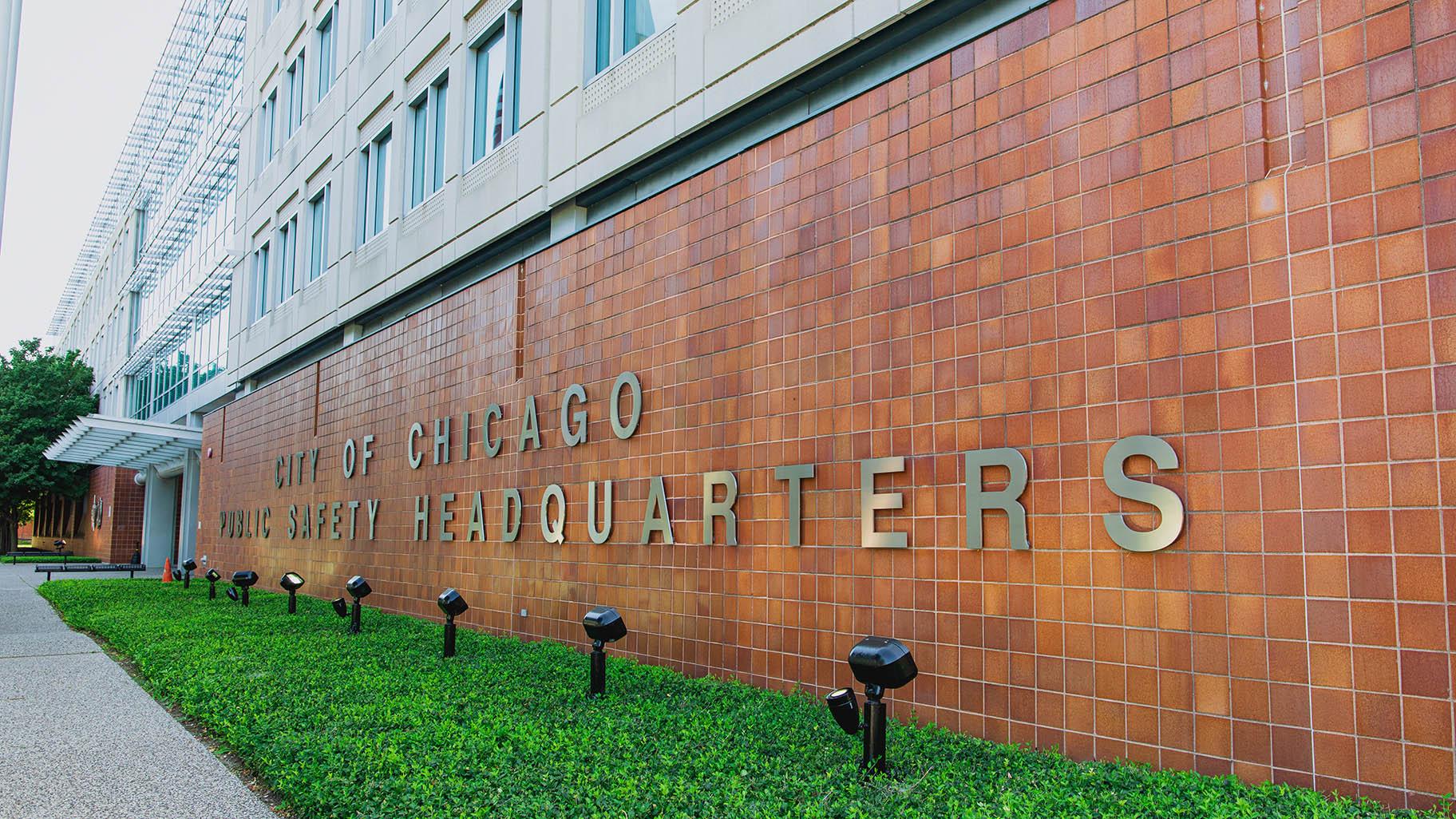 Chicago Police Department Headquarters, 3510 S. Michigan Ave. (Michael Izquierdo / WTTW News)
A federal court order requiring the Chicago Police Department to change the way it trains, supervises and disciplines officers should be expanded to include traffic stops, but the city’s new police oversight board should be given some power over the hot-button issue, according to a new recommendation released Friday by the team overseeing the reform push.
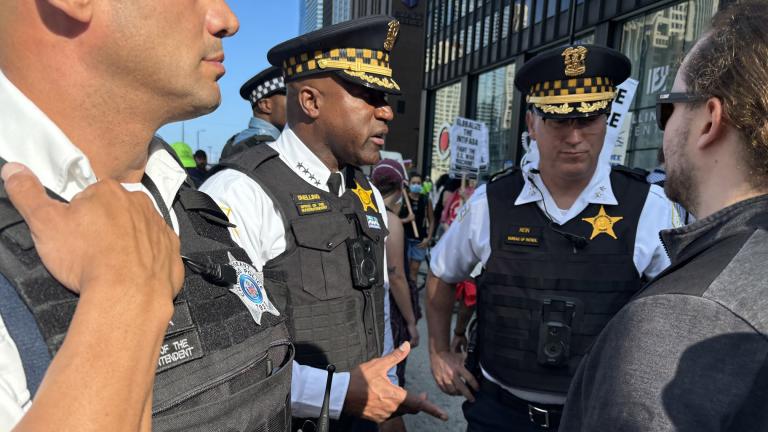
WTTW News was the first to report that the independent monitoring team charged with enforcing the federal court order known as the consent decree and Chicago Police Supt. Larry Snelling had reached an agreement to allow a federal judge to oversee the department’s use of traffic stops. That accord came two months after four officers fired 96 bullets in 41 seconds during a West Side traffic stop in March 21, killing 26-year-old Dexter Reed.
Investigators believe Reed fired at police first, wounding an officer, after he was stopped because officers believed he was not wearing his seat belt, according to the Civilian Office of Police Accountability, the agency charged with investigating police misconduct.
But the proposal to expand the consent decree for the fourth time ran into a brick wall of opposition from of progressive alderpeople and a coalition of police reform groups that sued the city over CPD’s use of traffic stops in June 2023, including the American Civil Liberties Union of Illinois.
A spokesperson for the Chicago Police Department declined to endorse the recommendation from the monitoring team, which was contained in a new report released Friday.
“We are reviewing this assessment and continue to work with both the independent monitor and the Community Commission for Public Safety and Accountability on traffic stops,” according to the statement.
Anthony Driver, Jr., the president of the Community Commission for Public Safety and Accountability, known as the CCPSA, said the police oversight board should be “an equal partner” with the monitoring team, judge and the office of Illinois Attorney General Kwame Raoul.
“We don’t want to chip away at the power of the CCPSA by expanding the consent decree,” Driver said.
The report from the monitoring team did not include specific recommendations about what power the CCPSA should have, nor did it address how the proposed expansion of the consent decree would affect the pending class-action lawsuit filed by the ACLU against CPD over its use of traffic stops.
The judge in that case ruled there is enough evidence that the city intentionally discriminated against Black and Latino drivers on the basis of race, and that the mass traffic stop program unlawfully burdens Black and Latino drivers disproportionately, for the lawsuit to proceed, court records show.
More than 51% of all drivers stopped by police officers in 2023 were Black, and nearly 31% of drivers pulled over by Chicago police officers were Latino. By comparison, just 13.6% of drivers stopped by Chicago police were White, according to a report from Impact for Equity, a nonprofit advocacy and research organization that has helped lead the push for police reform.
Approximately 73% of the traffic stops made by Chicago police officers in 2023 were prompted by improper registration or an equipment violation, according to the report.
Just 2.2% of those stops led to an arrest, and a gun was recovered in 0.5% of stops, according to the report. Approximately 4.4% of stops led to a citation, according to the report.
U.S. District Court Judge Rebecca Pallmeyer, who is overseeing the reform effort, could decide whether, and how, to expand the consent decree at any moment.
Alexandra Block, director of the Criminal Legal System and Policing Project at the ACLU of Illinois who represents the Black and Latino Chicagoans who sued the city, said her organization favors having as much “community voice” as possible in the effort to change how CPD uses traffic stops.
“That should include our clients,” Block said.
The consent decree has already been expanded to govern pedestrian stops.
Both Black and Latino Chicagoans were more likely than White Chicagoans to be stopped and frisked, according to a June 2023 report from the monitoring team.
Officers are only permitted to conduct pat-down searches if they suspect criminal activity, according to the report. A search is more intrusive than a pat-down and requires probable cause or consent.
Contact Heather Cherone: @HeatherCherone | (773) 569-1863 | [email protected]