

A Safer City
A WTTW News reporting initiative dives deep into neighborhood crime, violence and public safety as residents, policymakers and community groups work to address the growing issue.

It took less than five months for the Chicago Police Department to exhaust the $100 million earmarked for overtime set by the Chicago City Council as part of the city’s 2023 budget, according to data obtained by WTTW News through a Freedom of Information Act request.

The relationship between social media and violence might not be as cut-and-dry as some make it to be. There’s sometimes a perception that social media apps fuel violence, but researchers say that correlation can be overblown.
Recent data shows that the murder rate in the U.S. is experiencing one of the largest decreases ever. Yet that good news doesn’t always make the headlines. Instead, mainstream media is often accused of furthering a narrative about rampant crime.
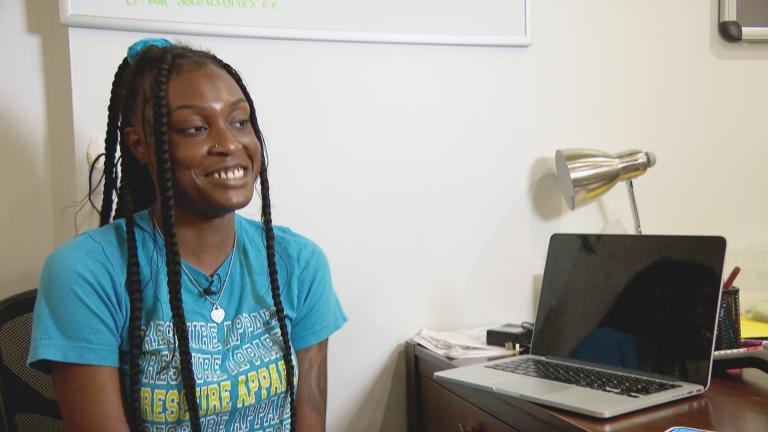
Free Spirit Media is a nonprofit that works with young people 11 to 25 years of age from the West and South sides of Chicago. Staff members work to teach students to create media arts projects, like short films and news stories, to amplify their own voices.
According to Chicago Police Department figures, 33 people were shot in 24 separate shooting incidents between 6 p.m. Friday and 11:59 p.m. Sunday.

Chicago had the greatest number of mass shootings in the study.
Chicago had the greatest number of mass shootings during that period with 141, which led to 97 deaths and 583 injuries. According to the study, Milwaukee had the highest segregation index.

In the 30 cities examined, homicides declined 9.4% in the first half of this year compared to the first half of last year, with about 200 fewer homicides in that period.

Research shows a correlation between youth unemployment and crime. Mayor Brandon Johnson has made teen employment a public safety priority. He’s pledged to double the number of jobs in the city’s youth employment program.
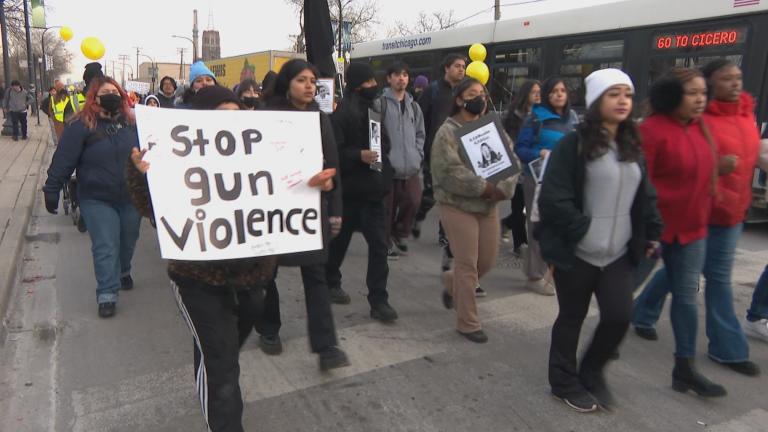
Gun deaths among U.S. youth rose 50% in just two years. Black children and teens were roughly five times as likely as their White counterparts to die from gunfire in 2021, according to the Pew Research Center.

Public safety isn’t just about addressing the root causes of crime or stopping people from picking up a gun. Sometimes, making a neighborhood safer is as simple as a water balloon or a bounce house.
Kenneth Griffin said as a young man growing up in Englewood, he didn’t have many positive interactions with the police. That’s part of the reason the trained chef became a Chicago police officer — to create connections between young people and police in his community.
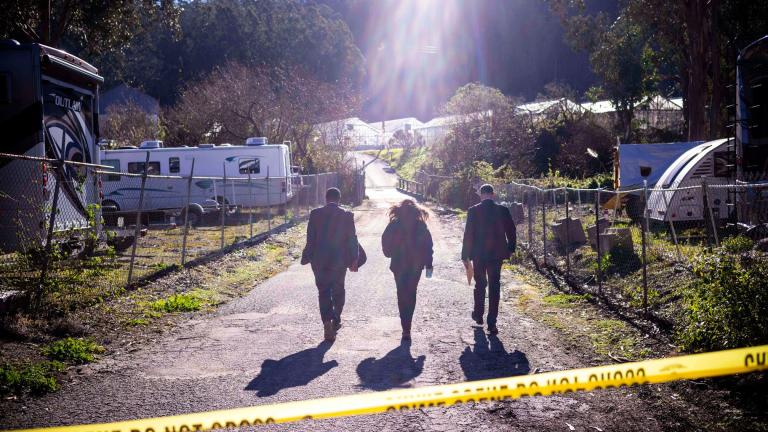
From Jan. 1 to June 30, the nation endured 28 mass killings, all but one of which involved guns. The death toll rose just about every week, a constant cycle of violence and grief. Six months. 181 days. 28 mass killings. 140 victims.
The proposed settlement is set to be considered next week by the City Council’s Finance Committee on Monday. A final vote of the City Council could come on Wednesday.
The program pushes $250 million in funds to the state’s hardest hit communities. Designed to interrupt and prevent gun violence, it’s a three-year investment that started at the end of 2021.

Exposure to violence is traumatic for everyone involved and can cause both immediate and long-term psychological damage. That damage can lead to depression, anxiety, post-traumatic stress disorder, sleep and substance abuse disorders and even suicide.
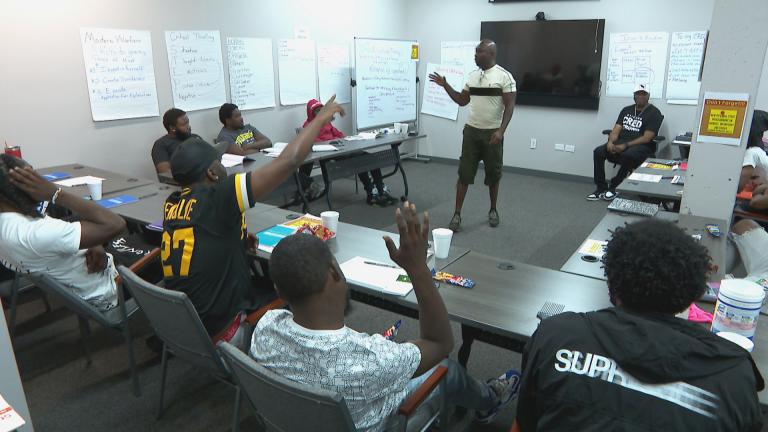
Chicago CRED aims to approach violence reduction by engaging with those most at risk of being shot. The nonprofit organization, which has nine locations, provides young men in the city with opportunities to change their lives through services like life coaching and education.
Trending
Who Is Running, or Thinking About Running, to Become Chicago’s Next Mayor

Suspend CPD Officers, Sergeant Repeatedly Accused of Making Improper Traffic Stops for a Combined 330 Days: Police Brass

Johnson’s Debt Refinancing Plan Results in Just Half of What He Promised, Forcing Officials to Scramble to Fill Budget Gap

Addiction Recovery Clinic Sees Increase of 7-OH Patients as Feds Seek to Crack Down on the Opioid-Like Drug

No Tax Hikes or Layoffs Needed to Close Cook County’s $550M Gap Thanks to ‘Budget Magic’: Preckwinkle

Sign up for the WTTW News newsletter