Crime & Law
$9M Crypto Coin Scheme Among Chicago Cases Highlighted by Feds in DOJ Fraud Crackdown
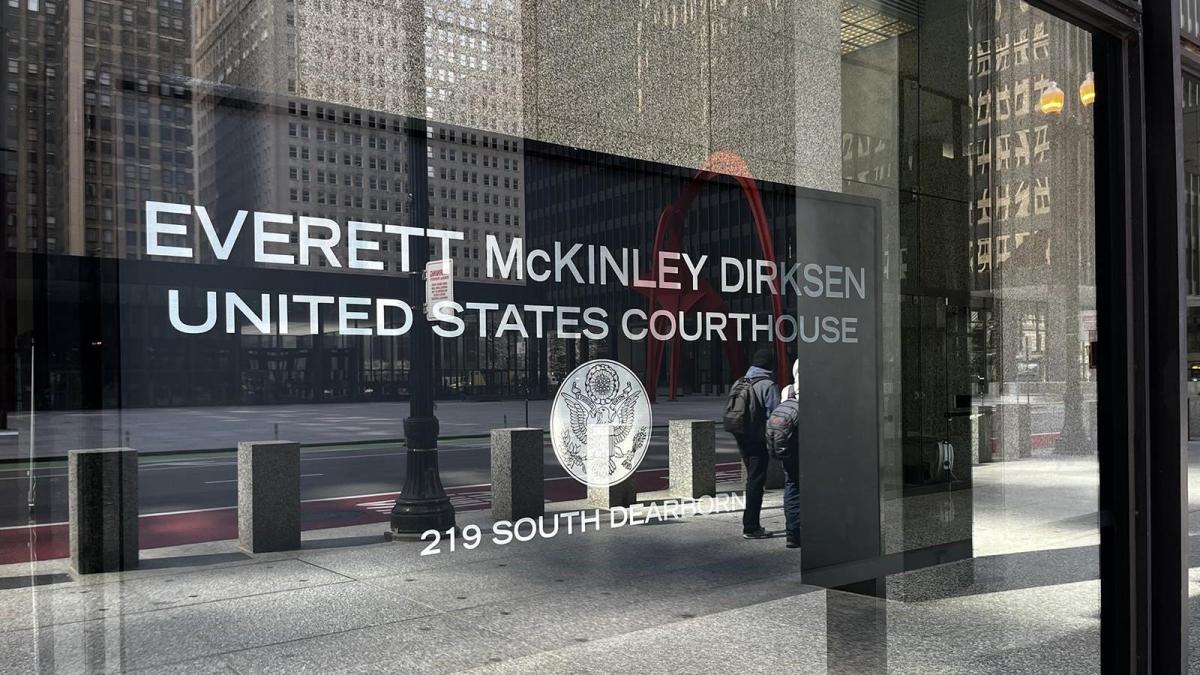 The Dirksen Courthouse is pictured in Chicago. (Capitol News Illinois)
Chicago’s U.S. Attorney’s Office highlighted a series of indictments and criminal sentences it says were tied to what the Department of Justice is calling the largest-ever nationwide crackdown on fraud and scam schemes.
The DOJ on Tuesday said that following a “surge” in resources directed to the investigation and prosecution of predatory scams beginning in March, prosecutors across the U.S. have filed 400 criminal cases against more than 800 defendants.
Andrew Boutros, U.S. Attorney for the Northern District of Illinois, detailed several such cases, including charges against the creator of a crypto coin who allegedly carried out a $9 million “rug pull” fraud.
“Fraud is not a victimless crime,” Boutros said in a statement. “These schemes can devastate families, seniors, and businesses. The Chicago U.S. Attorney’s Office is committed to vigorously investigating and prosecuting those who seek to defraud others for personal gain.”
The “rug pull” scheme was allegedly carried out by Alexander Sisemore, 28, who was charged in Chicago last month with three counts of wire fraud, which are each punishable by up to 20 years in prison.
Sisemore, who created a digital asset called “Kishu Inu,” allegedly lied to actual and potential investors on social media in order to boost the asset’s price in the cryptocurrency market, while he and others surreptitiously sold a large quantity of Kishu Inu tokens.
Kishu Inu reached a market cap of more than $1.6 billion, and Sisemore allegedly made some $9 million off the fraud scheme.
In another case Boutros’ office highlighted Tuesday, Makaio’ Kekoa was charged in August after he allegedly swindled numerous investors out of $180,000. According to federal prosecutors, Kekoa lied to his victims about investing their money into short-term, high-yield opportunities.
But those investment opportunities never existed, prosecutors said, and Kekoa instead allegedly used their funds to cover his own gambling expenses and other costs.
Federal officials on Tuesday announced that as part of that operation, authorities have recovered nearly $17 billion in illicit funds and prevented more than $690 million in potential victim losses.
“Predatory scams against the American people will not be tolerated,” U.S. Attorney General Todd Blanche said in a statement. “The unprecedented results of this surge are just the beginning. We will continue prosecuting those who perpetrate these schemes and disrupting the activities of transnational criminal organizations before they reach American shores.”