Politics
Giannoulias, Quigley, Wilson — But Not Johnson — Among First to File Signatures Ahead of Chicago’s February Mayoral Election
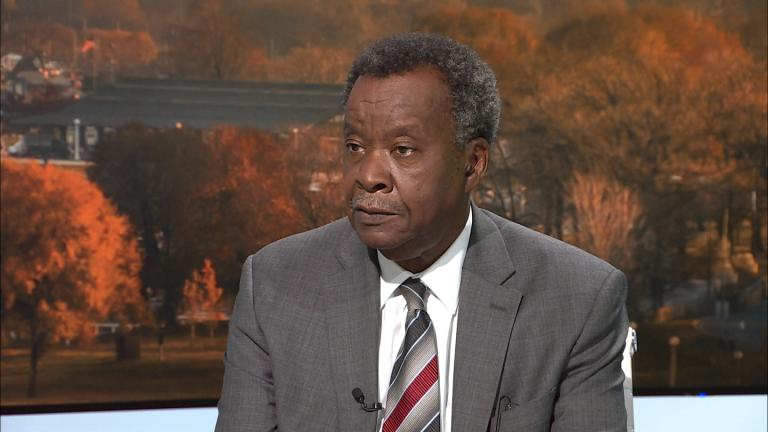
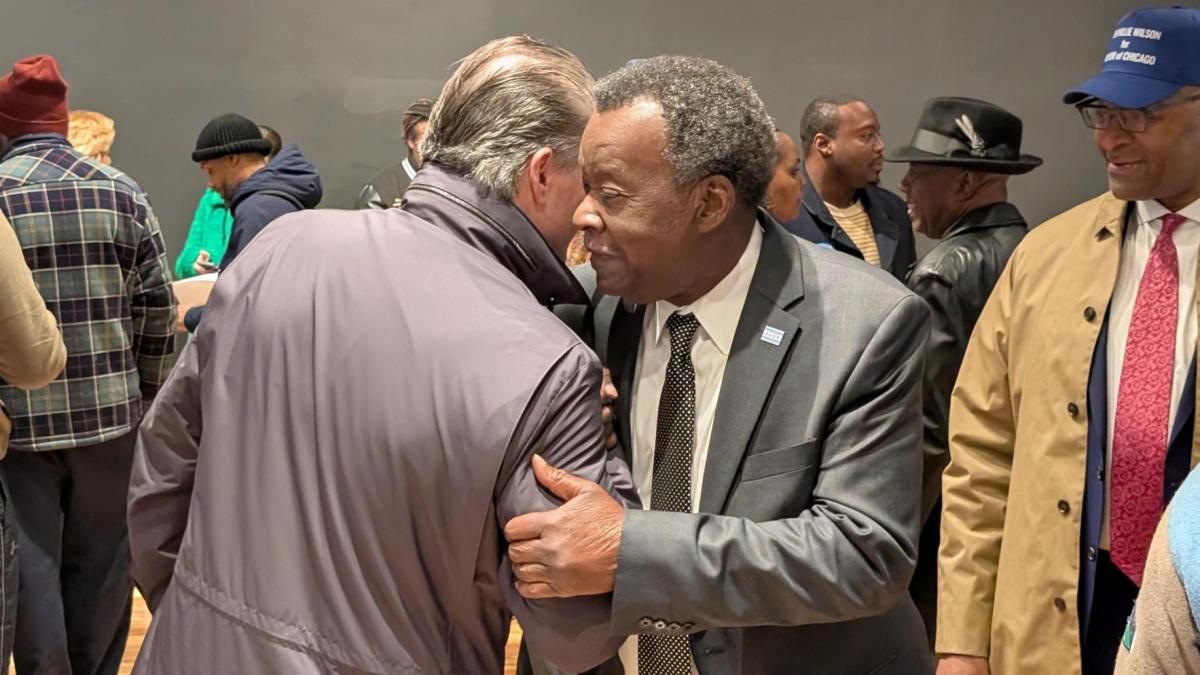 Willie Wilson was the first mayoral candidate in line as filing opened on Oct. 19, 2026. (Matt Masterson / WTTW News)
The first batch of candidates seeking to deny Mayor Brandon Johnson a second term each filed tens of thousands of signatures Monday to officially get on the Feb. 23 ballot, waiting in line for hours among aspiring alderpeople, staff members, lawyers and candidates for other offices.
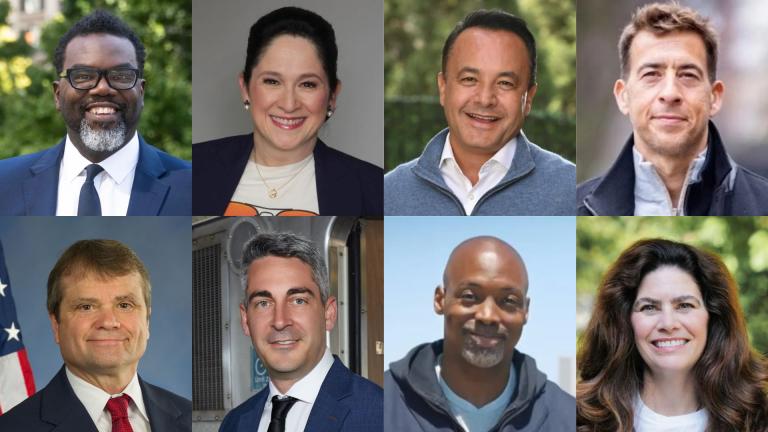
Illinois Secretary of State Alexi Giannoulias, U.S. Rep. Mike Quigley, businessman Willie Wilson, longtime lobbyist John Kelly and former Chicago Housing Authority chair Matt Brewer played their role in the quadrennial political extravaganza that did not return to the pedway beneath the George W. Dunne Cook County Office Building, but instead took place this year at a vacant State Street storefront near Adams Street.
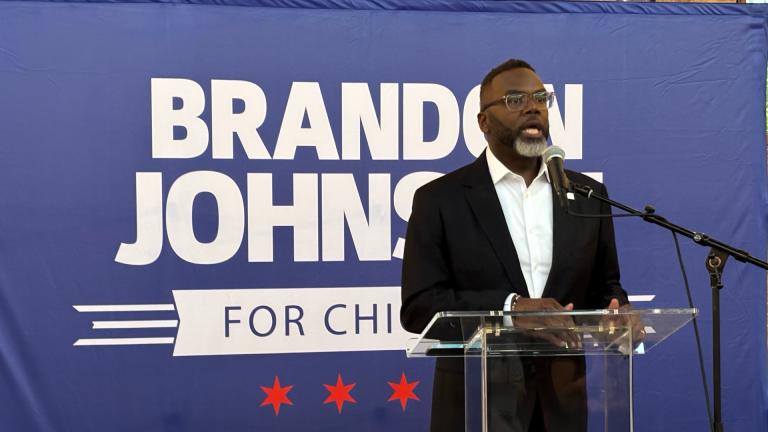
While the incumbent mayor was a major talking point for many of the candidates, Johnson himself did not file Monday, ceding the spotlight to his rivals, as well as a chance to be listed first on the ballot, since they were all in line by 9 a.m. Monday.
Other high-profile candidates including Comptroller Susana Mendoza, Cook County Board of Review member George Cardenas and Cook County Treasurer Maria Pappas also did not appear Monday.
In addition to running for mayor, Giannoulias will ask Illinois voters for another four-year term as secretary of state on Nov. 3, facing Republican nominee Diane Harris.
On top of submitting his petitions, he received another boost in his bid to unseat Johnson on Monday with new polling paid for by the Mansueto Institute for Urban Innovation at the University of Chicago and conducted by NORC's Chicago Speaks survey showing Giannoulias as the race frontrunner.
Giannoulias was the choice of 25% of likely voters, according to the new poll, ahead of Johnson at 13.6%. Mendoza (9.5%) and Wilson (6%) were the only others to top 5% in the polling, while 34% of likely voters said they’re still unsure of who they would vote for.
“The most important number in this poll,” Christopher Berry, faculty director of the Mansueto Institute, said in a statement, “just may be that 34% who say they’re yet not sure who they’re voting for. That’s a larger share than any single candidate, which tells you that this race is far from over. A lot will depend on how the field consolidates and whether any of the lesser-known candidates can break through.”
Giannoulias also led the way in the poll’s “excitement” factor, with 59% of respondents saying they are excited about his campaign, the highest of any candidate, ahead of Mendoza (46%), Pappas (39%) and Johnson (32%).
The poll also found that 55% of respondents said they are “not excited” about a second term for Johnson, whose job approval stands at 22%.
Giannoulias holds a massive lead in campaign funding — he collected more than $19 million while no other candidate topped $3 million — but his opponents on Monday dismissed the idea that next year’s election will be decided simply by spending.
“We know how to win campaigns,” Quigley said. “This is how I operate, I’m in crowded fields, I’ve been outspent 10-to-1, 11-to-1 before, and won by five points. It’s who we are.”
Brewer said he was “late to the party,” announcing his campaign in June, and while he said he was one of the race’s top fundraisers in the most recent quarter, he knows his funding won’t match Giannoulias.
“I hope that voters are still voting on principles and people instead of politics,” he said Monday. “We’ll have the money we need to run the race. We certainly won’t have $20 million.”
The Race for Ballot Position
Conventional wisdom holds that the candidate listed first on the ballot gets a bump, and in a crowded race, many were eager to fight for that spot.
Any remaining candidates have until 5 p.m. Oct. 26 to file their petitions. Those who file at the deadline will be entered into a lottery for the last spot on the ballot.
Wilson — a businessman and philanthropist who has made previous mayoral runs in 2015, 2019 and 2023 — was the first mayoral candidate through the doors Monday morning.
“We feel very good that we’re going to be able to win this race,” said Wilson, who submitted around 35,000 petitions.
As soon as candidates turned in their petitions, Chicago election officials began scanning the sheets of signatures, preparing to make them available to the public as soon as possible — which will allow their rivals to go through them with a fine-tooth comb. If they find enough questionable signatures on their opponents’ petitions, they can challenge them — in the hopes of tossing them off the ballot.
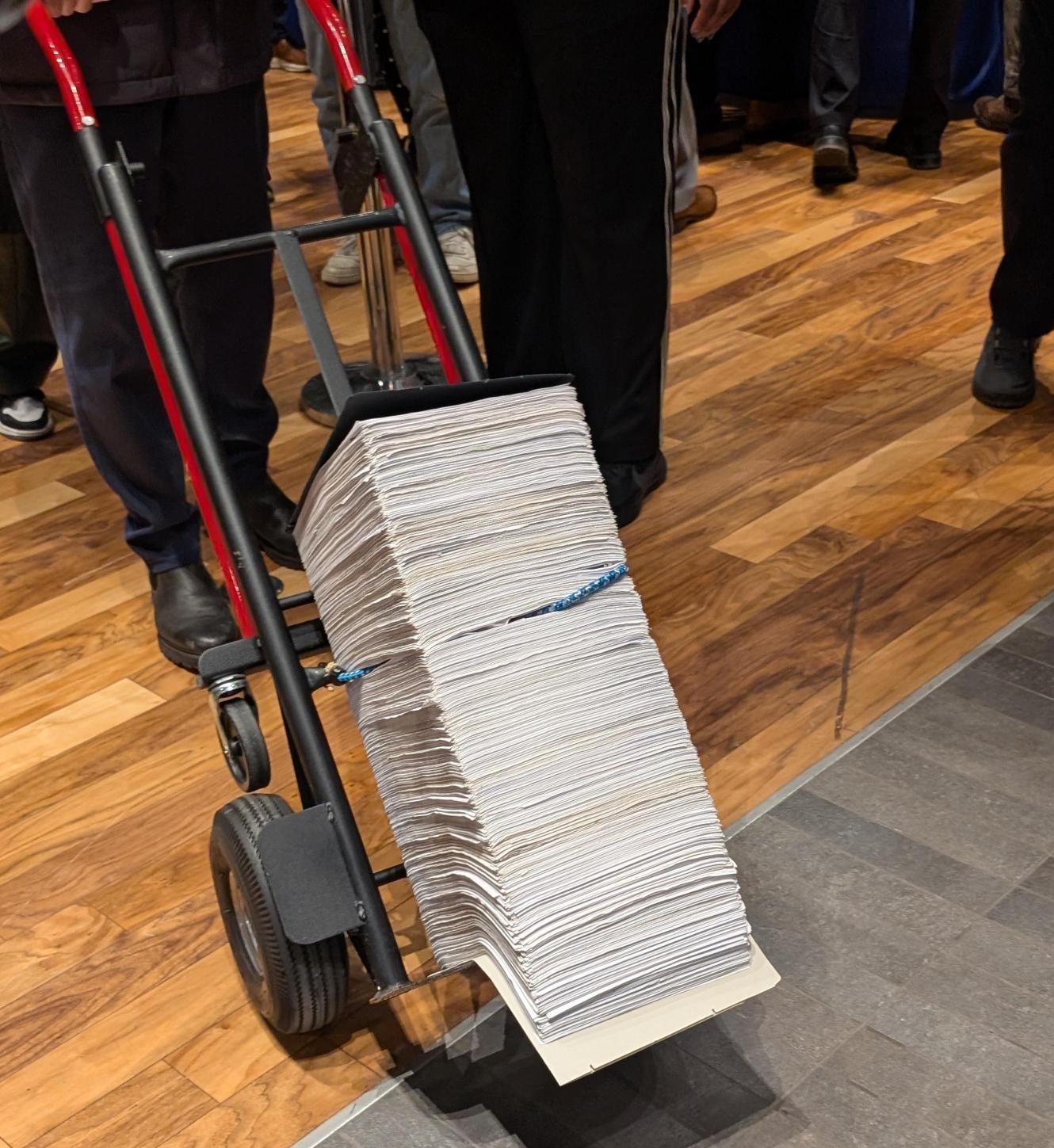 John Kelly wheels in his petitions on the first day of filing for Chicago’s mayoral race on Oct. 19, 2026. (Matt Masterson / WTTW News)
Mayoral candidates must submit at least 12,500 signatures from registered Chicago voters. Those who filed less than three times the required amount could find themselves in the crosshairs — and facing weeks of wrangling over hundreds — if not thousands — of signatures.
All objections must be filed by Nov. 2, and the ballot is scheduled to be certified by Dec. 17, records show.
Quigley formally asked Chicagoans to elect him as mayor just days before he asks some of those same voters to send him back to Congress for another two years to represent Illinois’ 5th Congressional District, which covers most of the city’s North Side.
He said it was an “easy choice” for him to jump into the mayoral race because “Chicago is in such a tough position.”
“The next mayor is gonna have to build coalitions, I’ve done that before,” Quigley said Monday. “The next mayor is going to know how local government works and how to restructure it to make it more efficient, not because we hate it but because we love it and know how important it is. … I would say I’m the only one in this field who has made all those tough choices.”
Also in line were dozens of City Council candidates, but not three incumbent alderpeople. Alds. Marty Quinn (13th Ward), Matt O’Shea (19th Ward) and Mike Rodriguez (22nd Ward) will leave the City Council at the end of their terms.
In addition to filing a statement of candidacy with the Chicago Board of Election Commissioners, would-be mayors, clerks, treasurers and alderpeople must file a statement of economic interests with the Cook County Clerk and the Chicago Board of Ethics.
If they want to raise and spend more than $5,000 on their bid for office, candidates will also have to form a campaign committee with the Illinois State Board of Elections.
Entrepreneur Joe Holberg loaned his campaign $400,000 on Dec. 26, which will allow all candidates to raise nearly unlimited amounts of cash for their campaigns.
The law is designed to even the playing field between wealthy candidates and those who cannot self-fund their campaigns by allowing them to raise bigger amounts from contributors.
State law limits individual donors to no more than a $7,300 contribution to a single campaign in most races. Businesses can contribute no more than $14,600 and political action committees are capped at $72,800, according to the rules.
Limits on campaign contributions imposed by city laws remain in place. Companies and people doing business with the city or its sister agencies are limited to contributing $1,500 to any one candidate per year, according to the city’s campaign finance ordinance.
Mail-in ballots are scheduled to be sent to voters on Jan. 14, the same day early voting is set to start.
Voters will finally have their say on Feb. 23 — unless no candidate gets 50% of the vote plus one. In that case, the top two candidates head to the runoff on April 6.
The new term for the mayor, city clerk, treasurer, all 50 members of the Chicago City Council and the members of the District Councils starts May 17.
Related Stories