Business
Beef Prices Rise as US Cattle Herd Remains Near Historic Low
Beef eaters may have noticed a price hike at the grocery store in the past year.
According to the U.S. Bureau of Labor Statistics, ground beef prices hit $7.16 per pound in August 2026, a 7.9% jump from 2025. That’s more than double the overall annual inflation rate of 3.4%, and nearly triple the rate for food overall.
But regardless of diet, taking a look at these prices shines a light on how trade policy, fuel prices, disease and industry consolidation are affecting a supply chain.
Like many industries, beef production carries risk. Decisions about a business need to anticipate future prices and market conditions that can change rapidly. But the beef industry faces unique complications for long-term planning.
For one, cattle farmers are limited in how quickly they can grow their herd. Unlike chickens, which lay multiple eggs and reach maturity in a matter of months, female cows typically only produce one offspring per year. These calves then take years of feeding before they can be sold.
The current beef cow herd size in the U.S. is near its lowest point since the 1960s, according to data from the U.S. Department of Agriculture. The herd sat at 28 million head in July. That’s about the same size as last year, but down from about 32 million in 2020.
Growing or shrinking a herd boils down to a deceptively complicated decision for farmers — should they sell cows for cash now, or hold them back to grow their herd for later?
According to Josh St. Peters, executive vice president of the Illinois Beef Association, farmers make those decisions in response to market signals. But because of the long production timeline, farms can take years to catch up to those signals.
And because the process of slaughtering, processing and selling beef involves so many steps that come downstream of farms, St. Peters said, farmers have little control over the price they can actually fetch on the market.
“Our farmers end up being the price taker, not the price maker along the way,” St. Peters said.
St. Peters said the majority of farmers in Illinois sell to packers or processors on a cash market, and those stakeholders have greater control over the price consumers pay for the final product. Recently, although prices at the store are rising, farmers haven’t been able to get much in return for their cows.
“The economic incentives have really been favoring decreasing herd sizes,” said Brittney Goodrich, a professor of agricultural economics at the University of Illinois Urbana-Champaign.
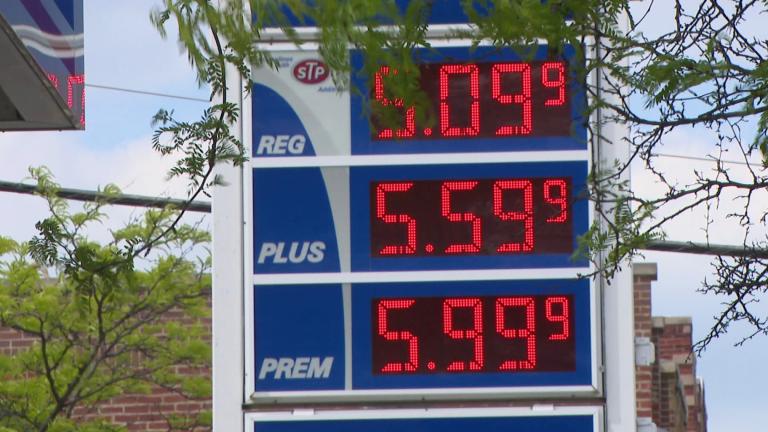
Not only have farmers not been able to sell cows for high prices, but persistent drought around the country has driven up the cost of feed. And the more recent spike in fuel prices also cuts into the bottom line for farmers.
A small herd size then feeds into a chicken-and-egg — or cow-and-calf — problem for growing the herd. As the herd shrinks, the market for those cattle tightens. That can lead to rapid price swings in response to real or anticipated changes to supply and demand, Goodrich said.
“When you have things like trade uncertainty, trade announcements, slaughter and processing plant closures, different concerns with New World screwworm, you basically have really high price fluctuations,” Goodrich said.
“We’ve actually seen in the last two months or so, feeder cattle prices dropping by 10%,” Goodrich said. “This fluctuation really makes it hard for these beef cattle farmers to invest in their herd.”
At the end of August, the Trump administration took action to incentivize imports of 300,000 metric tons, or 660 million pounds, of lean beef trimmings used to make ground beef.
St. Peters said this announcement left many farmers feeling frustrated and confused.
“It didn’t come from a market signal, it didn’t come from the marketplace saying we need to import more trim. … It had a lot of our economists that cover the beef industry, but even just the day-to-day farmers and ranchers, scratching their heads about where this is coming from,” St. Peters said.
With more beef being imported, St. Peters said farmers in the U.S. are forced to sell their cows at lower prices. Meanwhile, he said this decision is having little impact on the price of ground beef at stores.
Still, Goodrich said beef consumption in the U.S. has remained steady despite rising prices, indicating there’s still a willingness to pay high prices.
Meanwhile, consumers and industry watchers will be keeping an eye on the herd size, and whether it gets rebuilt.
As for how long that could take?
“That’s the billion-dollar question,” Goodrich said.