Business
Strait of Hormuz Closure Continues to Disrupt Oil, Fertilizer Prices Around the Globe
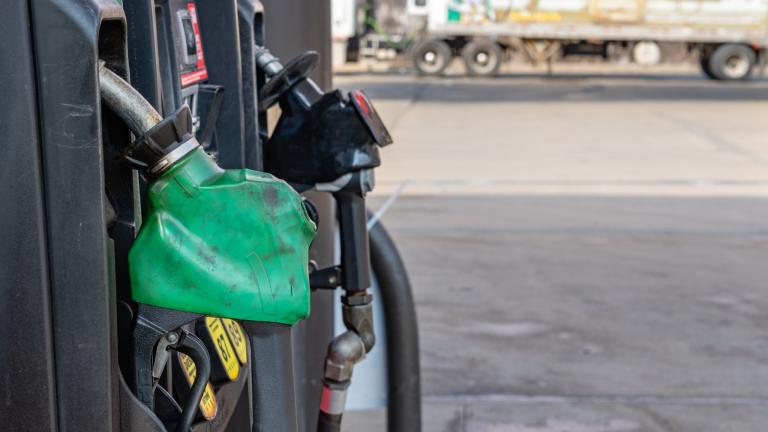
The pain at the pump that started at the beginning of the Iran war has only gotten worse in the months the conflict has gone on.
Gas prices in Chicago are up 70 cents from one month ago, and nearly $1.70 compared to last year, according to data from AAA.
Meanwhile, inflation is up, and disruptions to fertilizer shipments are leading to uncertainty in the agriculture business.
“This is the biggest disruption in the history of the oil market,” said Sam Ori, executive director of the Energy Policy Institute at the University of Chicago.
Although the United States is a net exporter of oil, the oil market settles on a global price per barrel. When the Strait of Hormuz closure disrupted 20% of the world’s oil shipments, oil producers in the U.S. raised their prices accordingly to meet the new demand.
But oil isn’t the only product disrupted by the Strait of Hormuz closure.
Fertilizer prices have gone up alongside natural gas, which is used as an input for making nitrogen fertilizers. Extended disruptions to this market could change farmers’ plans for next year’s growing season, like which crops to grow.
“Most Midwestern farmers secured their fertilizer prior to the conflict,” said Ken Foster, a professor of agricultural economics at Purdue University. “... There’s been very little disruption to farmers’ plans for the (2026) season. I think the thing to watch is the duration of this conflict, and if it goes on into the fall and starts to affect the (2027) crop-planning season.”
Foster said that so far, most food price increases have likely come through higher energy prices, which are related to the transportation and refrigeration of food.
An extended Strait of Hormuz closure could push these energy prices even higher.
“You’re starting to see in this market the buffers, the brakes on the market, start to erode,” Ori said.
According to Ori, global inventories were high at the beginning of the conflict. As we dip into those inventories and further restrict supply, prices could rise higher.
More spending on gas is likely to cause consumers to cut back — both on demand for gas, and on spending in other places.
When it comes to food prices, “the timing of the (conflict) resolution is super important,” Foster said. “If it gets resolved in time for farmers to begin making the 2027 crop decisions based on lower fertilizer prices — or the prospect of lower fertilizer prices — between now and next spring, it takes a lot of relief off that channel.”
Foster said that fertilizer markets will likely respond to a Strait of Hormuz re-opening within a matter of weeks, as long as shipments start up in earnest. But according to Ori, turning on the oil spigot might not be as simple.
“Even once the Strait (of Hormuz) opens, something that’s important to understand is that it is going to take some time for the oil market to really re-equilibrate,” Ori said. “For barrels to start flowing again, … I’m hearing more and more that it will take up to six months for the oil market to stabilize.”