Politics
TIF Districts Boosted Property Taxes but Failed to Spur Development in Blighted Neighborhoods: Report
Video: Joining “Chicago Tonight” on Aug. 31, 2026, is Matthew Wilson, associate director of the Great Cities Institute at the University of Illinois Chicago. (Produced by Andrew Montequin)
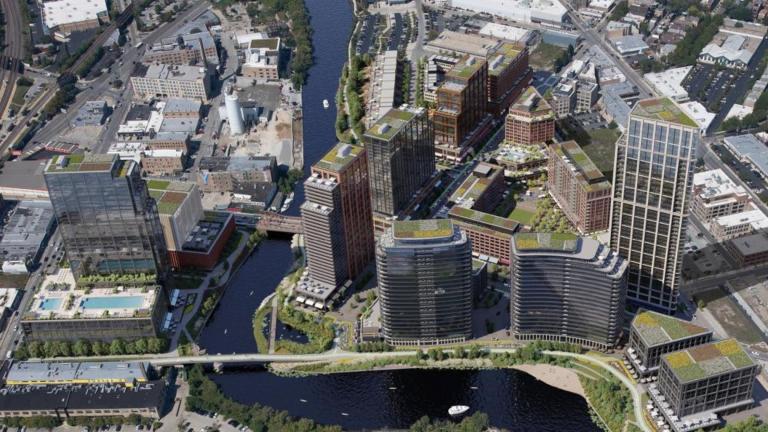
Chicago’s widespread use of tax increment finance districts caused property tax bills to increase significantly during the last 40 years, but did little to spur economic growth in the parts of the city that needed it most, according to a new study.
The districts, better known as TIFs, “reinforced the city’s historic economic inequities instead of reducing them — and all of this happened with little transparency or accountability from city planning officials,” according to a study released Wednesday by the Great Cities Institute at the University of Illinois Chicago.
In addition, Chicago’s use of TIF districts “diverted an extraordinary share of property tax revenue generated in TIF districts away from schools and other basic public services” into projects designed to combat blight, but failed to have any significant impact, according to the study from Teresa Córdova, the institute’s director, Juan González, Matthew Wilson and Jason “Jay” Campos.
Córdova, who chaired the Chicago Plan Commission from 2018-22, is also a professor of urban planning and policy in the College of Urban Planning and Public Affairs at UIC.
In all, $1.59 billion poured into the city’s 108 TIF funds in 2024, an increase of more than 51% since 2020, according to data from the Cook County Clerk’s Office.
Between 2014 and 2023, Chicago property owners saw their property tax bills grow 13.7% because of TIF districts, the study concludes.
But less than 2% of the growth in the assessed valuation of all Chicago properties can be attributed to subsidies from a TIF district, which means the vast majority of the growth the city has enjoyed was not due to their creation, the study concludes.
No other city in the United States has more TIF districts than Chicago, records show.
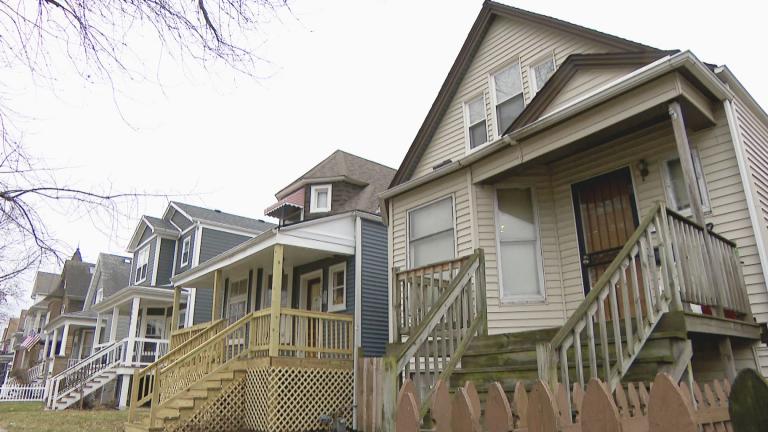
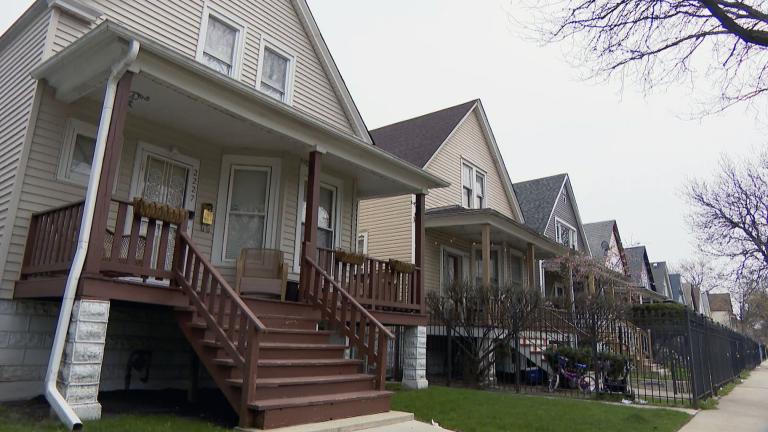
In order to create a TIF district, city officials determine an area is particularly blighted — maybe its roads and sidewalks are in bad shape, or its air is rife with pollution, or it’s strewn with vacant buildings.
Once that designation is in place, which lasts for 23 years, it freezes the amount of taxes that flow to fund crucial city services, like police, fire, libraries and schools.
But the rest — the tax increment, or the amount your taxes have gone up since the TIF was declared — flow into a special account the mayor and members of the Chicago City Council can use to subsidize projects designed to reduce blight.
That means the overall amount of taxes billed to property owners has to increase in order to cover the rising cost of providing those services.
The study declares that TIF districts in Chicago have become a “runaway tool” that have grown too large and too complex for both members of the public and elected officials to ensure they are actually being used to spur equitable development.
“The bulk of TIF funds over 40 years have gone to a handful of downtown and more affluent neighborhoods, a shift of resources and investment that is difficult to reconcile with TIF’s stated purpose of prioritizing ‘blighted’ or underperforming areas,” the study concludes.
More than half of all spending from the city’s TIF districts since 1984, when the first was created by former Mayor Harold Washington, funded projects downtown or in neighborhoods surrounding the Loop, the study concludes.
The city also paid banks and other financial institutions more than $2 billion in fees and interest to administer the districts, or nearly 17% of the $11.8 billion TIFs have spent in total, according to the study.
The study lauds the changes Mayor Brandon Johnson has made to the city’s use of TIF, including his decision to declare $2.1 billion that flowed into the districts to be in surplus during his first three years in office. That sent those funds back to the city, county and Chicago Public Schools.
Johnson has “begun to curb runway character of the TIF tool and returned much needed revenue and tax base to the city’s other taxing bodies,” according to the study.
That is nearly as much as his predecessors declared to be unneeded during the entire lift of the programs, according to the study.
But the study urges the city to establish independent oversight of the TIF program, since crucial decisions happen behind closed doors.
“That such a large amount of money could be reclassified from ‘restricted’ to ‘surplus’ in just one year suggests a planning process that is extremely pliable or easily manipulated,” according to the study.
The study also praises Johnson’s efforts to reduce the city’s reliance on TIF districts to fund economic development projects by borrowing $1.25 billion to fund a wide-ranging slate of projects designed to expand the supply of affordable homes and good-paying jobs.
That borrowing is set to be repaid as nearly half of the city’s TIF districts expire, according to the mayor.
However, the Johnson administration should work to reduce the cost of building units set aside for low- and moderate-income Chicagoans in order to build more apartments and reduce the shortage of affordable homes, according to the study.
The city should spend less in TIF funds on projects downtown and in other affluent neighborhoods by allowing those districts to expire, the study recommends.
In addition, the city should use TIF funds to help small businesses, job development and workforce training programs, the study recommends.
The city should also improve the quality of data available about TIFs and make it more comprehensible for the public, according to the study.
Note: This article was published Aug. 26, 2026, and updated with video Aug. 31, 2026.
Contact Heather Cherone: @HeatherCherone | (773) 569-1863 | [email protected]