Politics
Chicago Can’t Keep Trying to Poison Its Way Out of Rat Problem: Watchdog Report
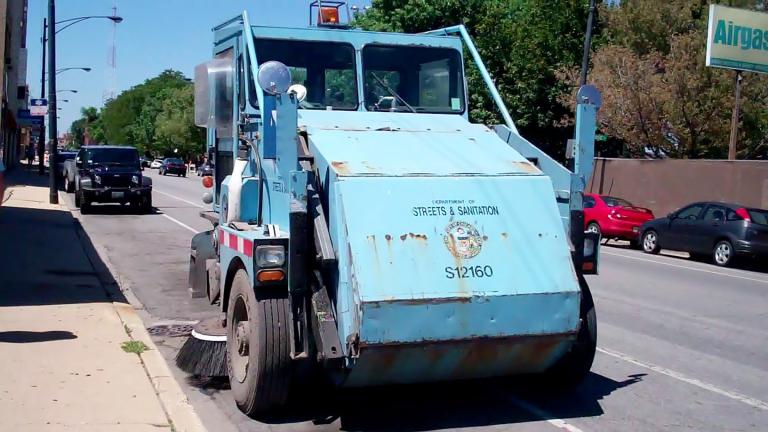
Chicago has a rat problem and it isn’t likely to improve if the city doesn’t come up with a new playbook, according to a just-released analysis by the city’s watchdog.
By relying almost exclusively on complaints logged with 311 to determine where abatement is needed, Chicago’s Bureau of Rat Control — under the Department of Streets and Sanitation — is playing defense rather than offense, the report concluded.
“This audit shows the need for a unified strategy, coordinated across city departments, to cut rats off from the resources that let them thrive and multiply,” said David Glockner, Inspector General for the city of Chicago. “Without a change in tactics, it will be nearly impossible to make lasting progress.”
The report also criticized the city’s heavy reliance on rat poison — known as rodenticide — as opposed to preventative tactics considered best practice within pest management.
“When the city responds to successive complaints without removing rats’ food and shelter through sanitation and habitat modification, it engages in ‘rat harvesting’: eliminating one generation of rats only to make way for another,” the report states.
These rodenticides often wind up having dire consequences for other wildlife, particularly raptors that eat rats, leading wildlife advocates to urge the city to discontinue the poison’s use and consider alternatives such as rat birth control.
The Audit
The audit focused on a period from July 2023 through July 2024. The objective was to determine whether Chicago’s approach to addressing rat infestations aligned with the principles of Integrated Pest Management, a framework endorsed by the Centers for Disease Control, the Environmental Protection Agency and the Illinois Department of Public Health.
In general, the audit found that Streets and Sanitation’s rodent control program was complaint-based, not integrated with other city services and that its primary goal was to poison rats.
The report’s recommendations for more effective rat control included:
— Inspections, monitoring of problem areas and development of methods to address root causes.
Crews should be gathering information on garbage and alley conditions; looking for signs of active burrows; making observations about vacant lots, weeds or nearby green space; and factoring in citations for restaurant and building violations.
A wrap-around approach should then be taken to manage an infestation, the report said, from weed whacking to educating residents about proper garbage disposal to sealing rat holes. Poison should be the last resort.
Evaluation should be part of this process, as well, the report said. The analysis noted that Chicago’s program measures its success by how quickly a complaint is addressed, not whether it reduces or eliminates an infestation.
As an example of pest management done right, the analysis pointed to New York City, which surveyed 35,000 properties across 11 neighborhoods from 2007 and 2008 and assigned severity scores to rat infestations. This information not only identified areas most in need of intervention but also provided a baseline against which the effectiveness of those interventions could be measured.
— Establish thresholds at which rat activity or sanitation conditions warrant intervention, and prioritize according to severity.
Currently, Chicago handles 311 complaints about rats in the order in which they were received, not by the scope of the problem being reported, so a single rat sighting could wind up in queue before an entire building infestation.
“Because 311 complaints reflect self-initiated reporting rather than citywide data, (the city’s) program did not position the Bureau to determine whether its efforts are serving Chicagoans where the problems are worst,” the report stated.
Apart from leading to inequitable results, the over-reliance on 311 complaints ignores the fact that plenty of rat infestations exist out of sight, the report said.
Studies have shown that sewer systems, for example, are common habitats for rats. Yet neither Streets and Sanitation nor the Department of Water Management “had assessed or monitored whether particular areas of the sewer system serve as reservoirs for rats or contribute to ongoing issues,” according to the analysis.
— Integration, integration, integration.
While Streets and Sanitation has responsibility for rat control, plenty of other city agencies and departments have a hand in activities such as restaurant cleanliness and building codes.
“These stakeholders operate independently instead of executing a shared rodent control strategy,” the report said.
The analysis also called out issues with private haulers, which collect trash from larger residential buildings and commercial customers.
“The fact that (Streets and Sanitation) does not provide sanitation services to the entire city also reduces their ability to prevent infestations,” the report said.
If these private companies aren’t maintaining their bins and dumpsters, rats will continue to have unlimited access to food sources. The same goes for those decorative wastebaskets on sidewalks — often paid for by chambers of commerce or Special Service Areas — which tend to overflow with trash from the top and leak from the bottom.
While the report focused on Streets and Sanitation, it also cited individual behaviors that contribute to Chicago’s rat population.
“The public can avoid feeding rats by: Keeping garbage contained within closed bins; ensuring dog waste is disposed in sealed containers; keeping pet food indoors; removing old tires, lumber and other piles of debris; regularly harvesting fruit and vegetables from gardens, and maintaining tidy bird feeders,” the analysis said.
Indeed, at a 2025 budget hearing, Streets and Sanitation Commissioner Cole Stallard said, “Stop tossing half-eaten food, pick up after dogs, and we’re halfway (to getting rid of rats). It’s really that simple.”
What’s Next?
The report concluded that Streets and Sanitation should undertake proactive surveying; establish meaningful thresholds for intervention; prioritize non-toxic methods of rat control such as sanitation and habitat modification; and evaluate outcomes of abatement efforts.
In response to the report’s recommendations, Streets and Sanitation said it would expand its surveying efforts; establish thresholds for intervention; establish measurable performance indicators; and would revise its operating procedures to strengthen collaboration with sister city departments. Progress toward these goals would, in some cases, be dependent on funding, technology enhancements and inter-departmental cooperation, Streets and Sanitation leadership said.
Regarding rodenticide use, the department stopped short of making any specific declarations, but did state it would revise policies to formally incorporate “circumstances that warrant the use of pesticides,” and would conduct biannual trainings to ensure “the safe and effective use of rodenticides.”
The Office of the Inspector General said it appreciated Streets and Sanitation’s proactive efforts and would assess the “efficacy of these program updates" in its regular follow-up to the initial report.
Note: This article was published July 29, 2026, and updated with video Aug. 4, 2026.
Contact Patty Wetli: [email protected]