Crime & Law
New Report Details Challenges Facing Domestic Violence Survivors in Cook County
Chicago native Sarah Brown has been dealing with an ongoing domestic abuse case for the last nine and a half years.
The saga started when her son, whom she shares with her abuser, was just 6 months old. Following an incident of abuse, Brown was initially granted a temporary restraining order but was denied her request for a permanent one.
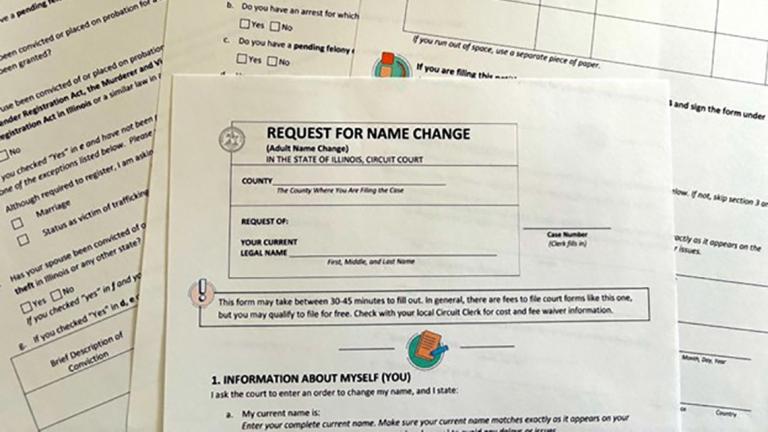
“It was a very lonely journey,” Brown said. “I actually filled out my own paperwork. I did not get any assistance when I initially filled out for my restraining order, even throughout the domestic relations court system. That process was very hard to navigate alone. So for me, it was kind of like, ‘OK, well, I feel like I’m revictimized through this whole entire process again,’ something that I didn’t think was even possible.”
Part of the reason Brown’s legal battle has lasted nearly a decade is a revolving door of judges. She’s had a total of eight judges appointed to her case.
Other obstacles she’s facing include a lack of court reporting, the cost of attorney’s fees, and being threatened with jail time for not paying those costs.
Domestic violence cases have become increasingly deadly in recent years. The U.S. saw a surge in domestic and intimate partner violence incidents during the COVID-19 pandemic, exacerbating a preexisting issue.
In an effort to combat the longstanding problem, Cook County and the city of Chicago launched the Violence Against Women Task Force at the start of 2026 following a year when citywide homicides dropped, but domestic-related fatal shootings increased.
“We think that there was an increase because people were reporting it more often,” said Cook County Commissioner Donna Miller, who helped create the task force. “I had a hearing last year that lasted about seven and a half hours long where we heard from victims of domestic violence and they told their stories. We hope that that encourages others to not only tell their stories, but to get resources and help available to them.”
The task force recently released its first report detailing systemic challenges that victims of domestic abuse face, and recommendations to better unify the court and law enforcement systems.
Within six months of the task force’s launch, domestic-related homicides have decreased in Cook County by 53%.
“We attribute that decline to higher engagement from the different departments,” Miller said. “They have more knowledge. They’re focused on it now. If we can do that in a six-month time period, imagine what we can do with better resources, greater transparency, more focus over a longer period of time and make it consistent. We don’t want to have just a six-month fix. We want to have a consistent fix that lasts throughout time.”
One of the main recommendations outlined in the report is reforming the Domestic Relations Court (DRC). Suggestions include recording every hearing and providing free transcripts, expanding free legal help, making mediation safer, improving technology and virtual access, and ending jail time or threats of jail to survivors who struggle to pay court costs.
No single agency is responsible for protecting survivors once they enter the system, so individuals could be interacting with multiple entities like local police, sheriffs, state police and various courts. That fragmentation creates confusion among victims as to where they’re supposed to go for help, Miller said, so streamlining that process is now a top priority.
Groups that provide advocacy services to victims of domestic violence, like Life Span, are also feeling overwhelmed by the volume of people in need of resources. Life Span has to turn away about 60% of people who request help because the group lacks the capacity to serve everyone without adequate funding.
“It’s devastating to make those hard decisions, but also to know that when we turn them away, we have nowhere to refer them to,” said Amy Fox, executive director of Life Span. “We know that then they’re going to navigate these systems that are even complex for our attorneys to navigate all on their own. That not only is it frustrating and complex, but it boils down to the safety of them and their children. Lives are at stake.”
Cook County did not fund domestic violence services until 2023, Fox said, and the money used then was largely available due to COVID-19 relief funding. Now that that money has dried up, so has the reach of services.
The next step for the task force is implementing its recommendations.
“This is a complex, multi-system crisis,” Fox said. “There is no one easy fix. It takes a combination of committed, meaningful, systemic change. But also, while that change is taking place, survivors have services so that they can continue to seek safety while the systems correct themselves.”