Crime & Law
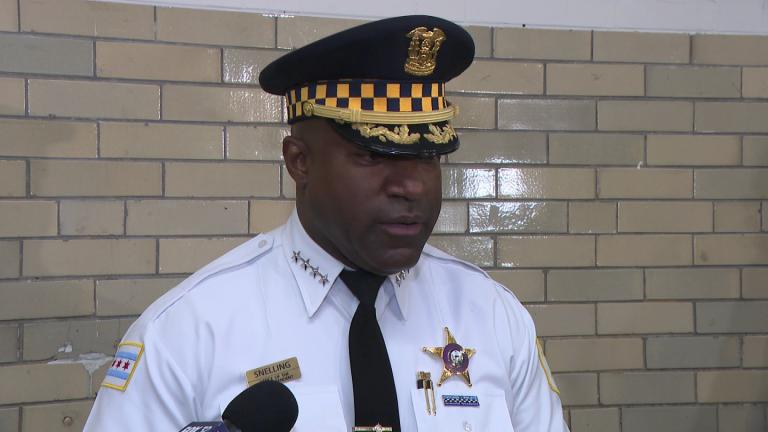
CPD Superintendent Larry Snelling to Retire This Month
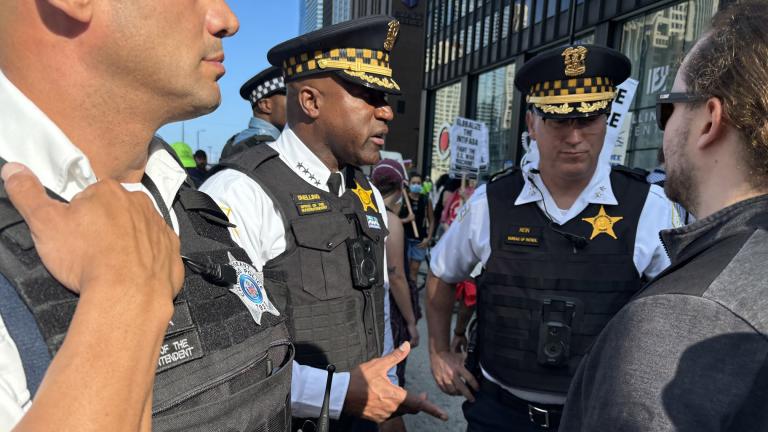
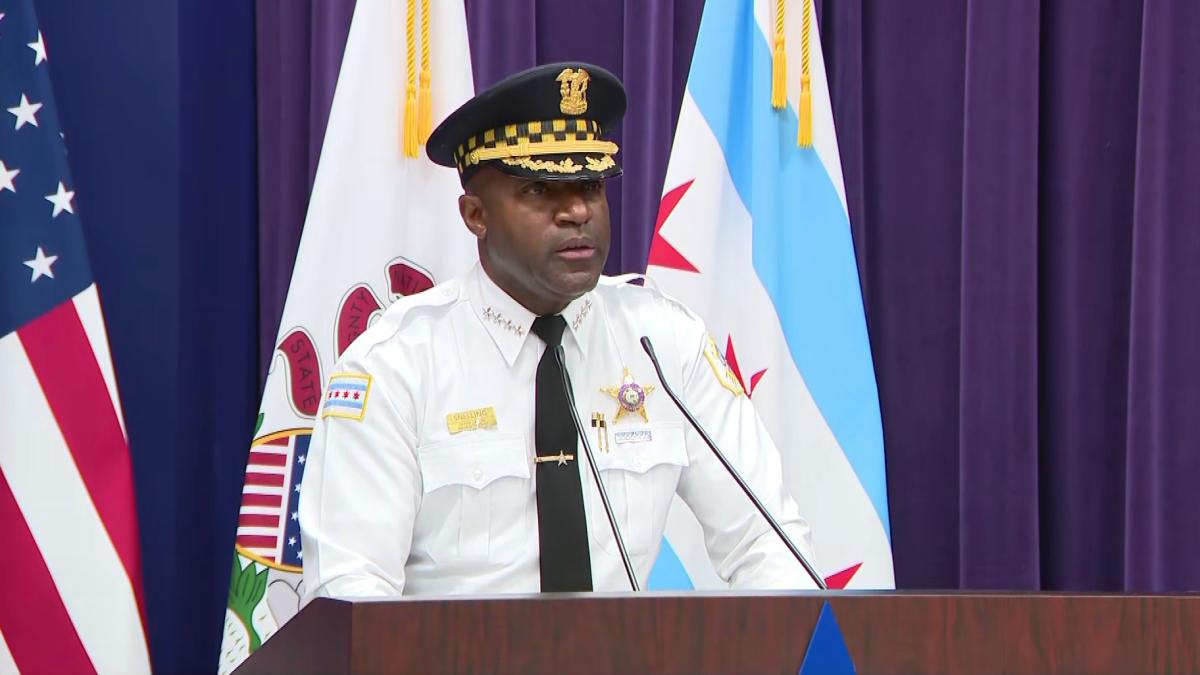 Chicago Police Superintendent Larry Snelling speaks at a news conference on Oct. 6, 2025. (WTTW News)
Chicago Police Superintendent Larry Snelling is set to retire later this month after spending three years as the city’s top cop and more than three decades with the department.
“I am closing out this chapter of my life with a heart full of gratitude for every Chicagoan and every community partner who embraced me during my time at the Chicago Police Department,” he said in a statement. “Thank you does not fully express my appreciation for you, the people of Chicago. I ask that you continue to extend this same warmth and support to every member of the department.”
Read Snelling’s full statement.
His last day will be July 15.
Interim Superintendent Fred Waller will lead the department while the Community Commission for Public Safety begins the search process for a permanent leader, Mayor Brandon Johnson announced.
“We’re grateful for Superintendent Snelling’s dedicated leadership and the work we’ve accomplished together to advance a community safety strategy rooted in strong partnerships and deep community engagement across Chicago,” Johnson said in a statement. “Leadership may transition, but our commitment to building safe communities and serving our residents with care and compassion does not. As we continue through the summer, the structures, coordination, and partnerships that drive our community safety efforts remain firmly in place.”
Snelling’s departure set up a critical decision on who will next lead the nation’s second-largest police department ahead of an upcoming mayoral election next February.
Johnson has not yet announced if he plans to seek a second term in office, but already numerous other candidates have formally launched their own campaigns, with more expected to join in the coming months.
Under city guidelines, the appointment of a new police superintendent must follow a three-stage process.
First, the Community Commission for Public Safety and Accountability will review applications, interview applicants, and submit the names of three finalists to the mayor. The mayor will then review those finalists and either select one as the next superintendent, or reject all three, at which point the commission will identify new finalists.
After the mayor does select a new superintendent, they must be approved by the City Council.
Snelling’s decision comes just a day after he announced a series of promotions and command staff changes, including bumping Chief Antoinette Ursitti, who has led the Bureau of Detectives for the past three years, up to first deputy superintendent.
A lifelong Chicagoan, Snelling grew up in Englewood and graduated from Englewood High School before heading to DePaul University.
After joining the department in 1992, Snelling spent much of his career as an instructor in the CPD training academy. Promoted to lieutenant in 2019, Snelling was named commander in the CPD’s 7th District just months later. He was in charge of the CPD’s counterterrorism bureau before Johnson tapped him to take over the entire department.
Snelling, the CPD’s 64th superintendent, was appointed by Johnson before being unanimously confirmed the City Council in September 2023. He took over during a tumultuous period for the Chicago Police Department, which had seen three previous leaders in less than a year.
At the time, Johnson made it clear he believed Snelling was the clear choice to guide the department as it struggled to reduce crime and implement court-ordered reforms under the consent decree.
During his tenure as superintendent, the city successfully hosted the Democratic National Convention and experienced a drop in shootings and homicides, culminating in 2025 when the city recorded its fewest homicides in 60 years.
“While this happened during my tenure as Superintendent, the hard and courageous work of the members of the Chicago Police Department should be given the credit,” Snelling said. “Though I am proud of what we have achieved, there is more to be done, and I am confident that we created a foundation for further progress.”
Snelling also defended his department’s actions amid an unprecedented surge of federal agents into Chicago last fall during the Trump administration’s expanded immigration enforcement efforts known as “Operation Midway Blitz.”
Not only did Chicago police officers comply with the Welcoming City ordinance — which prohibits all city employees from helping federal Immigration and Customs Enforcement agents in nearly all cases — but they also kept Chicagoans safe during tense confrontations with heavily armed federal agents that nearly spiraled out of control, Snelling said during a contentious hearing in April.
“Our officers showed up to keep down violence,” Snelling said during an April 2 meeting of the Community Commission for Public Safety and Accountability.
Snelling at that same meeting said he backed an effort to give the Civilian Office of Police Accountability the authority to investigate whether CPD officers and leaders violated city law by helping federal immigration agents.
Consent decree monitors praised CPD leaders in April for making “significant progress” in implementing the court-ordered reforms through the second half of 2025. But after seven years, the CPD is still only in full compliance with 25% of the consent decree.
Johnson has also said he’s pleased with the progress made by police leaders to reform the way CPD trains, supervises and disciplines officers in an effort to restore the public’s trust in the beleaguered department, which has faced decades of scandals, misconduct and brutality.
“Together with our officers, community partners, and sister agencies, we’ll continue working every day to ensure Chicagoans and visitors alike can safely enjoy their neighborhoods, parks, festivals, and public spaces throughout the rest of the summer,” he said Wednesday.
WTTW News coverage of policing and police reform is supported by The Joyce Foundation.