Crime & Law
Chicagoans Reflect on Larry Snelling’s Tenure as Top Cop, Share Hopes for Successor
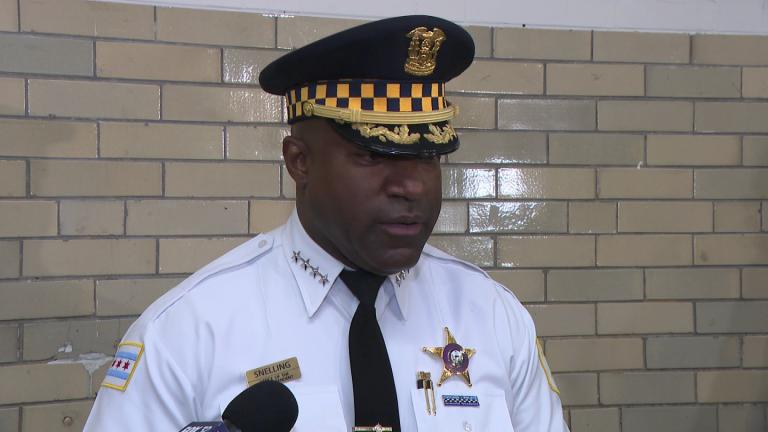
Chicago Supt. Larry Snelling’s retirement began Wednesday after a nearly three-year tenure leading the nation’s second largest police department. He leaves behind a city that’s seen significant declines in violent crime but has not completed federally mandated reforms.
Mayor Brandon Johnson named First Deputy Supt. Fred Waller as interim top cop while the Community Commission for Public Safety and Accountability (CCPSA) begins its search for Snelling’s permanent successor.
Though Snelling mostly avoided the high-profile controversies that plagued some of his predecessors, his legacy has garnered mixed reviews.
Chicago experienced substantial reductions in homicides and shootings over the past two years. Through the first half of 2026, the city remained on pace for one of its lowest homicide totals in decades, continuing a downward trend that began in 2023. At the same time, the department is only in full compliance with 25% of the federal consent decree, and questions remain about officer accountability, immigration enforcement and the role policing should play in violence prevention work.
Here’s how four Chicagoans who worked with or closely followed Snelling’s administration view his legacy:
John Escalante
Former First Deputy Supt. John Escalante, who briefly served as Chicago’s interim police superintendent, described Snelling as a well-respected department head who did an excellent job.
“When I left the department, he was actually a sergeant,” Escalante said. “He had a quick rise through the ranks after I had left. … He was always very squared away, always very sharp. I think during the time that he was a superintendent, I think he did a very good job. Difficult position to be in, but I think he did the best he could.”
The superintendent is the face of the department who has final authority on any decisions concerning CPD, relying on deputy superintendents and bureau chiefs to oversee day-to-day operations. Escalante said that reality, combined with political pressures of the job and mayoral turnover, partially explains why many Chicago police superintendents are only in the position for a few years.
“There’s strong internal candidates,” Escalante said. “It’s going to be interesting to see who applies externally. I am concerned right before the (February 2027 mayoral) election that it may impact people’s minds about whether they want to apply for a job that they might get, and a few months after they get into the position, the next mayor says, ‘I want my old guy.’”
Dion McGill
Dion McGill, who represents the 7th Police District Council, credited Snelling for overseeing one of Chicago’s safest periods in decades but thinks he fell short on generating meaningful reform.
“Statistically, it’s the safest period of time in Chicago that we’ve seen in recent memory,” McGill said. “But I think under his tenure, the progress on the consent decree, in my opinion, in the opinions of many, was slow.”
When Snelling became superintendent in 2023, the department had reached full compliance with just 6% of the consent decree’s requirements. That figure has since risen to 25%.
“We have to remember the consent decree is the floor,” McGill said. “We’re not talking like we’re going to be the epitome of the best police department in the nation. This is the ground floor for how you should be operating. So if you’re having like 10, 12, 15 years to reach the ground floor, that just seems odd to me. I think one of the issues with the process is the transparency of it and the communications of it. A lot of people don’t even know we’re under a consent decree or even what that means, and that’s problematic as well.”
McGill wants the next superintendent to have a more “open door policy” and said consent decree compliance is a top priority.
Artinese Myrick-Thomas
Artinese Thomas, deputy director of Live Free Illinois, said her organization saw tangible improvements in community-police relations under Snelling’s leadership.
Live Free works with churches and community organizations across the state on violence prevention initiatives and has partnered with CPD to improve homicide clearance rates. Thomas said some of the group’s recommendations were adopted during Snelling’s tenure.
“In 2024, we had over 150 community conversations where we came up with some collective recommendations,” Thomas said. “We did see some of them come into fruition while Supt. Snelling has been in his position.”
Thomas hopes CPD’s new leader works alongside community organizations and embraces nontraditional forms of policing to aid in violence reduction.
Baltazar Enriquez
For Baltazar Enriquez, president of the Little Village Community Council, Snelling’s CPD will be largely remembered by how the department handled “Operation Midway Blitz,” when immigrant advocates accused Chicago police officers of improperly assisting federal immigration agents.
Chicago’s Welcoming City Ordinance prohibits all city employees from helping federal Immigration and Customs Enforcement agents in nearly all cases.
Enriquez wants the next superintendent to more aggressively discipline or investigate officers accused of misconduct.
“There’s no relationship between the community and the police department at all, and we’ve seen here in Little Village, people not calling 911 anymore because they’re afraid that if they do call it, they might get arrested, beat up or even killed,” Enriquez said. “We would love to see more transparency. We would love to see a superintendent that could walk the streets, come to the neighborhoods that have high crime.”
WTTW News coverage of policing and police reform is supported by The Joyce Foundation.