Crime & Law
Immigrant Rights Groups Relieved But Vigilant After Supreme Court Upholds Birthright Citizenship
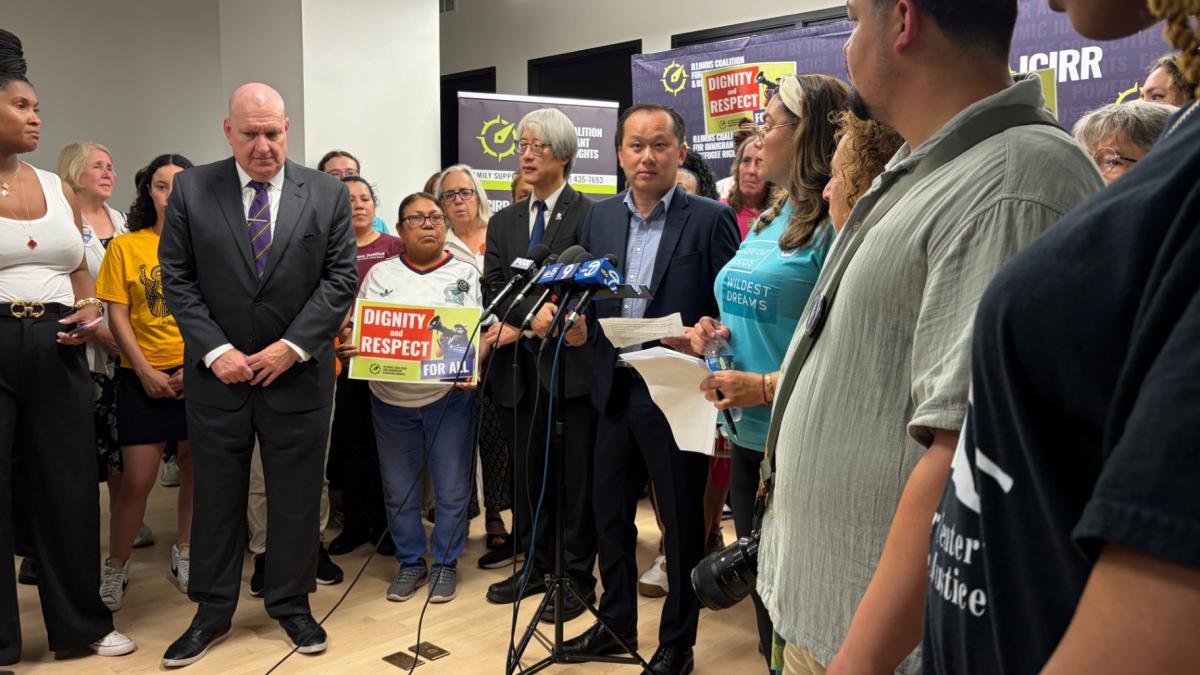 Chinese American Service League CEO Paul Luu speaks during a news conference on June 30, 2026, about immigrant rights advocacy groups reacting to the Supreme Court’s ruling upholding birthright citizenship. (Eunice Alpasan / WTTW News)
Immigrant rights advocates in Chicago gathered Tuesday to express relief and the need to remain vigilant following the U.S. Supreme Court’s ruling upholding birthright citizenship.
“We are relieved and grateful that the rights of our children have been upheld,” Illinois Latino Agenda Co-Chair José Muñoz said. “But make no mistake, we didn’t win anything. That right was ours before that case came to be heard.”
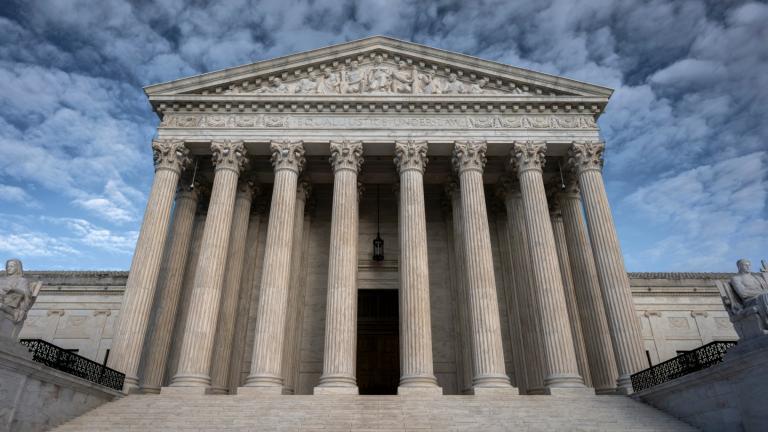
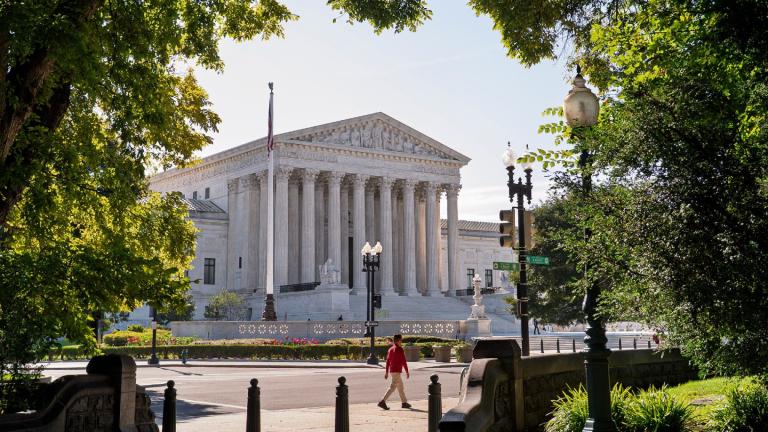
A divided Supreme Court upheld birthright citizenship in a 6-3 ruling Tuesday, striking down President Donald Trump’s executive order that claimed children born in the U.S. to people who are in the U.S. illegally are not U.S. citizens.
Fred Tsao, senior policy counsel at the Illinois Coalition for Immigrant and Refugee Rights, said despite the decision, advocates, still, are “troubled” that the White House would even question the principle of birthright citizenship and that three justices voted to “undermine” that principle.
During a news conference, advocates pointed to the need to remain vigilant amid what they described as the Trump administration’s ongoing attacks on immigrant communities and efforts to erode people’s rights.
Advocates highlighted previous Supreme Court rulings allowing for racial profiling during immigration stops, the weakening of the Voting Rights Act, and decisions last week that allow the Trump administration to end temporary protective status for Haitian and Syrian migrants, along with allowing the administration to turn away asylum seekers at the border.
“These kinds of attacks across communities continue to be cruel and unrelenting,” said Dulce Ortiz, executive director of Mano a Mano Family Resource Center.
A bare majority of five justices, in an opinion written by Chief Justice John Roberts, held that the long-settled understanding of the 14th Amendment, adopted after the Civil War, makes a citizen of anyone born in the country, with very limited exceptions. A sixth justice, Brett Kavanaugh, disagreed about the constitutional ruling, but pointed to a federal law that he said broadly conveys birthright citizenship.
“Citizenship, then and now, was the right to have rights—to freely participate in our political community. The Framers of the Fourteenth Amendment extended that promise to ‘every free-born person in this land,’” Roberts wrote for the court, citing congressional debate over the amendment. “We keep that promise today.”
Justices Samuel Alito, Neil Gorsuch and Clarence Thomas would have upheld Trump’s proposed restrictions.
In a memo circulated hours after the Supreme Court’s ruling upholding birthright citizenship, the deputy attorney general’s office under the U.S. Justice Department directed prosecutors to “prioritize the investigation and prosecution” of fraudulent “birth tourism” schemes, the AP reported.
“Together, we will bring illegal birth tourism to an end and those responsible to justice,” the memo says.
In a series of decisions, lower courts struck down Trump’s executive order seeking to end birthright citizenship as illegal. Those decisions invoked the Supreme Court’s 1898 ruling in Wong Kim Ark, which held that the U.S.-born child of Chinese nationals was a U.S. citizen.
The Supreme Court reaffirmed Tuesday what Wong Kim Ark proved 128 years ago, according to Chinese American Service League CEO Paul Luu.
“Our responsibility is to ensure that no children born in this country ever has to question whether they belong in the only home that they know,” Luu said. “We’ll continue to defend that right for our children and generations to come.”
The Associated Press contributed to this report.
Contact Eunice Alpasan: [email protected]