Politics
Illinois House Speaker on AI Regulation, Bears Stadium Incentives
It was well past 4 a.m. Monday when the Illinois House of Representatives adjourned for the summer. The budget had been balanced, and a flurry of bills were sent to the governor’s desk.
But a busy finish to the spring session left some of the biggest decisions — in some cases, the decision to wait — until the very end.
AI regulations, a school cell phone ban, social media regulations for youth and more made it across the finish line. Meanwhile, legislative action on zoning reform, data center expansion and, perhaps most notably, incentives for a new Bears stadium were kicked down the road.
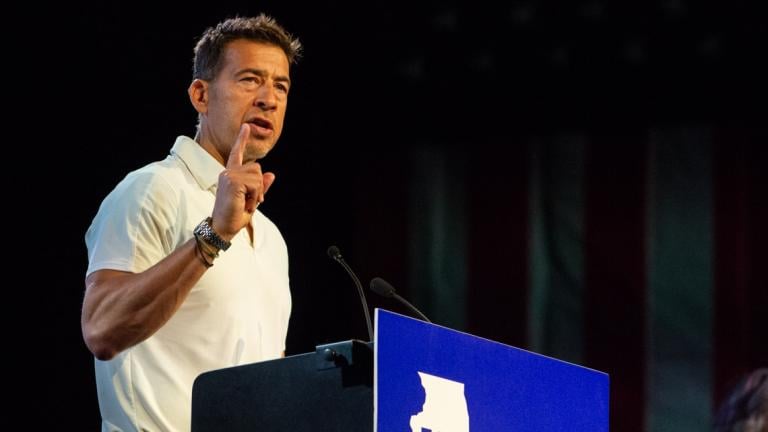
Illinois House Speaker Emanuel “Chris” Welch joined “Chicago Tonight” to share his perspective on the spring session. Excerpts from the conversation are below.
On a Bears stadium deal:
“My first thought (when the state Senate passed an updated incentives bill) was we don’t have time to consider that in the House. We have processes in place that we’ve been very consistent with since I’ve become speaker, and that involves getting a lot of stakeholder input. … We get a lot of input from our members, and we had no time to look at the bill, read the bill, let alone go into caucus and talk about it at 3:30 in the morning. And so we just ran out of time.”
On the potential for a special summer session:
“There’s no plans to call a special session. We are back in November, and then again in January for a lame-duck session. What I think is really important is to keep the conversations going. People know that you’re working earnestly. If we can reach an agreement between the House, the Senate, all of the stakeholders that are involved, that’s what’s really important right now.”
On new revenue sources:
“Our Progressive caucuses in both chambers were very insistent that those who can pay more should pay more. Looking at corporations, looking at the rich. And I’ve got to tell you, they had some wins in this budget cycle. We closed some corporate loopholes. … We passed taxes on social media platforms, digital ad tax, prediction markets, fantasy sports, cryptocurrency, all these new things that call for some taxation. And that’s what helped us close the budget. Nothing on regular, everyday people.
“... Taxing the rich is very important to me. … To those who much is given, much is required. And I fought very hard for a surcharge tax on millionaires to go on our November ballot. It came up just short in the House. The Senate president and I agreed to keep talking this summer and find ways to come to an agreement on that language that we can probably look at in 2028.”
On K-12 funding:
“If you look at the budget we passed the other day, the single biggest thing that was prioritized was K-12 funding. We put in 350 million new dollars. Since I’ve been speaker, we’re close to 2 billion new dollars for K-12 education.
“Are we at the level we should be at? No. But that’s going to take that new revenue stream that we need, and that’s why I think we need the structural tax change.”
On AI regulation:
“You have to have (OpenAI and Anthropic) at the table. They’re stakeholders, they know their industries, but they also know that they needed regulation. Our regulation is tougher than New York and California. They fought against some of the things that we put in our bill. … But we got it done. It was very important that we lead the way on that. (OpenAI and Anthropic) knew it was going to happen, and so they decided to participate in the process rather than not participate in the process. And that was welcomed.”