Politics
DACA Recipients in Legal Limbo as Renewal Application Delays Mount
The Trump administration has put renewal applications for Deferred Action for Childhood Arrivals, or DACA, recipients on “processing holds.”
Some of the program’s more than 500,000 beneficiaries, often referred to as “Dreamers,” have waited months for an answer only to see their deadline pass without a decision. Now they’re stuck in a type of limbo in which their work authorization disappears, oftentimes along with their driver’s license, and their ability to stay in the U.S. is at risk.
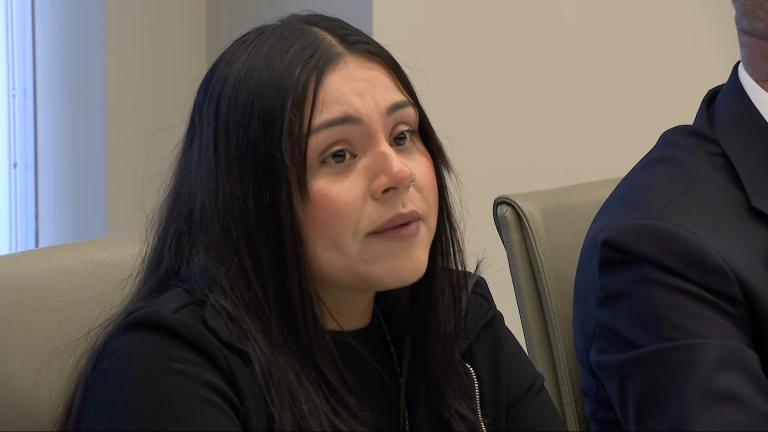
Isaias Perez is a DACA recipient and teacher at Chicago Public Schools. His DACA status does not expire until 2027, but he still feels the anxiety of applying for renewal.
“It’s a heavy feeling of uncertainty on a day-to-day basis,” Perez said. “It is a feeling that is not rare, and that is very familiar to us DACA recipients.”
Perez said going through the DACA renewal process, especially when applications are being processed slowly, makes planning a normal life difficult.
“Everyday actions, like renting an apartment or committing to certain professional events, do make me rethink, like, ‘Would I be able to fully commit myself to this?’” Perez said. “It is the uncertainty more than anything, more than fear, it is the uncertainty and lack of stability and being able to plan a 30-year future on a two-year permit.”
No numbers were available on how many people have recently missed their renewal deadline despite applying 120 to 150 days before their DACA lapses, which is what U.S. Citizenship and Immigration Services recommends.
“Under the leadership of President Trump, USCIS is safeguarding the American people by more thoroughly screening and vetting all aliens, which can lengthen processing times,” Zach Kahler, an agency spokesperson, said in a statement.
DACA grants those who qualify two-year renewable permits to live and work in the U.S. It does not confer legal status but is meant to offer protection from deportation.
When DACA was introduced in 2012, many in immigrant communities hoped the program would turn into a pathway to citizenship. David Canola, also a DACA recipient and Chicago Public Schools teacher, moved to the U.S. when he was 10. He described the recent changes to DACA as “heartbreaking.”
“I’ve been waiting for that path,” Canola said. “As long as we do our due diligence, as long as we stay according to law in good faith, we’re gonna receive something out of that. But we’re still waiting.”
From October 2025 to the end of February 2026, the median wait time for renewals was about 70 days, compared to about 15 days in fiscal year 2025, according to USCIS. This is the longest median wait time since 2016, when it was about 79 days, according to the agency’s data, which did not include 2020 because of the pandemic.
The U.S. Department of Homeland Security attributed the 2016 delays to technical issues that emerged as it transitioned to fully processing DACA renewals in its electronic immigration system.
At the end of April 2026, USCIS was reporting that the majority of renewal requests were being completed within about 122 days. That marked a two-week increase from the processing times listed earlier that month.
Nancy Garcia is the director of civic engagement at the Southwest Suburban Immigrant Project, a community organization that provides legal counseling to immigrants in DuPage and Will counties. She said that of the 32 DACA recipients who filed renewal requests through her clinic in November, only two have been approved. The rest, she said, have received no updates.
“Some of them are getting close to six months that the case has been pending,” Garcia said. “Before November of 2025, cases were taking about a month and a half to two months on average to be approved. And we even saw cases being approved really fast, like less than two weeks, but that’s not happening anymore.”
Federal lawmakers and immigrant groups said some applicants recently have had to wait six months — about 183 days — or longer.
An April 24 ruling by the Justice Department’s Board of Immigration Appeals also made it easier to deport DACA recipients by finding that DACA status alone does not protect against removal.
The board wrote that an “Immigration Judge erred in terminating removal proceedings based solely on the fact that the respondent has been accorded Deferred Action for Childhood Arrivals.”
According to DHS, Immigration and Customs Enforcement arrested 261 DACA recipients and removed 86 from the country between Jan. 1 and Nov. 19, 2025.
The Associated Press contributed to this report.