Science & Nature
Female Piping Plovers Make Highly Anticipated Return to Chicago Area Beaches, Let the Mating Games Begin
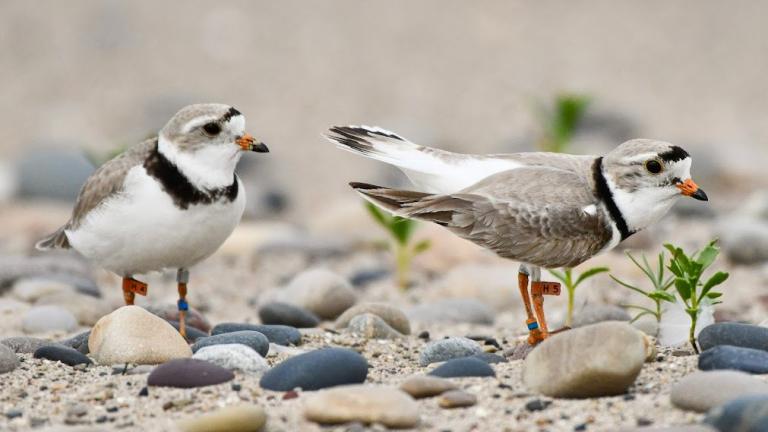
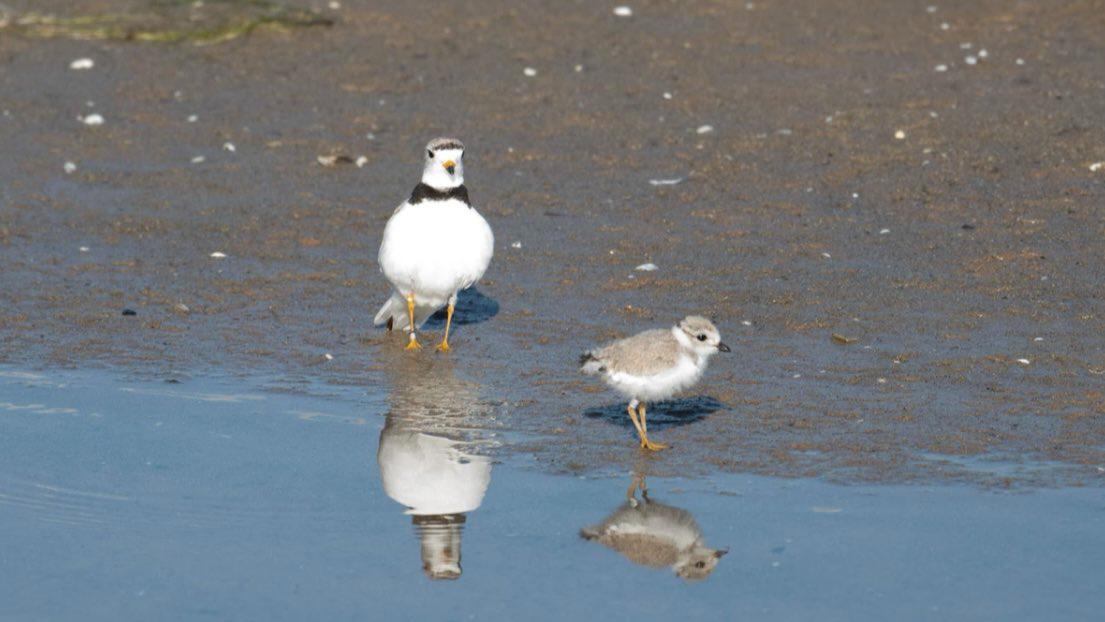 Imani with his 2024 offspring Nagamo, at Montrose Beach. (Courtesy of Chicago Piping Plovers)
The wait is over for Chicago’s female piping plovers.
Three weeks after the fellas arrived at Montrose and Waukegan beaches, the ladies have landed. Monitors from Chicago Piping Plovers and Lake County Audubon have confirmed that for the third year running Sea Rocket has returned to Montrose and Blaze is back at Waukegan.
“After a long journey from their wintering grounds, seeing these birds come back to the same stretch of shoreline is a thrill,” Lake County Audubon shared on social media.
Now the question is will the gals pair up with previous mates, Imani and Pepper, respectively or will bachelor plover Pippin — who roves between the two beaches — finally make a love connection?
Other plovers have made brief stopovers along Illinois’ lakefront in recent days, including Blaze and Pepper’s 2024 fledgling, Sage, who nested at North Manitous Island in 2025, successfully rearing three chicks of her own.
Over the weekend, Imani was photographed making scrapes in the sand at Montrose, which are the indentations plovers use for nests.
Monitors will be keeping watch for mating behavior and the appearance of any eggs in the coming days. Nests would then be surrounded with protective cages that leave enough room for plovers to come and go but ward off predators including skunks and raccoons.
The Waukegan plovers nest on a restricted beach, while Chicago’s piping plovers stick to a protected strip on the southern end of Montrose Beach.
The endangered Great Lakes piping plover population was once down to fewer than 20 breeding pairs. Thanks to conservation efforts, that number has rebounded to nearly 90 pairs in 2025, though that figure is still well short of the recovery goal of 150 nesting pairs.