Politics
Darren Bailey Gears Up to Face Pritzker for Second Consecutive Governor’s Race
Illinois is gearing up for a rematch.
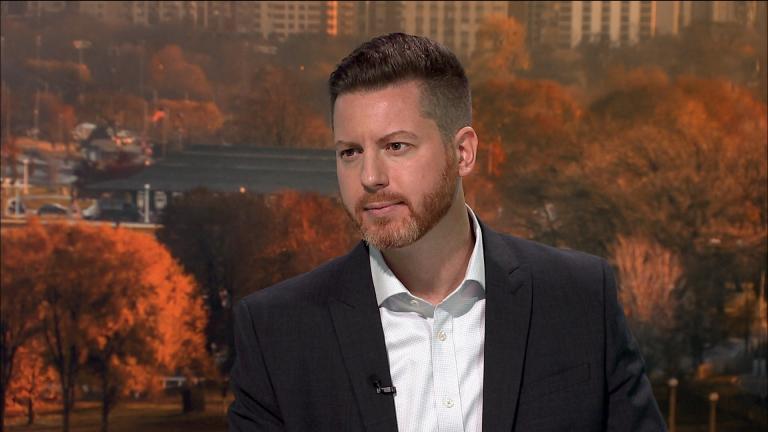
Former state legislator Darren Bailey won the Republican nomination for governor on Tuesday, meaning he will face incumbent Gov. JB Pritzker in the November general election.
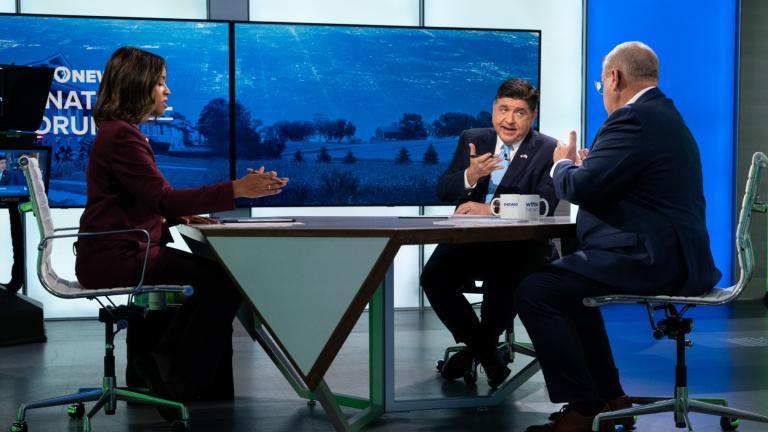
Pritzker beat out Bailey for the governor’s mansion in 2022 by more than 500,000 votes. But the longtime Illinois Republican said things this time around could be different.
“I’m a different person,” Bailey said. “Seven months ago, we didn’t have this on the radar to run. We felt called to it and thought that we had learned enough over the last four years that we could make a difference.”
Bailey has made affordability a central tenet of his campaign, criticizing Pritzker for raising taxes multiple times as governor. Pritzker’s FY2026 budget was the state’s largest ever at more than $55 billion, $700 million of which came from new taxes.
Pritzker, a billionaire, has maintained that the revenue is necessary to maintain programs Illinoisans rely on. But Bailey said the increasing size of the state budget has not actually solved any key problems.
“When I started running as a state representative, the budget in Illinois was $32 billion, and today it’s $55 billion,” Bailey said. “We just continually, any time there was a problem, whether it was education, mental health, just money. Hundreds of millions of dollars. Throw it at the problem, with no result, no resolve. We still have the same problems.”
Despite the new message, Bailey is expected to face strong headwinds in November, running in a midterm election cycle that typically favors the party outside the White House. Bailey, a former staunch supporter of President Donald Trump, has recently sought to distance himself from the administration, seemingly to broaden his appeal in areas such as Chicago.
In 2022, Bailey was criticized for referring to Chicago as a “hellhole.” Now he’s taking a different approach to the Windy City and its more than 1.5 million registered voters.
“I love Chicago,” Bailey said. “I want to work with Chicago. I want to help make it great. I want to work with every organization, every group of people that’s here. So Chicago, I’m sorry I said what I said, and I hope you open up your doors and your ears and give me another chance.”
As a state senator for the 55th District and state representative for the 109th District, both in southern Illinois, Bailey has long been a champion of rural Illinoisans.
Since 2020, more than 30 counties have passed advisory referendums to secede from Illinois, citing growing misalignment with Cook County. Bailey is sympathetic to the issues of southern Illinois but said his candidacy is about unity.
“You can’t split Illinois and Chicago,” Bailey said. “We’re better as one. It’s kind of like a marriage maybe that’s in trouble, you go get help, you figure it out, and you work together so that we can live together, work together, and love each other.”
To defeat Pritzker in November, Bailey will need to win votes in more Democratic counties, a tall order with ground left to cover. One of his primary challengers, Ted Dabrowski, won handily in Cook, Lake and DuPage counties, areas where Bailey performed much better four years ago.
Bailey is hoping his affordability agenda and focus on state-level, rather than federal, issues will help him increase his margins in northern counties.
“My relationship will be with the people and the General Assembly. That’s it,” Bailey said.
He has also come out squarely against federal immigration agents in Cook County, a stance likely to resonate with voters following last fall’s “Operation Midway Blitz.”
“The whole ICE situation should’ve looked a lot different and better coordinated,” Bailey said. “And I’ll even go so far as to say there shouldn’t be federal agents in Cook County doing this work.”
Bailey laid the blame for ICE’s presence in Chicago at the feet of Pritzker, arguing that local and state law enforcement should have been arresting “the most dangerous of these people who are here illegally.”
“We wouldn’t be having this conversation right now,” Bailey said.
This year’s gubernatorial matchup is an unlikely one. Last October, the Bailey family suffered a devastating loss when Bailey’s son Zach, his wife and two of their children died in a helicopter crash.
Less than three weeks later, Bailey announced he would still seek the Republican nomination. Bailey said he knew he needed to stay in the race upon discovering his son’s intention to run for office in Illinois.
“When we were busting up passwords, getting into his computer, I found where he was thinking, working and talking with some people about running for state Senate or state rep himself,” Bailey said. “When we saw that, we realized that this is what we believe in, this is our fight and we need to stay the course.”