Politics
Tech Group Sues Chicago Over First in the Nation Social Media Tax
 (Thomas Ulrich / Pixabay)
A tech industry trade association sued the city of Chicago Friday in an effort to block a first-of-its-kind tax on social media companies, records show.
NetChoice, a trade association representing the tech industry, filed suit in Cook County Circuit Court to block the Social Media Amusement Tax included in the city’s 2026 spending plan.
The tax violates “free speech rights, unfairly discriminates against digital publications, violates federal law and harms Chicago residents and their businesses,” the group said in a statement.
“This is a targeted strike against America’s most popular publications; it will not stand,” said Paul Taske, co-director of the NetChoice Litigation Center.
A spokesperson for the Chicago Department of Law said officials remain “confident the Social Media Tax rests on strong legal footing and will address the matter in court.”
Corporation Counsel Mary Richardson-Lowry told the Chicago City Council before the budget took effect that she was confident the tax would withstand the all-but-certain legal challenge.
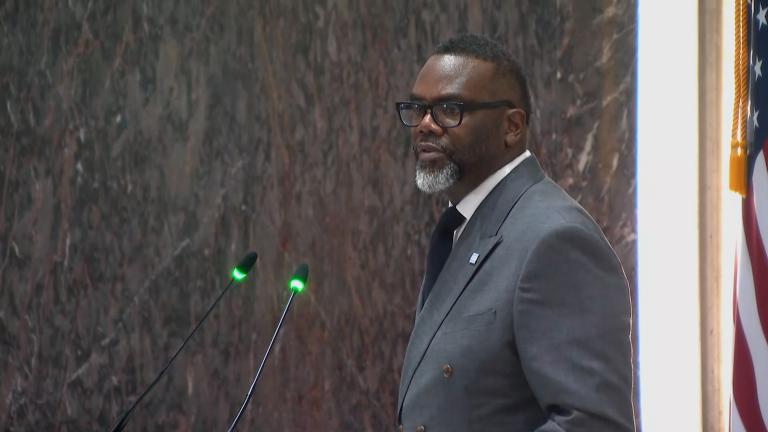
Crafted by Mayor Brandon Johnson, the tax would force social media companies to pay a tax of 50 cents per month for every active user after the first 100,000 users, under the city’s amusement tax authority, officials said.
Because research shows that social media has a negative impact on mental health, particularly for young people, the firms profiting from those services should “contribute fair share to fund additional public health and mental health services for Chicagoans,” according to Johnson’s budget proposal.
The city’s spending plan relies on $31 million from that tax, which officials said they expected to trigger a legal challenge. That revenue was not expected to flow to Chicago until the second half of the year, officials said.
Efforts by Johnson to strengthen the city’s social safety net and make good on promises to reopen all six mental health clinics closed in 2011 by former Mayor Rahm Emanuel in 2024 and expand efforts to respond to 911 calls from those experiencing mental health crises with trained counselors.
While three clinics reopened in 2024, the effort has faltered amid the city’s financial crisis.
“We are not afraid of taking on Big Tech giants to fund free mental health care for Chicago,” Johnson told reporters in October.
However, a 1983 U.S. Supreme Court decision prohibits governments from taxing news organizations based on their audience size as well as a federal law passed in 2015, according to NetChoice’s complaint.
If the tax is upheld, Chicago businesses will have to pay more to advertise online, as companies pass on the cost of the tax, according to NetChoice’s complaint.
Gov. JB Pritzker proposed a similar tax as part of his budget for the 2027 fiscal year that he said would generate $200 million.
For the largest social media firms with 1 million Illinois users or more, the proposal calls for charging $165,000 per month and an additional 50 cents per month for each user over the 1 million user mark, according to Pritzker’s proposal.
NetChoice has filed dozens of lawsuits against states attempting to tax and regulate social media, including against a California law designed to shield children from social media and other online content that could harm them mentally or physically.
The 9th U.S. Circuit Court of Appeals struck down an injunction on Thursday issued in that case.
Contact Heather Cherone: @HeatherCherone | (773) 569-1863 | [email protected]