Politics
How Local Poll Watching Groups Are Preparing for the Primary Election Amid Concerns Over Federal Immigration Actions
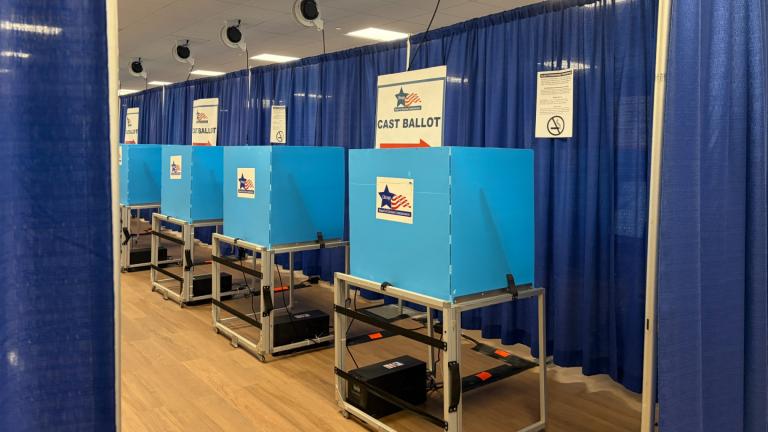
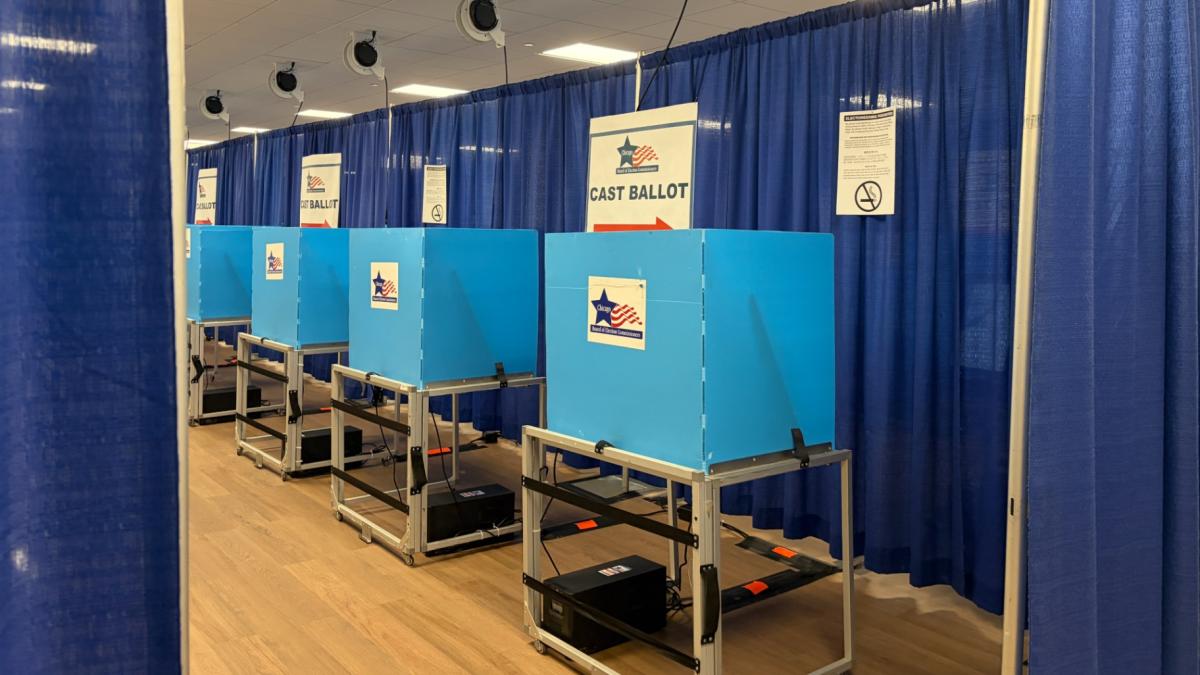 Chicago Board of Elections Supersite, 137 S. State, in downtown on March 2, 2026. (Eunice Alpasan / WTTW News)
Nonpartisan poll watcher groups in Chicago are preparing to respond to election law violations and voting rights threats during Tuesday’s primary election.
The efforts come amid concerns over federal immigration activity near polling places after the Chicago area became a flashpoint in the Trump administration’s mass deportation efforts this fall.
“Our democracy is strongest when every eligible voter participates in our elections,” Ami Gandhi, director of the Midwest Voting Rights Program at the Chicago Lawyers’ Committee for Civil Rights, said in a statement. “We know voters are concerned about federal overreach at the polls, and we stand ready alongside our partners to ensure every eligible voter can cast their ballot.”
Poll watching is one part of a broader response network the Chicago Lawyers’ Committee for Civil Rights, Illinois Coalition for Immigrant and Refugee Rights and Asian Americans Advancing Justice Chicago have built to monitor possible cases of voter intimidation and federal immigration agents near polling places. Legal volunteers, field volunteers, local rapid response teams and volunteer hotline operators will also be mobilizing as part of the effort.
Trump administration officials have previously said they have no plans to deploy immigration agents to polling locations during this year’s midterm elections. But Democrats and voting rights groups are on high alert as aggressive federal immigration enforcement operations continue in Democrat-led cities, including Chicago. President Donald Trump has also recently suggested that the federal government run elections, despite the Constitution giving that authority to states.
“Operation Midway Blitz” was scaled back by Department of Homeland Security officials late last year, but Illinois Coalition for Immigrant and Refugee Rights communications director Brandon Lee said the organization still gets calls on their family support hotline on a daily basis.
“When the administration is trying to tell you that you don’t have rights, here in Illinois, we have been very defiant in saying, ‘No, we will exercise our rights,’” Lee said. “Whether that’s documenting instances of ICE agents in our communities, or whether that is the right to protest, or whether that is the right to vote, Chicagoans and Illinoisans have been very defiant in exercising those rights, and we’ll continue doing that on Election Day.”
Federal and state laws prohibit any type of intimidation of voters during elections, including prohibiting the presence of federal officers at any polling place, according to Chicago Board of Election Commissioners Chair Marisel Hernandez.
The Board of Elections is in contact with federal, state and local agencies to ensure “we’re all on the same page,” Hernandez said during a Feb. 12 news conference. Election judges are trained to contact the board if they see “unusual” activity, Hernandez added.
“Every voter has the right to register to vote, and then vote, free of intimidation, threats and coercion,” Hernandez said. “We will do what we need to do to protect the rights of voters.”
The Chicago Lawyers’ Committee for Civil Rights is close to achieving its goal of doubling its number of “voter protection” volunteers this primary election compared to the primary election in 2024, according to Gandhi. The group is also doing more litigation planning this year compared to previous elections.
Poll Watching and Protecting Voter Rights
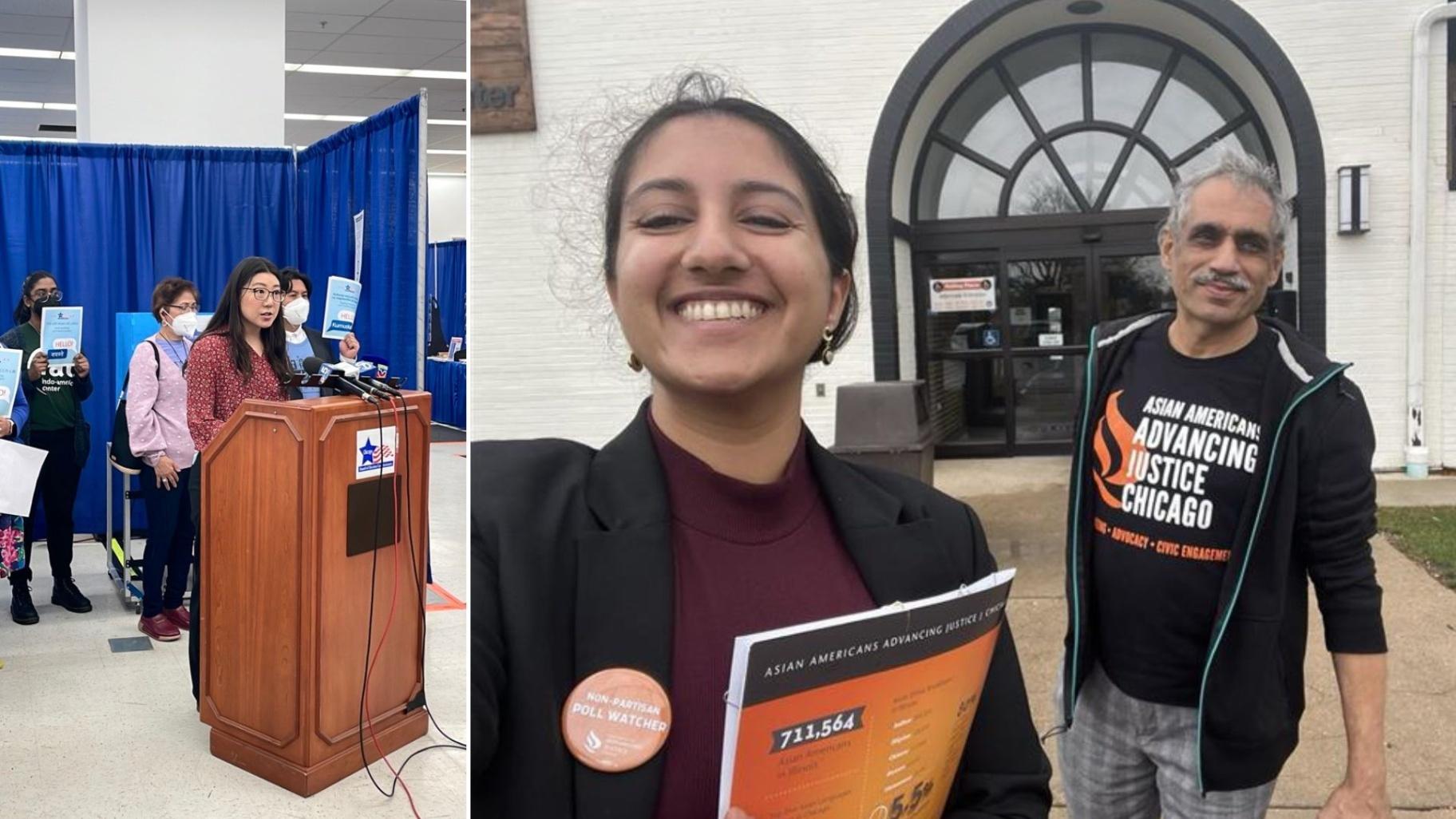 Left: Grace Pai, executive director of Asian Americans Advancing Justice Chicago, speaks about language access during a Chicago Board of Elections press conference on March 4, 2024. Right: Nonpartisan poll watchers at a polling site on Election Day in 2024. (Courtesy of Asian Americans Advancing Justice Chicago)
Chicago Lawyers’ Committee for Civil Rights and Asian Americans Advancing Justice Chicago are among a handful of organizations coordinating nonpartisan poll watchers for the primary election on Tuesday.
Poll watchers monitor conduct at polling places and inform election judges about violations of the law or improper procedures they witness. Typically, about 10 civic organizations coordinating nonpartisan poll watchers are approved by the Chicago Board of Elections each election cycle.
Poll watchers can also be a representative of a candidate or political party, and are also required to have credentials from the proper election authority.
The nonpartisan poll watcher program is one of the longest-running initiatives at Asian Americans Advancing Justice Chicago. Through its program, the organization aims to ensure all eligible voters can cast their ballots without interference, with a focus on language access.
“When it comes to Election Day, we have found that most election judges are very receptive to feedback,” said Grace Pai, executive director of Asian Americans Advancing Justice Chicago. “Some election judges do this every election, and others may be new, and so we try to really bring an approachable and friendly, but still accountability-focused approach.”
Poll watchers at the organization typically look for translated ballots and signage, and ensure that voters bringing an interpreter with them are treated fairly, according to Pai. In some cases, reported issues will be brought to higher election authorities for remedy, and can result in, for example, missing materials getting dispatched to a polling place.
The organization coordinated with the Chicago Board of Elections to implement new signage at polling places to highlight language access starting in 2024. Through its poll watcher program, the organization also raised concerns over suburban Cook County struggling with bilingual judge recruitment.
For the upcoming primary election, Pai said her organization’s goal is to have poll watchers at all Asian language designated precincts and vote centers in Chicago and suburban Cook County. That amounts to more than 120 polling locations in the city and nearly 95 locations in the suburbs, according to Pai.
Pai said her organization is concerned about federal immigration enforcement presence in Chicago during the election because law enforcement presence can deter people from going to the polls, especially given the difficulty sometimes of distinguishing between local law enforcement and federal immigration enforcement.
“Even though all voters are citizens, it’s still scary to pull up with the intention to cast your ballot and see flashing lights or to see an unmarked car or someone in a law enforcement uniform,” Pai said. “We’ve asked our poll watchers to keep an eye out for what they observe.”
Poll watchers are also trained to ensure a polling place maintains a campaign-free zone, prohibiting electioneering from taking place within 100 feet of the polling place.
Gandhi said the Chicago Lawyers’ Committee for Civil Rights assists voters through its Election Protection hotline, poll watcher program and the work of field volunteers and legal volunteers. Field volunteers at the organization are available outside the polling place to assist voters who might have questions about the voting process.
“In the instance where there may be long lines, or confusion, or where there may be election judges who are overstretched, or who themselves may be calling for help from their local election authority, our field volunteers can serve as an additional source of information if the voter would find that to be helpful,” Gandhi said.
Common questions field volunteers get from voters relate to same day registration, vote-by-mail ballots, tech issues, privacy concerns, electioneering and interactions with election judges, according to Gandhi.
Local response partner organizations are advising voters to use the Election Protection hotline 866-OUR-VOTE for reporting election interference and Illinois Coalition for Immigrant and Refugee Rights’ Family Support Network hotline 855-435-7693 for reporting federal immigration enforcement sightings.
The Associated Press contributed to this report.
Contact Eunice Alpasan: [email protected]