Politics
Mayor Vetoes Ban on Sale of Most Intoxicating Hemp Products in Chicago
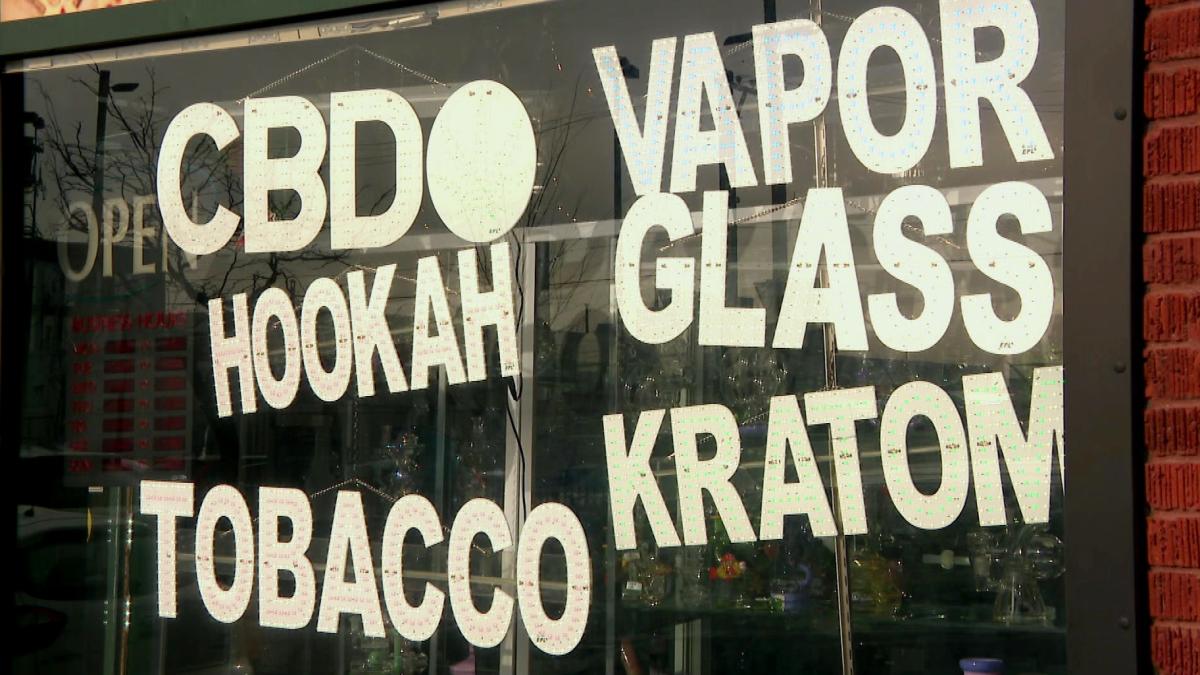 A store window is pictured in a file photo. (WTTW News)
Mayor Brandon Johnson on Friday vetoed an ordinance that would ban the sale of most intoxicating hemp products throughout the city, calling it “premature.”
The City Council voted 32-16 on Jan. 21 to approve the measure that would have immediately banned the sale of intoxicating hemp products to those younger than 21, while exempting the sale of beverages, topical creams and pet products with intoxicating hemp.
Ald. Marty Quinn (13th Ward), the author of the measure, said he would not attempt to override the mayor’s veto, which would require 34 votes.
“I don’t have 34,” Quinn told WTTW News. “I don’t have the numbers, and I don’t want to waste anyone’s time.”
The ordinance also would have banned the sale of delta-8 and other hemp-derived snacks and other products outside licensed cannabis dispensaries, effective April 1. Johnson said that ban was too broad and punished “many of our small businesses who have been following the law and deserve to have a seat at the table,” including those owned by Black and Latino Chicagoans.
Business owners pleaded with alderpeople in recent months not to destroy a burgeoning industry.
“Many are operated by entrepreneurs who were shut out of the expensive cannabis licensing process and turned to federally legal hemp as a pathway into the marketplace,” Johnson said in a statement. “We cannot claim to support equitable economic development while advancing policies that concentrate the market in the hands of a few large entities. Our responsibility is to pass thoughtful regulation, not to legislate entire segments of neighborhood business corridors out of existence.”
Quinn said Johnson’s decision to veto the measure “defies logic.”
“The mayor has prioritized dodgy storefronts over the safety of the city’s children,” Quinn said. “That doesn’t pass the smell test.”
Johnson said he remained concerned about the sale of products designed to appeal to children and youth or those with untested or undisclosed ingredients, and called on members of the City Council to work with his office “to craft balanced legislation and a responsible regulatory framework.”
“We must have strict age verification, responsible labeling, and clear enforcement standards,” Johnson said. “There must be zero tolerance for businesses that market or sell these products to minors.”
Johnson waited 23 days after the City Council vote to decide whether to veto the measure, his second veto in less than nine months. Johnson allowed the $16.6 billion spending plan approved by the City Council over his objections to take effect without his signature.
Johnson’s original proposed spending plan for 2026 would have regulated intoxicating hemp products in an effort backed by Chicago Department of Public Health Commissioner Dr. Olusimbo “Simbo” Ige, who has urged the City Council to do more to protect Chicago children and teens from the products.
That measure would have banned the sale of intoxicating hemp products to those younger than 21 years old while prohibiting the sale of all products designed “to resemble a branded candy, cookie, chip or other snack food” in an attempt to stop the items from attracting the attention of children looking for a treat.
Johnson’s plan would have also imposed a $2 per item tax that officials projected would add $10 million to the city’s coffers.
That effort fell apart after the federal government banned the sale of products that contain less than 0.3% delta-9 tetrahydrocannabinol, the main intoxicating compound in cannabis better known as THC, starting in November 2026.
That left efforts by city officials to regulate intoxicating hemp products in limbo, even as Ige said they could pose a threat to Chicagoans of all ages.
That prompted Quinn, a frequent critic of the mayor, to propose an immediate ban on the sale of all products containing hemp outside licensed cannabis dispensaries, including at bars and breweries that sell intoxicating hemp drinks alongside alcoholic beverages.
After pushback from the Illinois Restaurant Association, Quinn agreed to revise the proposal to allow establishments with liquor licenses to continue selling intoxicating hemp drinks.
Violations of the measure would trigger fines of up to $10,000 for multiple violations.
Despite efforts to send the measure back to the License and Consumer Protection Committee to consider that change and allow members of the public to review the revised proposal, the City Council approved those changes on the floor at Quinn’s request.
Typically, the City Council’s rules require that it vote on proposals that have not undergone substantive revisions after being endorsed by a City Council committee.
Before the Dec. 3 vote by the License and Consumer Protection Committee, dozens of business owners pleaded with alderpeople to delay any action that could force them to shutter their businesses and pledged to protect children and teens.
Ivan Capifali, the commissioner of the Business Affairs and Consumer Protection department, told alderpeople that the initial proposal would be impossible to enforce, especially because it includes a ban on the sale of all products that contain hemp, including those sold at large retailers like Walgreens and Target.
At the same time, it would threaten hundreds of businesses, Capifali said.
If approved, the measure would create a “black market” of unregulated intoxicating hemp products and “inflict economic harm” on businesses that pose no threat to Chicagoans, Capifali said.
That could prompt the elimination of 10,000 jobs and blow a $10 million hole in the city’s budget by reducing sales tax revenue, Capifali said.
Although Capifali urged members of the City Council to advance a separate measure to ban the sale of intoxicating hemp products to those younger than 21, committee members expressed skepticism that a smaller ban would be effective.
In June, the City Council failed to override Johnson’s veto of a measure that would have allowed Chicago Police Department officials to preemptively impose a curfew anywhere in the city and begin enforcing it with just 30 minutes notice in an effort to stop teen gatherings.
While the City Council approved that proposal with a vote of 27-22, a new effort to stop teen gatherings remains in limbo.
Contact Heather Cherone: @HeatherCherone | (773) 569-1863 | [email protected]