Health
1 in 4 Chicago Adults Have a Disability, With a Higher Percentage Living on the South and West Sides: City Report
Video: Joining “Chicago Tonight” on Feb. 19, 2026, are Amber Smock, vice president of advocacy at Access Living, and Timotheus Gordon Jr., co-founder of the Chicagoland Disabled People of Color Coalition and a research associate at UIC’s Institute on Disability and Human Development. (Produced by Eunice Alpasan)
One in four Chicago adults — more than 500,000 residents — live with a disability, with the South and West sides having a higher percentage of residents with a disability compared to the North Side, according to a city report released earlier this week.
The “Neighborhood Conditions for Adults with Disabilities in Chicago” report aims to better understand the experiences and needs of Chicagoans with disabilities across neighborhoods. The report was created in collaboration with the Mayor’s Office for People with Disabilities and the Chicago Department of Public Health.
The report found eight community areas where more than 40% of adults report having a disability: West Garfield Park, North Lawndale, Fuller Park, West Englewood, Burnside, Roseland, South Deering and Riverdale.
During a webinar about the report, CDPH Commissioner Dr. Olusimbo Ige said public agencies must incorporate the feedback and recommendations of people with disabilities in planning and resource allocation.
“We cannot do a good job as public agencies if we’re not listening, if we’re not learning, if we’re not documenting the realities of the people we are supposed to be serving,” Ige said. “People living with disabilities are not a separate group — they are Chicagoans. We must listen.”
The report found, that compared to adults in the city without a disability, those with disabilities reported experiencing:
- More environmental concerns
- A harder time accessing resources like transit and fresh produce
- Less trust in law enforcement
- Less sense of belonging
- Greater fear of crime
“Disability, truly, is not always about the person’s condition,” said Amber Smock, vice president of advocacy at Access Living, a disability rights and services organization in Chicago. “It is about the social barriers that are put in front of us.”
Those barriers can range from not having the same level of economic security as non-disabled people to an increased likelihood of experiencing harm at the hands of law enforcement, according to Smock. The report is meaningful because it can be used when making decisions on a neighborhood level, such as opening up a grocery store, Smock said.
There’s no reason why every city department couldn’t benefit from the report, Smock, who is deaf, added.
“I would challenge people reading the report to think about the fact that disabilities should never be an extra consideration in planning or in making communities as best as they can,” Smock said. “In fact, everything should just basically be done from a disability standpoint. When you design or make sure that your community is inclusive from the get-go, that actually ends up creating access for all the other people.”
The report found disability is more prevalent among Black residents than among Latino, White or Asian residents in the city. Disability is also more prevalent among LGBTQ+ residents compared to cisgender heterosexual adults.
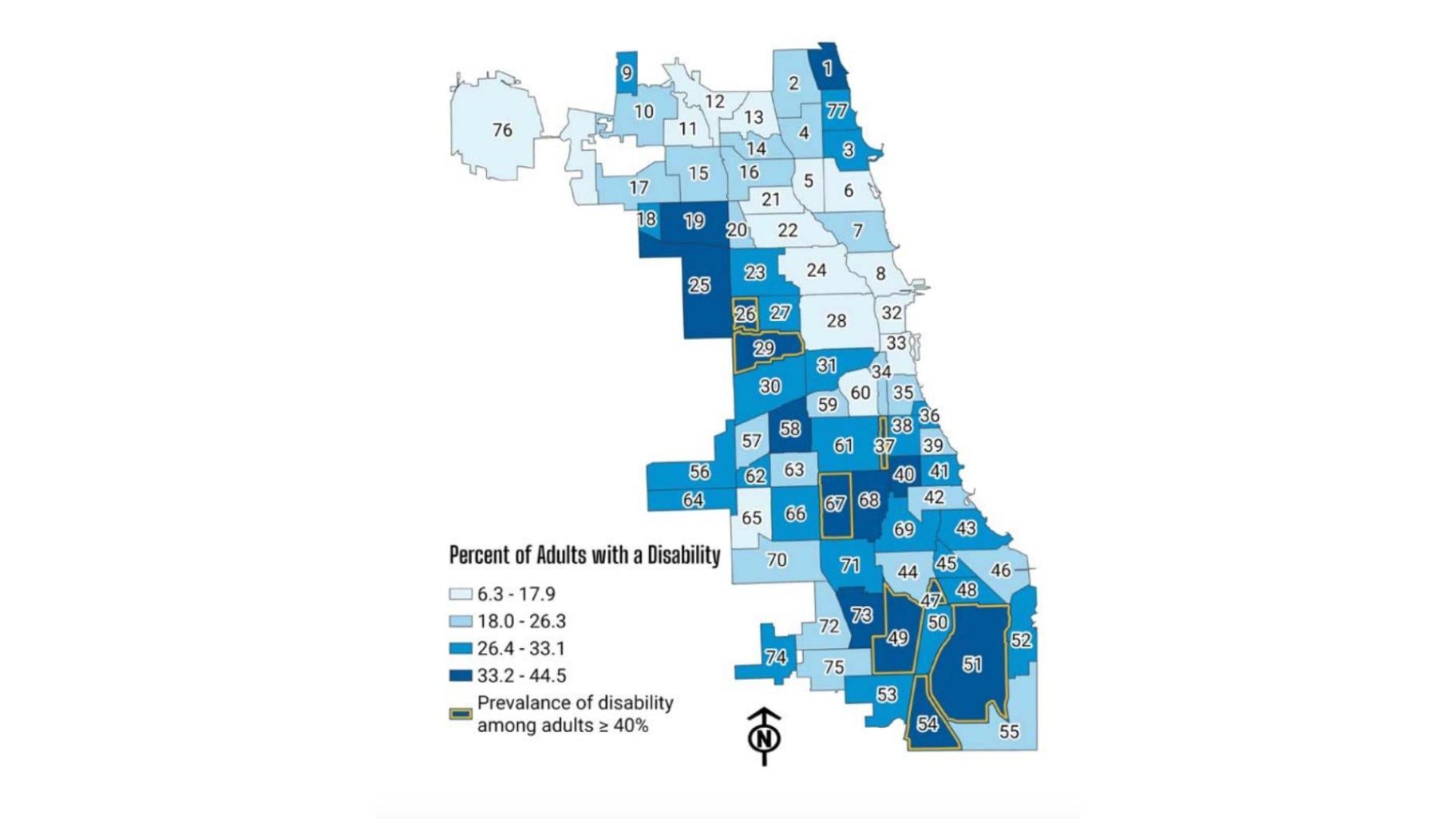 (Courtesy of Mayor’s Office for People with Disabilities and the Chicago Department of Public Health)
The most common types of disability were cognitive and mobility disabilities, the report found.
Over two-thirds, or nearly 70%, of adults with cognitive disabilities are under 45, the report found, with nearly 40% of adults with cognitive disabilities being young adults aged 18-29. Cognitive disabilities can include an intellectual or developmental disability, a mental health condition, or any condition that severely limits ability to concentrate, make decisions or remember, according to the report.
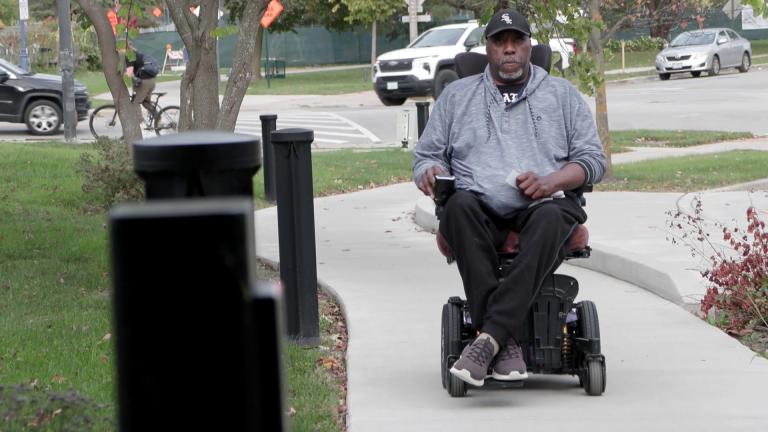
Seniors aged 65 and older accounted for the largest age group with a mobility disability, according to the report. Nearly 80% of adults with mobility disabilities are over 45.
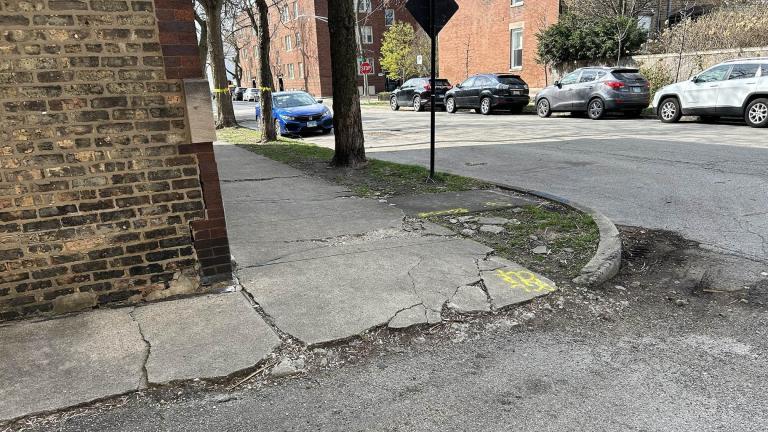
Adults with disabilities were also less likely to report sidewalks were well maintained compared to those without disabilities, according to the report. A WTTW News investigation in 2024 found a patchwork of programs in the city created geographical disparities over which sidewalks get repaired, and is often based on which receives the most complaints.
The data presented in the new report is from a 2024 Healthy Chicago Survey. The survey is conducted annually by CDPH and collects information from a random sample of over 4,000 Chicago adults from all 77 community areas about a range of health-related topics.
“I do think this report begs the question of: What does it mean to live a good life in Chicago?” Smock said. “Nothing is ever perfect, but I think that there’s a lot of ways that the city of Chicago, in particular, and everybody who invests in the city of Chicago, can do a lot better.”
Note: This article was published Feb. 12, 2026, and updated with video Feb. 19, 2026.
Contact Eunice Alpasan: [email protected]