Politics
Plan to Transform 6th Loop Office Building Into New Homes Advances
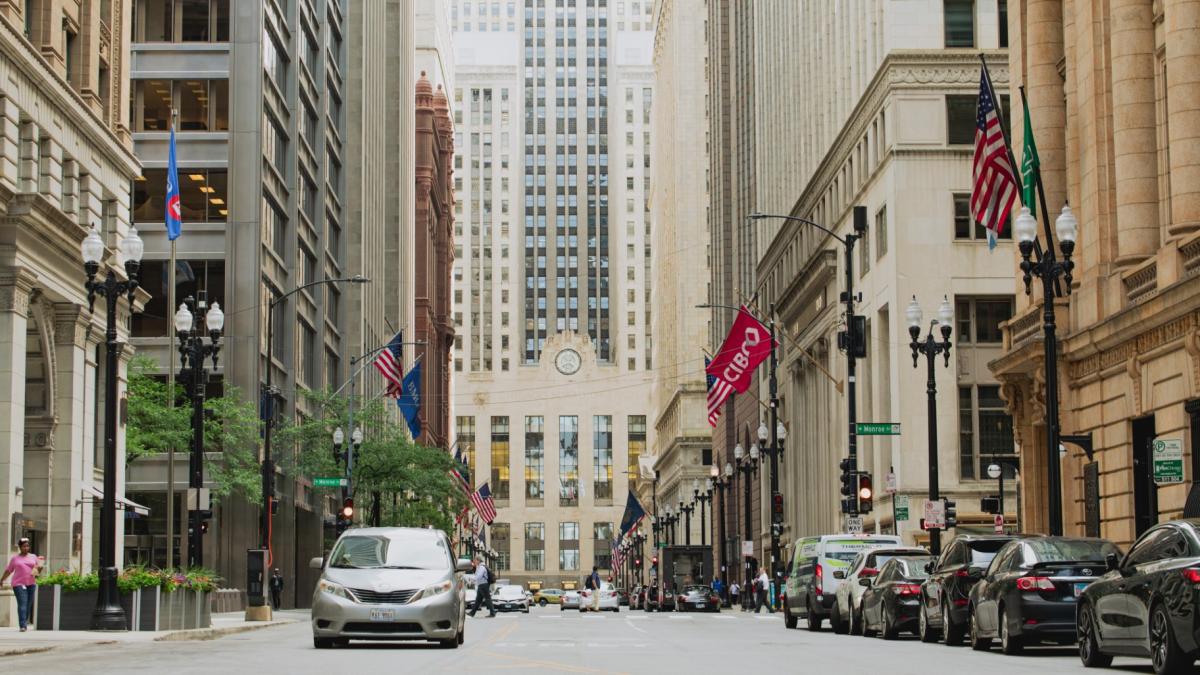 LaSalle Street in Chicago. (Michael Izquierdo / WTTW News)
A proposal to transform a sixth Loop office building into new homes with the help of a $57 million city subsidy is one step away from approval.
The City Council’s Finance Committee endorsed the $135 million project from Golub & Co to transform 16 floors of the 44-story tower at 30 N. LaSalle St. into 349 homes, including 105 units set aside for low- and moderate-income Chicagoans.
If approved by the City Council on Jan. 21, as expected after the Finance Committee’s unanimous endorsement Wednesday, the project will be the sixth commercial building in the heart of the city’s financial district to get the green light to be transformed into new homes.
The effort to breathe new life into Chicago’s financial district by transforming it into the city’s newest residential neighborhood has been embraced by Mayor Brandon Johnson after it was launched by former Mayor Lori Lightfoot in 2023.
The effort is on track to build 1,765 apartments in what is now mostly empty office space as part of an effort to reduce segregation in Chicago and chip away at the city’s shortage of affordable homes, officials said.
In all, the six projects are set to get $316.5 million in city subsidies and create 538 units of affordable housing in an area that has almost no apartments or condominiums within reach of most Chicagoans, records show.
The residential developments along LaSalle Street are required to put aside 30% of their units for Chicagoans earning 60% or less of the area’s median income, which is $71,940 for a family of four, according to city data, in order to get millions of dollars in city subsidies from the downtown tax-increment financing, or TIF, district.
Ald. Bill Conway (34th Ward) called the subsidies an investment into a new future for LaSalle Street between Washington Street and Jackson Boulevard, an area of the city significantly changed by the shift triggered by the COVID-19 pandemic in how and where Chicagoans work and shop.
By law, TIF districts capture all growth in the property tax base in a designated area for a set period of time, usually 23 years or more, and divert all that growth into a special fund for projects designed to spur redevelopment or for public projects such as schools or bridges.
While the number of people living downtown has doubled since 2000, that growth has bypassed LaSalle Street, where many of the historic buildings were built during a bygone era and are beloved but little used historic landmarks.
Contact Heather Cherone: @HeatherCherone | (773) 569-1863 | [email protected]