Investigations
Roseland Hospital Failed to Monitor a Patient During a Mental Health Crisis, Regulators Say. Now He’s Charged With Killing His Wife
EDITOR’S NOTE — This story includes discussion of suicide. If you or someone you know needs help, the national suicide and crisis lifeline in the U.S. is available by calling or texting 988. There is also an online chat at 988lifeline.org.
Paul Patton was in distress.
On Oct. 3, records show that emergency responders came to the 69-year-old south suburban man’s home after he called 911 amid a heated dispute with his wife. Patton told the responding officer he was worried he’d harm his wife or himself.
He was taken by ambulance to Roseland Community Hospital, a safety net facility that’s faced years of serious citations from regulators, complaints of neglect and financial stress.
Because he was experiencing thoughts of suicide, experts and regulators say Roseland’s ER should have taken special care to ensure he didn’t harm himself — keeping him in a private room or hallway away from the waiting area and having a staff member monitor him at all times.
That didn’t happen.
After spending nearly 90 minutes in the emergency department’s waiting room, then outside the ER entrance, Patton left the hospital and returned to his Calumet Park home, hospital regulatory reports obtained from the Illinois Department of Public Health and court filings show.
It was there, prosecutors say, that Patton picked up a knife – but he didn’t end his own life. Court records show that about three hours after the initial argument that led to the 911 call, Paul Patton allegedly grabbed a knife from the kitchen after another argument. According to the Cook County State’s Attorney’s office, he stabbed his wife, Gelola Patton, through the chest. Prosecutors say she managed to dial 911 to say that her husband had stabbed her.
Records show that police took Paul Patton into custody on the front porch of his home. Inside, they found an unresponsive Gelola Patton on the bathroom floor holding the knife. She was transported to Ingalls Hospital and was pronounced dead.
Patton now faces two counts of first-degree murder, to which he has pleaded not guilty.
Roseland’s failure to properly treat Patton and prevent him from leaving the hospital while in crisis, documented by hospital regulators in a report obtained by WTTW News, was such a serious breach the hospital received an “immediate jeopardy” citation.
That warning is the most serious deficiency a health care facility can be cited for, according to federal guidelines. It’s categorized as a failure that’s “clearly identifiable due to the severity of its harm or likelihood for serious harm and the immediate need for it to be corrected to avoid further or future serious harm.”
But Patton’s case isn’t an outlier.
Since 2023, Roseland has received at least four immediate jeopardy citations, with one case involving the death of an adult and another where a pregnant woman was transferred to another hospital before Roseland properly stabilized her — after which she gave birth to a stillborn boy, according to state records.
Those failures follow a pattern previously reported by WTTW News and ProPublica documenting eight immediate jeopardy citations between 2017 and 2022, as well as a number of lawsuits alleging neglect.
“There’s no real oversight of that place,” said Cecelia Harrison, a Roseland resident and community organizer who’s pushed for overhauling hospital administration. “We’ve had many leaders come into those roles and take advantage of the community, take advantage of the hospital, and move on. It’s a never-ending repeating cycle because no one cares about Roseland, they don’t care about the poor Black people here.”
WTTW News contacted Roseland via an email to its CEO, a message left with the hospital administration office, and multiple messages to Heron Agency, its public relations firm. The hospital did not respond.
WTTW News was unable to reach a member of the Patton family for comment. An attorney for Patton did not respond to a request for comment.
Failures of Care
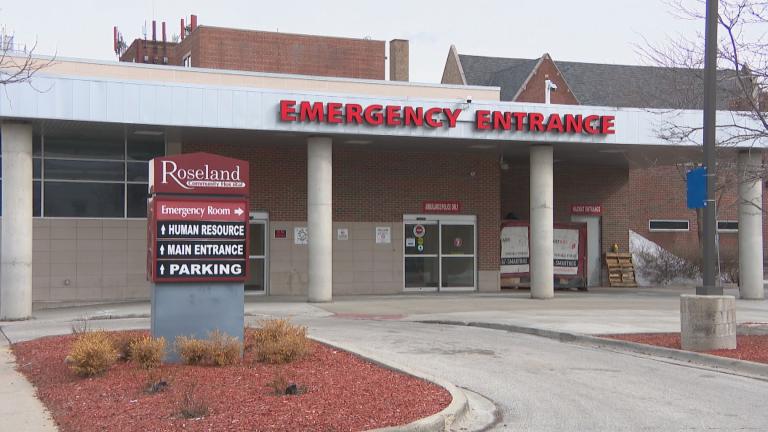
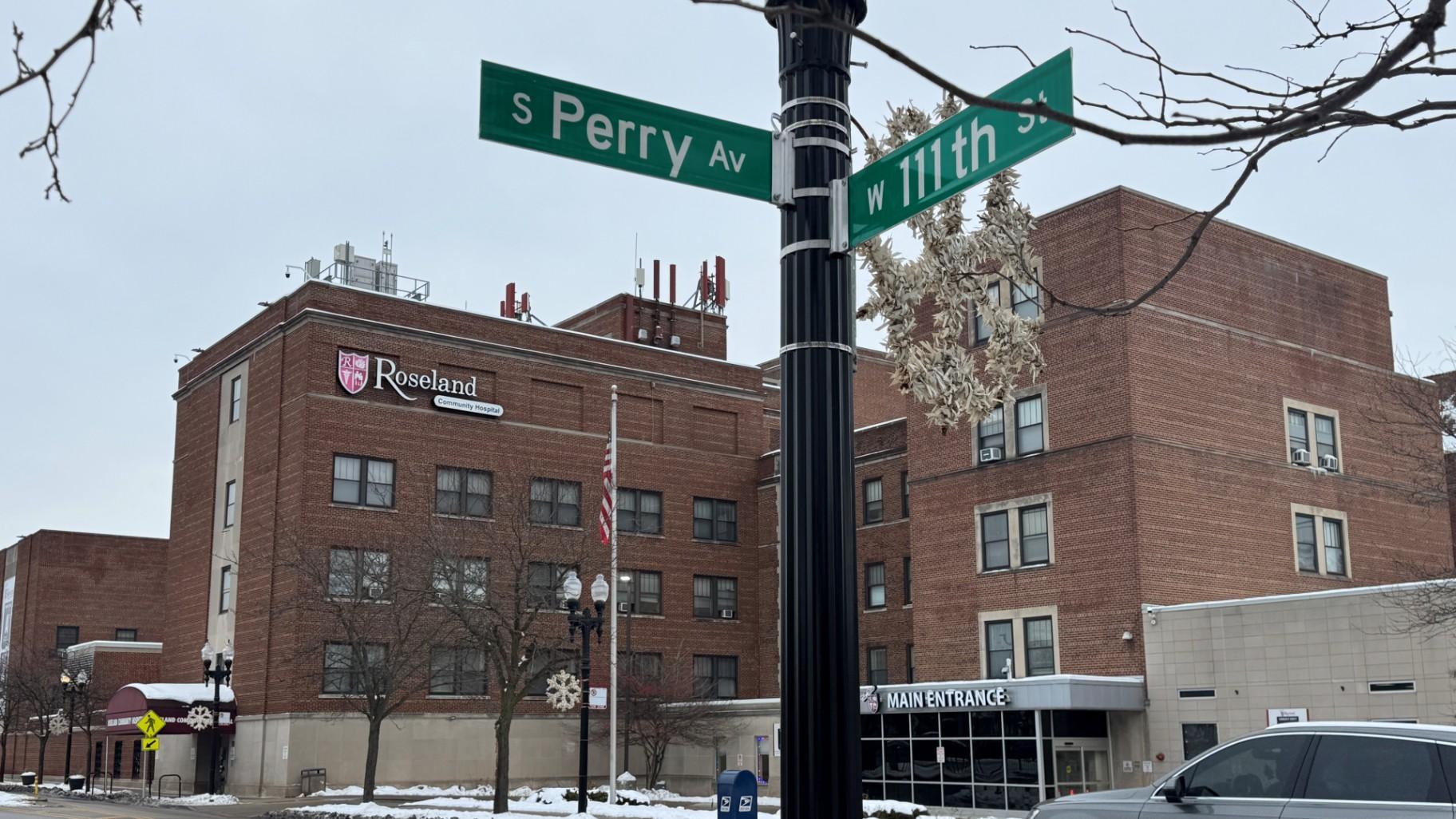 Roseland Community Hospital is pictured on Dec. 6, 2025. (WTTW News)
The string of events that ended in the death of Patton’s wife, Gelola, began around 7:30 p.m. Oct. 3, according to Cook County prosecutors, who say that the couple of more than 40 years got into an argument. Patton called 911, telling the responding officer he’d been drinking heavily and his wife had been “disrespecting” him, the police report shows.
He asked to be taken to the hospital for a psychiatric evaluation, because he was worried he’d hurt himself or his wife. The Calumet Park Fire Department took Patton by ambulance to Roseland, while his wife texted a family group chat to notify them of the situation, records show.
When a patient like Patton arrives at an emergency department, experts say that hospital staff should be well aware of the procedures to prevent someone from self-harm.
Dr. Emmy Betz, an emergency physician and public health researcher at the University of Colorado who serves as deputy director of the Injury and Violence Prevention Center, says that includes a risk assessment: “a conversation about the person’s risk factors and protective factors … it helps us gauge risk and then determine the best treatment plan for that person.”
According to the immediate jeopardy citation obtained by WTTW News, Patton’s record contains no suicide assessment.
And, Betz said, hospitals should ensure that suicidal patients are in a safe physical environment. Those practices follow guidelines laid out by the nonprofit health care accreditation organization the Joint Commission.
The guidelines outline procedures like making sure sharp objects aren’t in the room, changing a patient into clothes that can’t be used for self-harm and having a staff member watch the patient to make sure they don’t leave before a full assessment, Betz said.
Dr. Edwin Boudreaux, a clinical psychologist who leads UMass Chan Medical School’s Center for Accelerating Practices to End Suicide, said that while precautions to keep a patient from leaving the hospital can be challenging, they’re a critical part of caring for suicidal patients.
“Many larger (emergency departments) have locked, secure areas where their psychiatric patients are treated,” Boudreaux said. “But other, smaller emergency departments often don’t have that kind of capability … so it makes the observation all the more important. It also makes other precautions for the hospital important — location of the safe room, for example. If it’s close to an exit, close to an ambulance bay or something like that, that’s probably something to be avoided.”
A Roseland emergency department technician and medical director interviewed as part of the investigation both said that suicidal patients are to be “placed on 1:1 monitoring with a sitter,” with the medical director saying the patient should be evaluated by a doctor.
Patton was not monitored, records show.
It’s unclear whether those hospital standards are officially codified by Roseland.
“Per the Manager of Risk,” regulators wrote in the immediate jeopardy citation, “the Hospital does not have a policy related to care/oversight of the psychiatric patients in the ED.”
The gaps in care meant that Patton wasn’t being closely observed for some 90 minutes — and that his disappearance wasn’t noted by staff for another 90 minutes after he left.
A Series of Breaches
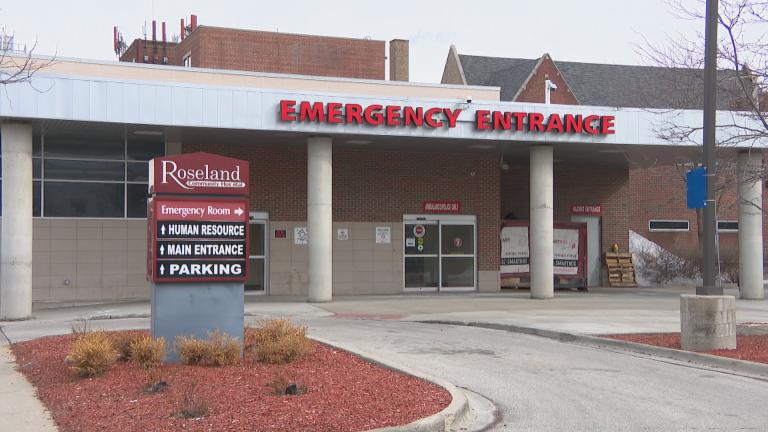
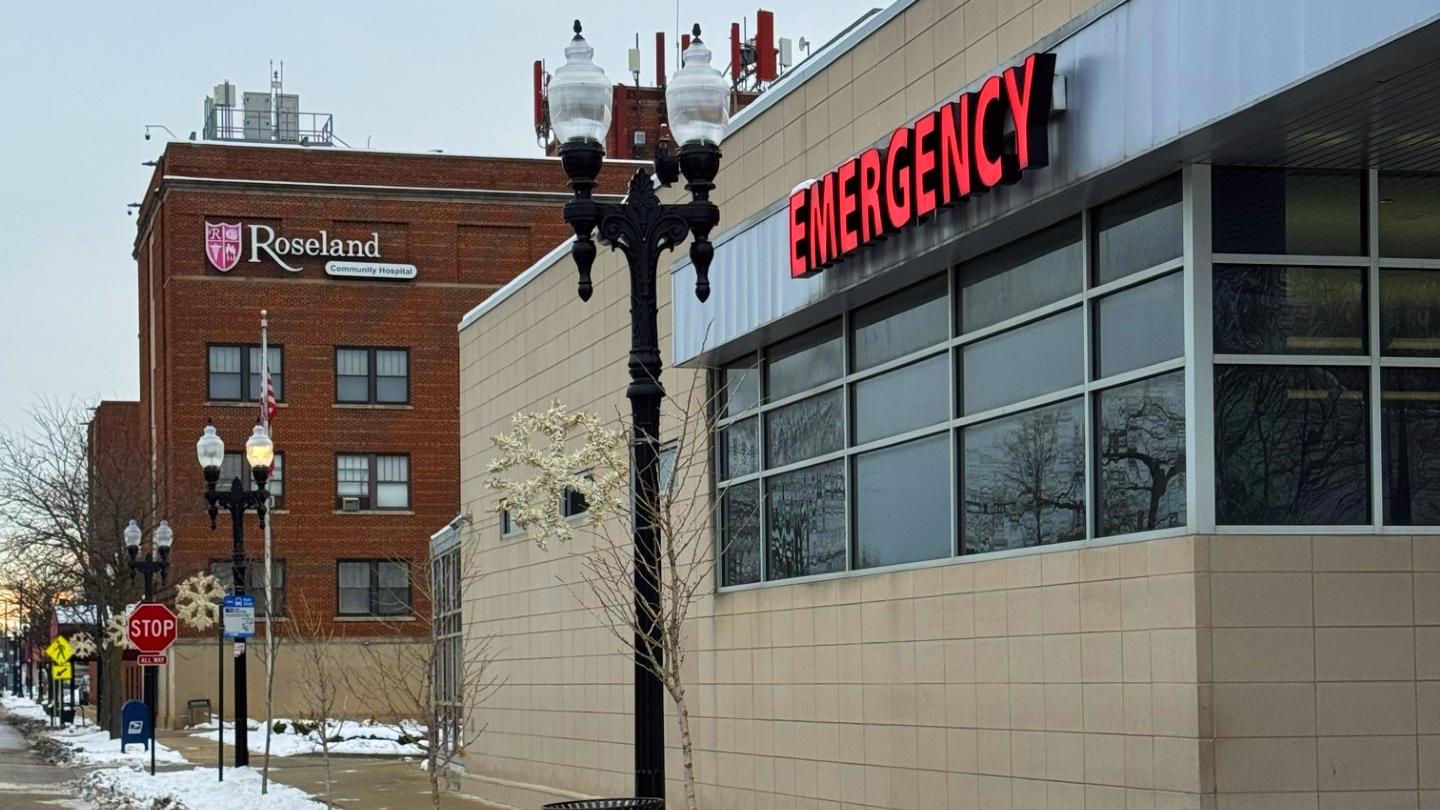 Roseland Community Hospital is pictured on Dec. 6, 2025. (WTTW News)
At the time WTTW News and ProPublica published the 2022 investigation, the hospital said it was working hard to identify deficiencies and improve its care.
Then-chief quality officer Sharon DeVita said in a statement that the COVID-19 pandemic had “strained staffing throughout all healthcare systems, especially urban and safety-net hospitals” and that Roseland had “redoubled its commitment to the process of continued improvement.”
According to a LinkedIn page for DeVita, she’s no longer with the hospital.
The four immediate jeopardy citations Roseland has received since 2023 ties it for the second-most such citations during the same time period in Illinois along with Jackson Park and South Shore Hospitals, also on the South Side. Montrose Behavioral Health Hospital in Uptown had the most in that time, with seven.
In February 2025, a 28-week pregnant woman came to Roseland complaining of nausea, vomiting and body aches. The citation says that the hospital failed to properly assess and stabilize her condition before transferring her to another hospital, with one Roseland employee confidentially telling regulators that she was “dumped on” the second facility.
At that hospital, the woman was treated for diabetic ketoacidosis, a dangerous buildup of acid in the blood, and delivered a stillborn boy.
Another immediate jeopardy citation was issued in 2023 for a patient brought in as a possible overdose case after several days of reportedly heavy crack cocaine usage. Records show the patient could not walk and complained of chest pains. After they became agitated and began screaming at staffers, hospital security arrived. Despite those public safety officers warning that the patient appeared unstable, a doctor ordered that the patient be discharged and escorted out.
Security wheeled the patient to a waiting area. After nearly five hours there, they were found unconscious and readmitted, then pronounced dead some 25 minutes later.
A third immediate jeopardy citation centered on the hospital’s failure to prevent a psychiatric patient from fleeing the hospital. Records show the person, who had not been following their medication regimen, came to the ER with paranoia and increased auditory hallucinations. That patient wasn’t properly observed, allowing them to pull the fire alarm and escape the hospital.
Regulators toured the hospital’s behavioral health unit as part of the subsequent investigation, noting in the official report that Roseland’s “failure to ensure patients exhibiting elopement behaviors were monitored … could potentially affect the current 14 behavioral health patients on census who are on elopement precautions.”
Roseland eventually followed a plan of correction for those three immediate jeopardy citations, bringing the hospital back into compliance. The most recent records obtained by WTTW News do not indicate whether the hospital is in compliance after the October 2025 citation.
The hospital also faced an investigation in 2023 that didn’t result in an immediate jeopardy citation, but found that a patient diagnosed with schizoaffective mania bipolar disorder was improperly discharged home rather than to the nursing home from which they were admitted. Roseland also failed to properly involve the patient’s legal guardian in the treatment plan or get consent for administering psychotropic drugs, and didn’t ensure a post-discharge plan was in place.
Roseland currently holds a one-star rating on a five-star scale on the Center for Medicare and Medicaid Services’ Care Compare tool. According to the most recent information in that database, patients’ median time from arrival to departure in Roseland’s emergency department is 246 minutes, compared to an average of 194 minutes across Illinois.
And, the ranking says, 10% of patients leave the ER before being seen, compared to an Illinois average of 4%.
According to the state’s Hospital Report Card tool, just 36% of patients would “definitely recommend” Roseland, 31 points lower than the statewide average.
Taking Aim at the Top
Community organizer Harrison works in health information administration and previously did consulting work for Roseland, which she says ended on bad terms. She’s launched a petition, she says, “to get some help in my community and … to call for the state of Illinois to come and do an emergency oversight of that hospital, because it is needed.”
Her petition, which at last count had more than 1,500 signatures, calls for replacing the Roseland board and CEO Tim Egan. While Egan had previous hospital administration experience when he took over Roseland, he doesn’t hold a medical degree. He’s also a committeeman for the Cook County Democratic Party. WTTW News and ProPublica previously reported that Egan’s political fund and his allies have benefited from his work with the hospital.
“I would like to see a community oversight board that is put into place,” Harrison said. “There need to be policies in place that require the community to vote in our next CEO, that require our community to vote in the next board members.”
Contact Nick Blumberg: [email protected] | (773) 509-5434 | @ndblumberg