Politics
Rival Chicago Budget Proposal Eliminates Garbage Fee Hike as Agreement Out of Sight
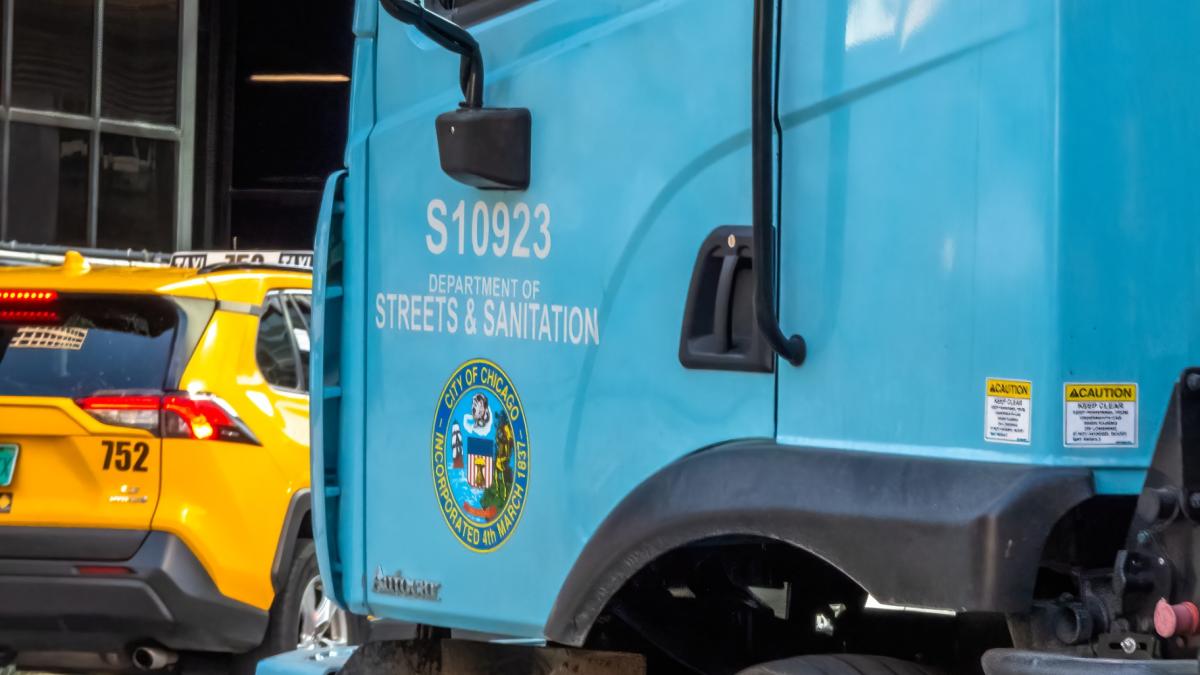 A Chicago Department of Streets and Sanitation vehicle is pictured in a file photo. (Marvin Samuel Tolentino Pineda / iStock)
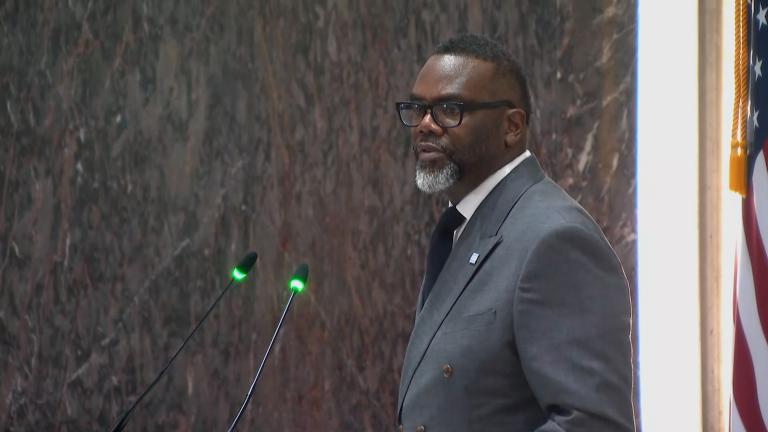
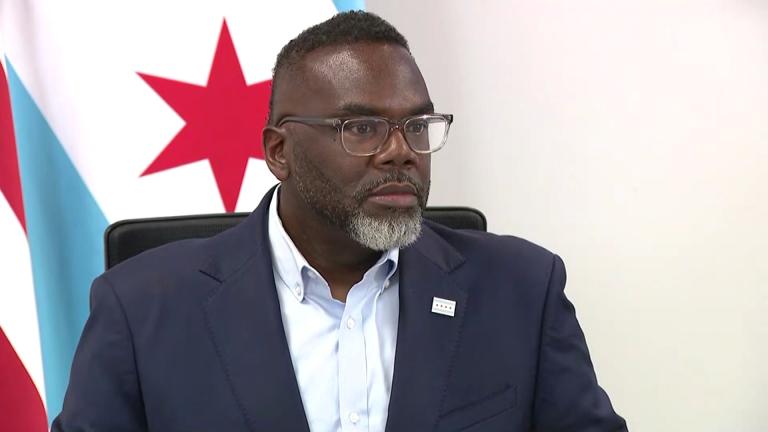
Mayor Brandon Johnson and the leaders of a group of Chicago City Council members backing a rival budget plan emerged from a brief meeting Monday afternoon no closer — and perhaps further away than ever — to breaking the deadlock gripping the city.
Johnson said the 11 members of the City Council declined to present a detailed revised proposal to close the city’s $1.19 billion budget gap without hiking garbage fees for most Chicagoans to $15 per month, which would have generated $35 million, as they initially proposed.
“There was not one proposal or idea that was put on the table for us to discuss,” Johnson told reporters outside his fifth floor office after the 30-minute meeting, which he repeatedly called a “disappointment.”
Johnson said the opponents of his budget appeared divided during the meeting, with some members of the City Council — who he declined to identify in response to a question from WTTW News — determined to avoid real negotiations over his proposed $16.6 billion spending plan.
“I’ve tried to warn the people of Chicago that there are individuals that are committed to destruction and chaos,” Johnson said.
The mayor said he and the supporters of the rival plan agree on how much money should be spent by the city and on which programs. Supporters of the rival plan did not dispute that assessment.
“Where they come up short with what they provided to me was ideas of how they’re going to actually generate revenue outside of what they have already put forward,” Johnson said.
Supporters of the rival budget proposal — which includes Finance Committee Chair Ald. Pat Dowell (3rd Ward) — refused to tell reporters at a news conference after the mayor’s remarks how they plan to make up the revenue that would have been generated by the garbage fee hike and still eliminate Johnson’s proposal to levy $33 per month per employee tax on companies with 500 or more employees.
Dowell said that plan would be unveiled Tuesday, when it is presented to the Finance Committee for a vote.
“We are not going to spend the next 12, 16 hours having somebody in this administration say ‘poo-poo,’ our numbers are wrong, our estimates are wrong,” Dowell said.
Ald. Nicole Lee (11th Ward) said the group — which slammed Johnson for not meeting directly with them a week ago — refused to share their detailed plan after the mayor would not tell them whether he would veto a spending plan that did not impose a so-called head tax.
All members of the group again ruled out voting for a budget that includes such a tax.
Johnson had promised to veto any spending plan that included an increase in the garbage fee, property tax hike, reimposed the grocery tax or cut the Chicago Police Department’s budget.
While a budget can pass with just 26 votes, it would take 34 alderpeople to override a mayoral veto.
During an earlier news conference before he met with alderpeople, Johnson said he was pleased that the rival budget proposal no longer included a garbage fee hike.
“Through our advocacy for working people, these members understand the importance of not passing budgets that disproportionately impact people already experiencing Trump cuts,” said Johnson, who has repeatedly cast his proposed spending plan as the best way to blunt cuts imposed by the Trump administration.
Johnson said he still has “serious fiscal concerns” about the rival budget plan, making it unclear how — or when — the stalemate over the city’s $16.6 billion spending plan for 2026 could be resolved.
Budget Director Annette Guzman said the rival spending plan does not “reflect a balanced budget,” as required by state law.
Lee and Dowell insisted, without offering evidence, that their spending plan is balanced.
With just 15 days left before the deadline to avoid an unprecedented shutdown of city government, only 20 members showed up for a City Council meeting scheduled for Monday morning at the insistence of the mayor’s opponents. Without a majority of City Council members present, the meeting was quickly adjourned.
Most of the alderpeople present for the meeting were allied with the mayor.
Officials cannot pass a short-term ordinance to keep City Hall functioning while negotiations continue, officials said. That means without a budget agreement, more than 30,000 workers will not be paid and city services will stop.
The City Council’s Finance Committee is scheduled to meet at 11 a.m. Tuesday to consider both the mayor’s proposal and the rival plan. The Budget Committee is scheduled to meet at 2 p.m. Tuesday.
If a budget proposal wins the endorsement of both committees, the full City Council could take it up as soon as Thursday and approve it Friday.
Much of the debate over Johnson’s 2026 budget, which would impose $623 million in new taxes on the wealthiest Chicagoans and largest firms, remains focused on his call to reimpose the head tax to fund violence prevention and youth employment programs.
The third, and so far, final, proposal from Johnson would impose a $33 per employee tax on companies with 500 or more employees to generate $82 million.
While Johnson and his allies have defended the head tax as the best way to continue funding the programs they credit with reducing Chicago’s homicide rate by approximately 30% and the city’s overall violent crime rate by 22.5%, opponents contend the tax will kill jobs and stifle economic growth.
In order to eliminate the so-called head tax and pay $139.9 million more toward Chicago’s woefully underfunded pensions and eliminate the $166 million the city is set to borrow to pay firefighters, who worked without a contract for four years, the revised alternative plan raises a host of fines and fees and counts on new revenue from sources that the Johnson administration says will threaten the city’s financial stability.
The proposal counts on $48.4 million in revenue from yet-to-be installed slot machines at O’Hare and Midway airports.
“Those are not realistic assumptions that we could rely on,” Chief Financial Officer Jill Jaworski said.
Johnson’s proposal counts on just $31 million in revenue from the temporary casino, now open in River North, and the permanent casino, set to open next year, records show. State law allows as many as 4,000 gaming positions, including slots at O’Hare and Midway airports, in Chicago.
City officials have been counting on casino gaming to significantly ease the pressure on the city’s finances while creating thousands of jobs and drawing tourists — and their fat wallets.
In addition, the rival budget plan also urges the city to increase its estimates on tax revenue collection by $31.6 million, saying the mayor’s plan is too conservative. That could threaten the city’s financial stability, Johnson said.
The proposal also relies on $26 million from an “augmented reality” advertising licensing program that would allow companies to impose videos and other content on city properties like Millennium Park or the Riverwalk that can be seen through a smartphone, virtual reality glasses or tablet, according to the proposal.
An additional $19 million would come from additional taxes on short-term rentals through home-sharing platforms like Airbnb, according to the rival proposal.
Ald. Gilbert Villegas (36th Ward) said he was confident that the new version of the rival budget proposal was balanced and fiscally sound, even while adding $5 million to the Chicago Public Library budget to purchase new materials and restoring $6.2 million the initial version of their spending plan cut from the budget to provide jobs to teens and young adults during the summer along with funding to help those suffering from gender-based violence.
Contact Heather Cherone: @HeatherCherone | (773) 569-1863 | [email protected]