Politics
Chicago Set to Borrow $283.3M to Resolve Police Misconduct Lawsuits
 (Michael Izquierdo / WTTW News)
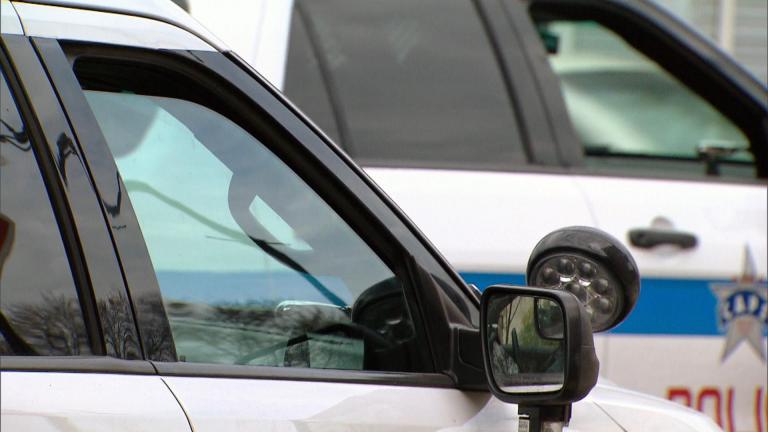
Chicago must borrow $283.3 million to cover the soaring cost of lawsuits alleging Chicago police officers committed a wide range of misconduct — including wrongful convictions and improper pursuits — as part of the city’s 2026 budget, Mayor Brandon Johnson said.
It will likely cost Chicago taxpayers approximately $52 million in interest to borrow that money and pay off during the next five years, according to estimates provided to the Chicago City Council by Chief Financial Officer Jill Jaworski.
Johnson told reporters the move was “prudent,” given the massive liability the city faces after decades of police scandals, misconduct and brutality.
Resolving the lawsuits will also allow the city to provide “restoration and restitution to families who have been harmed by police misconduct,” Johnson said.
Several members of the City Council said they were shocked by the amount of money Johnson’s administration is proposing to borrow to resolve lawsuits alleging police misconduct.
“It’s additional money going just to debt service, that’s not going to paying down the pension debt, that’s not going to affordable housing or public safety initiatives, mental health initiatives,” Ald. Matt Martin (47th Ward) said. “That is not the sort of investment that I think Chicagoans want to see.”
Martin, who said the proposal was “not in the best interest of Chicagoans” was one of two members of the Progressive Caucus who voted against last year’s budget, giving Johnson only the slimmest of margins of victory.
Ald. Mike Rodriguez (22nd Ward) said the scale of the city’s police misconduct liability caught him off guard.
“It’s overwhelming,” Rodriguez said. “The fact is, this has been in the background for a number of years. But the chickens are coming home to roost now. The day of reckoning is absolutely here.”
City officials must step up efforts to comply with the consent decree, the federal court order designed to compel the department to change the way it trains, supervises and disciplines officers and stop routinely violating the civil rights of Black and Latino Chicagoans.
“These settlements are going to keep on coming unless we really dig deep on the consent decree,” Rodriguez said.
Six and a half years after the consent decree was implemented, CPD had fully complied with 22% of its requirements by the end of June, according to the court-appointed monitoring team charged with keeping track of reform efforts.
Ald. Jessie Fuentes (26th Ward) said she hoped this moment serves as a reckoning about both the financial toll and the human cost of police misconduct.
Fuentes represents Humboldt Park, home to many people who contend they were framed by disgraced former CPD Detective Reynaldo Guevara. Taxpayers have paid $112 million to resolve nine cases naming Guevara; 44 cases are pending, records show.
“These families had to suffer an immense amount of trauma, and not just the individuals who were behind bars, but their children, their parents, their relatives, who still live in our community,” Fuentes said, calling it an injury added to an insult that those residents’ tax dollars are being used to defend Guevara and other officers.
In all, Chicago taxpayers have paid at least $42.4 million to defend Guevara and the other officers he worked with during his 29-year career, on top of the amount paid to resolve the lawsuits.
“I think it is extremely important for us to recognize that something needs to change,” Fuentes said.
The city has not borrowed funds to cover the cost of resolving police misconduct lawsuits since former Mayor Rahm Emanuel’s tenure. Johnson’s proposal represents the first time ever that the City Council has been asked to approve funds outside of CPD’s regular budget to pay to resolve the lawsuits.
Chicago taxpayers have spent at least $285.3 million to resolve lawsuits alleging Chicago police officers committed a wide range of misconduct so far in 2025, according to an analysis of city data by WTTW News.
That is $200 million more than the city’s annual budget to resolve lawsuits alleging police misconduct, city records show.
In 2024, taxpayers spent at least $107.5 million to resolve police misconduct lawsuits, according to a separate WTTW News analysis.
In 2026, taxpayers are set to pay an additional $90 million to 180 people who spent a combined nearly 200 years in prison after being wrongfully convicted based on what they allege was fabricated evidence gathered by former Chicago Police Sgt. Ronald Watts, who was convicted in 2013 of taking bribes, and other officers.
Despite that, the 2026 budget sets aside just $82.5 million to cover the cost of resolving police misconduct lawsuits.
That should be increased, Martin said, to ensure that the city’s budget accurately reflects what it expects to spend to resolve police misconduct lawsuits and ensure it is acting transparently.
“There are no free lunches, and so we’re going to have to buckle down and figure out what the least harmful tradeoffs are going to be and level with our community before making those decisions,” Martin said.
The 2026 budget will include provisions to ensure that CPD continues to move in a “stronger and better direction,” Johnson said.
Police brass will be required to submit monthly reports to the City Council on efforts to create a system designed to alert supervisors about which officers have been the subject of repeated police misconduct allegations.
CPD must implement that system under the terms of the consent decree.
The University of Chicago Crime Lab began work on the so-called Officer Support System, also known as OSS, in 2016, and began testing it in a South Side police district in September 2020, only to face repeated and lengthy delays, caused in part by decisions by CPD leadership to transfer the staff members assigned to run the system to patrol, according to a letter obtained by WTTW News through the Freedom of Information Act.
That system could have been rolled out citywide in May 2021, but it remains in use in only two of Chicago’s 22 police districts. CPD officials are developing a new system, officials have told the judge overseeing the reform push.
WTTW News coverage of policing and police reform is supported by The Joyce Foundation.
Contact Heather Cherone: @HeatherCherone | (773) 569-1863 | [email protected]