Business
Mayor Brandon Johnson Doubles Down on Taxing Big Companies, Sparking Debate
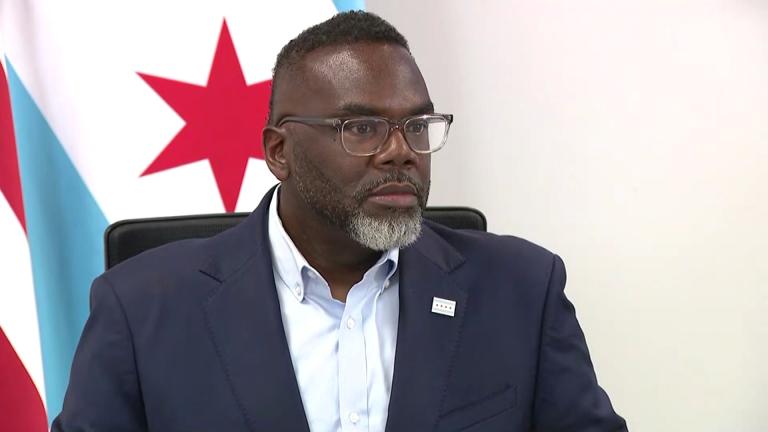
Mayor Brandon Johnson is calling for more taxes on big companies in his 2026 budget proposal.
Under the mayor’s plan, businesses in Chicago with more than 100 employees would have to pay $21 for each employee every month.
Johnson said the extra charge would generate $100 million to fund local services like violence prevention. But it’s sparking heated debate as critics say the tax would hurt the local economy.
Johnson defended the plan in a news conference Thursday, saying companies should invest more in the city. He told reporters that the tax would only impact 3% of the city’s largest corporations.
Ishan Daya, co-director at the Institute for Public Good, a nonpartisan advocacy and policy group, said big companies should pay their fair share.
“Do we either tax corporations or tax working people in a moment where their health insurance plans are increasing or do we cut the services that Chicagoans rely on every day?” Daya said.
But getting enough support in the Chicago City Council to pass the tax could be an uphill battle. It’s been panned by several alderpeople and opponents who call the idea a “job killer.”
Pat Doerr, director of the Hospitality Business Association of Chicago, said the costs of the taxes are too high and they would discourage companies from moving to the city and hiring locally.
“Having to tell somebody who wants to start a business here, ‘Oh, by the way, if you do us a favor and create this many jobs, you’re going to owe us an extra $2,100 a month for those hundred employees,’ is not an economic development pitch that I think even Shakespeare could sell,” Doerr said.
The city had a head tax in the past, from 1973 to 2012, of $4 per employee per month for companies with 50 or more employees. It was phased out by Mayor Rahm Emanuel.
Now, the city faces a looming $1.2 billion budget gap and federal funding uncertainties. To help fill the hole, Johnson is also pushing for taxes on services like boat mooring and social media — an effort to target the wealthiest Chicagoans.
Daya said big companies also rely on the city to be safe and produce a work force, and they should pitch in to support community safety.
“What we’re asking is for these corporations who’ve said, ‘We want to see improved public safety within our city,’ to share that burden with working-class people that pay for it every day,” Daya said.
Doerr said local leaders should focus more on job creation and managing spending instead of imposing new taxes to address the city’s funding crisis.
“It’s not a sin that businesses should be paying at the last minute,” Doerr said.