Politics
Chicago Police Department Overspent Its Budget By $501M Over 5 Years: Data
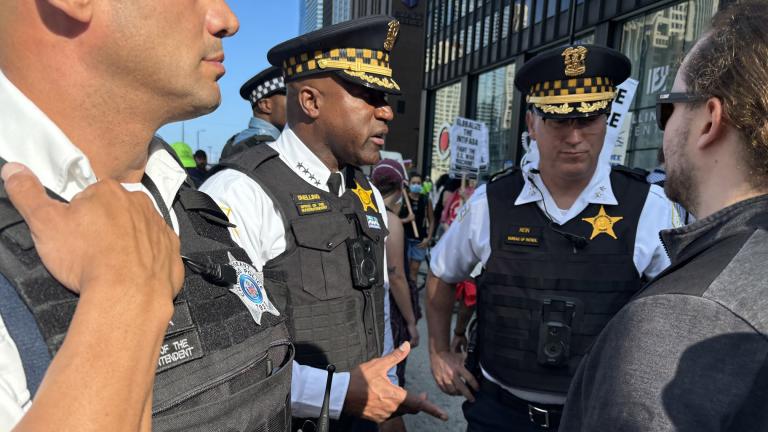
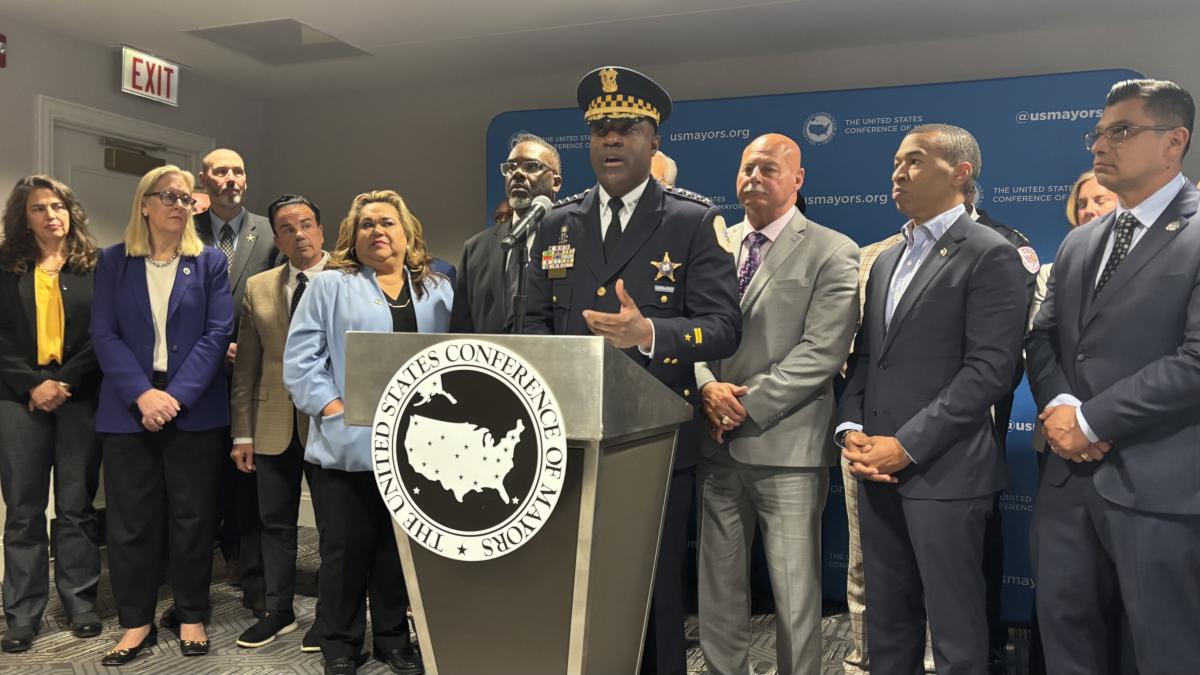 Chicago Police Supt. Larry Snelling addresses the news media on Monday, April 28, 2025, at a meeting of the U.S. Conference of Mayors. (Heather Cherone / WTTW News)
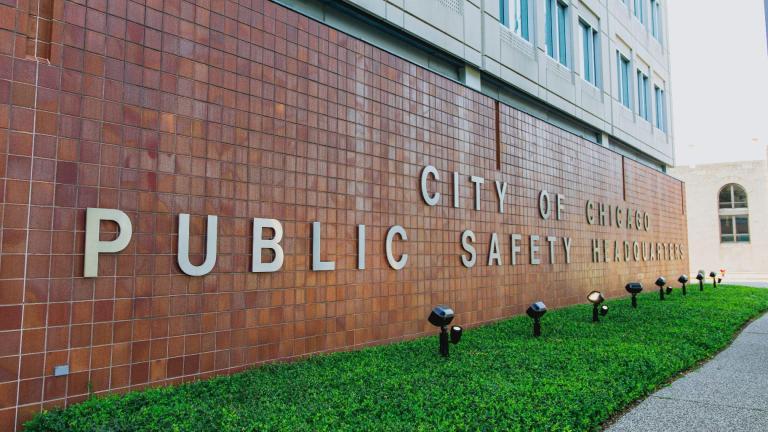
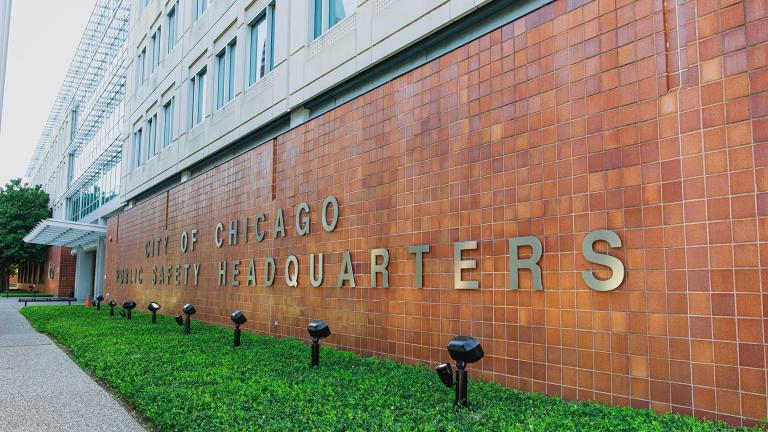
The Chicago Police Department spent more than its City Council-approved budget in five of the last six years, costing Chicago taxpayers more than $501.2 million in unanticipated expenses, records show.
The only year that CPD did not overspend its budget was 2020, when with department operations upended by the COVID-19 pandemic, CPD ended the year nearly $128.5 million under budget, according to the city’s Annual Comprehensive Financial Reports from 2019 to 2024.
Allowing CPD to spend unlimited sums of taxpayer money is a “crazy way to run a city,” said Justin Marlowe, a professor in the University of Chicago Harris School of Public Policy, and the director of the Center for Municipal Finance.
“The City Council controls the city’s purse strings,” Marlowe said. “There is no doubt the City Council could be much more meaningfully engaged. But alderpeople would have to choose to exercise that power, and it could be politically costly.”
With two full months left in 2025, CPD is certain to exceed its $2.09 billion annual budget, having already paid $192.3 million to officers for working extra hours through September, according to a database published by Inspector General Deborah Witzburg. That is nearly double CPD’s annual budget for overtime.
In addition, Chicago taxpayers have spent at least $266.8 million to resolve nearly two and a half dozen lawsuits, exceeding the city’s annual budget to resolve lawsuits alleging police misconduct by nearly $185 million, city records show.
CPD Supt. Larry Snelling is set to appear Wednesday before the City Council’s Budget and Government Operations Committee to defend the department’s 2026 proposed budget, which is set to swell to $2.11 billion, increasing by $37.9 million as compared with 2025 to cover the cost of salary increases required by agreements with unions representing members.
CPD’s budget includes an estimated savings of $30 million from a partial hiring freeze of long vacant positions, officials said.
CPD’s budget accounts for one-third of the city’s $6 billion corporate fund, which the City Council has wide discretion to spend.
In all, the budgets for the Office of Public Safety Administration, the Chicago Police Board, the Office of Emergency Management and Communications, the Chicago Fire Department, the Civilian Office of Police Accountability and the Community Commission for Public Safety and Accountability have a combined budget of $3.2 billion, or more than half of all of the discretionary funds the City Council has authority to spend.
Between 2019, when CPD spent $1.59 billion, and 2024, when CPD spent $1.94 billion, police spending grew 22%, records show.
CPD overspent its 2024 budget by a total of $204 million, records show. That includes exceeding its personnel budget by more than $128 million, according to the 2024 audit, even though the department has approximately 1,000 vacant positions, records show.
Mayor Brandon Johnson said in July that was “unacceptable,” and moved to limit police overtime spending to no more than $200 million in 2026, even though CPD is certain to spend more than that by the end of 2025.
However, Johnson’s proposed budget for 2026 sets aside just $82.5 million to cover the cost of resolving police misconduct lawsuits, even though the city has already agreed to spend $90 million next year to resolve 176 lawsuits tied to former Chicago Police Sgt. Ronald Watts and his team.
Focus on How to Close Budget Gap With Cuts, Taxes
The continued growth of CPD’s budget comes even as the City Council struggles to close a $1.19 billion projected shortfall in 2026.
Johnson’s proposed $16.6 billion spending plan calls for more than $617 million in new taxes on the wealthiest Chicagoans and largest firms, saying it only makes sense for Chicago’s largest companies to “put more skin in the game” in order to allow the city to “double down” on efforts that are working.
The most controversial proposal included in Johnson’s budget would impose a $21 per employee tax on large companies to generate $100 million to fund violence prevention and youth employment programs.
That proposal immediately triggered outrage in the city’s business community, which blasted that proposal as a job killer.
Gov. JB Pritzker joined that chorus, saying he is “absolutely, four-square opposed” to the imposition of the head tax.
“It penalizes the very thing that we want, which is more employment in the city of Chicago,” Pritzker said. “It makes it very hard to attract companies from outside the city to come in and harder for companies already here to stay.”
Pritzker said city officials need to find more “efficiencies,” or cuts, a call echoed by nearly all of the mayor’s opponents on the City Council and even some of his allies, complicating the spending plan’s path to passage by the Dec. 31 deadline.
But none of the alderpeople or business leaders who have called on Johnson repeatedly to revise his spending plan to include more cuts to city spending said they would vote for a budget that cuts even a single dollar from the Chicago Police Department’s budget, despite its chronic overspending and significant budget growth.
Because CPD’s budget takes up such a large share of the corporate fund, significant cuts would threaten the ability of other departments to continue to function, officials said.
Derek Douglas, the president of the Civic Committee and the Commercial Club of Chicago, called Johnson’s head tax proposal the equivalent of being “stabbed in the heart.”
“There is more room for efficiencies,” Douglas said. “Efficiencies first.”
Dubbed the Community Safety Fund, the tax would send $62.3 million to the Department of Family and Support Services, $14.5 million to the Chicago Department of Public Health and $3.5 million to CPD, records show.
The fund would pay for CPD’s 31 counselors, who provide mental health and substance abuse counseling services to CPD members, records show.
The bulk would be used for violence prevention programs, which the Trump administration has slashed even though city officials credit those programs for the sustained drop in crime in Chicago since the pandemic began to wane.
Chicago Police Department data shows there have been nearly 36% fewer shootings, and homicides are down 29% and robberies dropped 34%.
Douglas said he would not encourage the City Council to avoid the head tax by cutting police spending. A plan to replace the $100 million Johnson is counting on from the resurrected head tax is in the works, Douglas said.
“We are making progress now on public safety,” Douglas said. “We don’t want to threaten that.”
Ald. Marty Quinn (13th Ward) said he trusted Snelling and the commanders of the police district that covers his ward to make the right decision on how to spend CPD resources, and would not support a spending plan that reduced the police budget.
While agreeing with Quinn that CPD’s budget should not be cut, Ald. Bill Conway (34th Ward) acknowledged that the City Council could do a better job of keeping tabs on spending across city departments.
“It’s pretty clear in the city budget that we are playing a little bit of a known shell game that we all seem to know is happening,” said Conway, a frequent critic of Johnson. “It’s clear as day out there, that in the sense that we approve in the city budget a number of vacancies, that we could not fill in a year.”
“We need to continue to stay vigilant on keeping up throughout the year and where we are on a budget and spending basis,” Conway said.
But Ald. Rossana Rodriguez Sanchez (33rd Ward), who introduced Treatment Not Trauma in September 2020 and reshaped the debate over how to protect those suffering from a mental health crisis from police violence, said she is frustrated that CPD’s budget continues to grow, more than two years into what Johnson hopes will be his first term in office.
The original Treatment not Trauma plan would have reduced CPD’s budget to find enough money to reopen the city’s mental health clinics and establish a citywide program that would send emergency medical technicians and mental health professionals to calls for help from those in crisis.
Since Johnson took office, CPD’s budget has grown nearly 21%, records show.
“They have been throwing money at the Chicago Police Department for decades,” Rodriguez Sanchez said. “It doesn’t matter if the crime is high or low. It does not matter. It’s the only agency that consistently gets their budget increased while the rest of the agencies in the government have to, you know, adjust their budgets and lose programs. And I think that that’s one of the things that have gotten us in the mess that we are, and we really need to address it.”
Ald. Andre Vasquez (40th Ward) has repeatedly called for CPD’s operations and spending to be audited to give the City Council the ability to make informed decisions that help fulfill efforts to transform CPD into an agency better prepared to take a more holistic approach to public safety that focuses on what Vasquez and other progressive officials call the “root causes of crime” — mental illness, poverty and disinvestment.
“The officers don’t want to do all the work that we’re putting on their plate, and so if we actually took the time to do a proper audit to allocate certain responsibilities to different departments, you could then right-size it in a way where CPD could focus on their core functions,” including investigations, arrests and emergency response, Vasquez said.
A long-awaited study of whether Chicago police officers are efficiently and effectively deployed across the city to stop crime and respond to calls for help is nearly complete, officials said.
That study will not make recommendations to reduce CPD’s budget, officials said.
The study will help police brass determine “if we’re getting the best bang for our buck with our officers out there showing up, overtime, things of that nature, this is going to help us get to the bottom of that,” Snelling said during a public meeting on Oct. 23.
WTTW News coverage of policing and police reform is supported by The Joyce Foundation.
Contact Heather Cherone: @HeatherCherone | (773) 569-1863 | [email protected]