Politics
Chicago Professors Analyze the Politics of the Government Shutdown: ‘There Is Building Pressure’
The federal government shutdown hit Day 30 on Thursday — just five days short of the record set back in 2019. And with no deal between Democrats and Republicans in sight, that record looks likely to fall.
Meanwhile, thousands of federal workers have been furloughed, with thousands more still on the job without pay. Programs like SNAP are set to run dry of funding come Saturday.
At the heart of the shutdown are partisan disagreements on extending a set of Affordable Care Act tax subsidies created in 2022.
A recent Ipsos poll shows Americans are growing more aware — and more worried — about the government shutdown: 75% now say they’re concerned, up from 66% when the shutdown began.
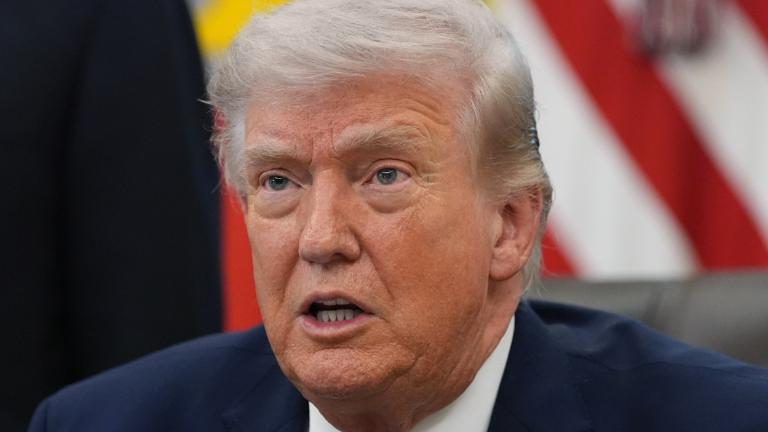
When it comes to blame, 45% of Americans point to congressional Republicans and President Donald Trump, while 33% blame congressional Democrats.
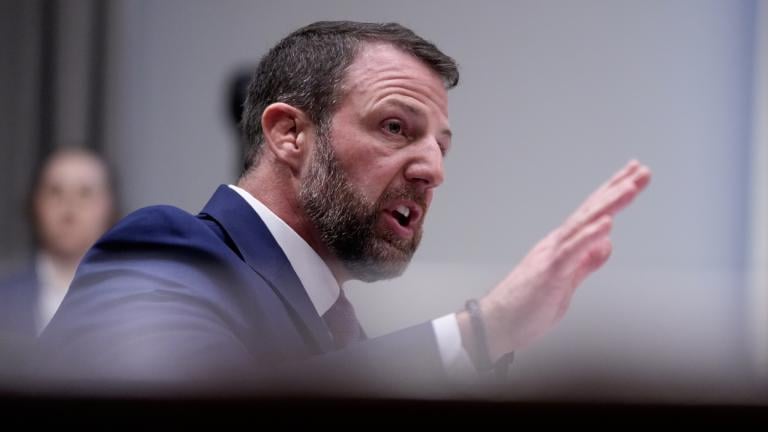
Here’s how two Chicago-area political scientists — Tabitha Bonilla of Northwestern University and Mark John Hansen of the University of Chicago — are viewing the politics of the shutdown and which party is under more pressure.
(Bonilla and Hansen’s answers have been edited for length and clarity.)
WTTW News: On Monday, the largest union representing federal workers came out publicly in support of the clean continuing resolution, which congressional Democrats have rejected. Do you see Democrats feeling the pressure to pass that clean CR, so that federal workers can get paid again?
Tabitha Bonilla: I do think that there is building pressure for them to pass that. I also think that there’s understandable concern that if they do so they may not have this same strength to hold their ground to protect the health care subsidies that they’re trying to push for later on. I think the pressure is not fully on their side, and I also think if you look at what unions did in the last election cycle they were not fully taking the sides of Democrats as they had maybe historically, so I don’t know that that is necessarily going to be the biggest driver for pushing Democrats to give in at this point.
Republicans argue that the government should open first, and then negotiations on the health care subsidies can proceed. But if the government does reopen without those subsidies in place, can Democrats trust that Republicans and Trump will negotiate on this issue?
John Mark Hansen: Well, Democrats don’t think that that would be the case. One of the things that we’ve seen is that there is no deal with Donald Trump that is a done deal and no promise that he makes that’s a solid promise. I think Democrats think, ‘If we just give up and return for a promise to talk about it, we’ll get nothing at all.’ In the meantime, if we extend the shutdown we’re going to get into a period where the consequences of the shutdown begin to hit more people. Benefits will come to an end on Nov. 1, so very soon, and the expiration of the Obamacare subsidies will happen at the end of December, and the more that Democrats can keep a focus on that I think probably the better for them. We’ve already seen hesitation in the Republican ranks to go through with the cuts in health care subsidies.
Speaker Mike Johnson has said emergency funds will not be used to fund SNAP past Saturday, Nov. 1, because funding for all programs affected by the shutdown need to be restored simultaneously, not one by one. What do you make of that argument?
Hansen: That’s exactly what Republicans have proposed. They’re basically giving us the vote on the continuing resolution to extend the budget that was passed last year for an additional several months. There’s really nothing new there. By the same token, what will happen is that those cuts right now are in prospect and those cuts will become real. Even though there’s the stereotype out there that the Supplemental Nutrition (Assistance) Program is something that only benefits urban minorities, in fact, it’s very important even in Republican constituencies. So the pressure is going to increase on Republicans to do something, and doing something might well involve having a serious talk with Democrats.
What happens when Republican constituencies also start to feel the pain of higher health care premiums?
Bonilla: I think that’s partly what we’re seeing now. There’s a lot of reporting that indicates that the communities that will be hardest hit by the ending of these health care subsidies are in fact Republican strongholds. Democrats are really trying to leverage that information to solidify their position and come at it from a position of strength — that they are doing this for working families, for Americans as a whole and not just their constituents. The public opinion is a little on their side. As more Republicans start to break rank that seems to solidify the Democrats’ position more and I do think that along with many other increased costs — if SNAP payments do not go through, if families see really big increases in their health care — that this does kind of support the Democrat position, but again policy doesn’t always translate into differing party support so the gains may be marginal in the next set of polls we see.
Is reopening the government high on the president’s priority list?
Bonilla: He seems to be using this as a way to punish Democrats further. When he talks about it, he talks about how he’s gonna fire workers for activities Democrats want to focus on. He talks about penalizing them. So the language that we have seen does not seem like he cares about it other than pushing Democrats to do what he wants and to meet the Republican demands.