Politics
CNN Anchor Abby Phillip Has a New Book on Jesse Jackson’s Lasting Impact on Politics and Black Power
Who can forget that night in November 2008 when Barack Obama delivered his victory speech in Grant Park, having become the first Black person ever elected to the presidency.
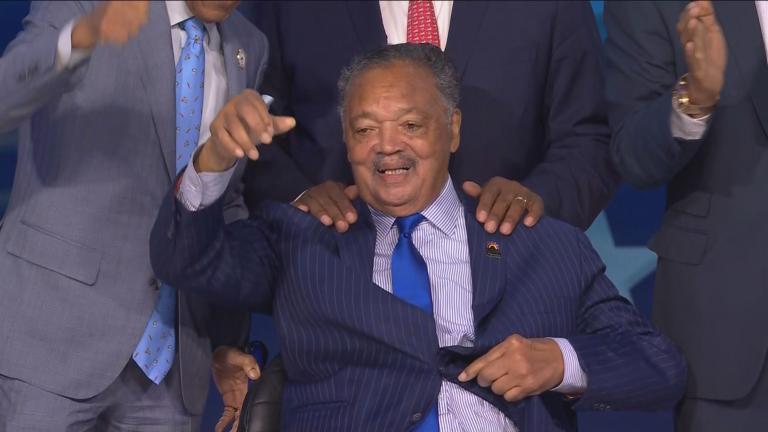
In the audience watching was a tearful Rev. Jesse Jackson.
The civil rights leader-turned-politician had twice run for the office himself.
CNN anchor and journalist Abby Phillip details Jackson’s historic campaigns and political rise in a new book, “A Dream Deferred: Jesse Jackson and the Fight for Black Political Power.”
From Obama’s election to Sen. Bernie Sanders’ presidential campaigns, Phillip argues that Jackson’s civil rights leadership and political career helped shape the country’s trajectory.
“I don’t think I and many other people realize to what extent Jesse Jackson paved the way,” Phillip said. “In the message, in the vision that he had of unity in a Democratic coalition – of using all the different parts of the rainbow of America and putting them together in one political party. He was largely responsible for that.”
It wasn’t until Obama became president that Jackson’s impact began to be recognized, Phillip said.
Jackson’s push for civic engagement and economic advancement in Black and Brown communities helped expand the Democratic Party’s voter base.
“He really took the lessons of the Civil Rights movement and moved it to the next level,” Phillips said. “He was a student of that movement; he was there with Dr. King. In the ‘70s and the ‘80s, what he was saying to voters of all stripes — but particularly Black voters — is that they have untapped political power and he wanted them to use it.”
Jackson ran for president in 1984 and 1988, but both times, he wasn’t able to secure the nomination. But several changes came out of his campaigns.
In a 2020 interview with WTTW News, Jackson said he pushed for proportional allocation of delegates in primaries and causes during his 1984 presidential bid.
“We democratized democracy; we changed it to proportionality,” Jackson said. “We changed the rules.”
This eventually replaced the old winner-take-all system. Phillip said the change paved the way for future candidates like Obama, who, despite not always coming in first during a particular primary, was still able to win delegates and have a shot at the nomination.
Before Jackson’s activism spread nationally, he mobilized Black voters in Chicago. From voter registration drives to launching his own civil rights organization RainbowPUSH, Jackson’s local impact allowed for Harold Washington’s historic election as Chicago mayor.
Phillip said the movement Jackson created in Chicago helped put the city on the political map.
“This is a major American city,” Phillip said. “Control of the city was a massive signal to the rest of the country. In 1983 it was, and in 1984 when Jesse Jackson ran for president, he used Chicago as an example of what could be.”