Health
Northwestern University Lab Helps Shape the Future of Medical Monitoring
In a laboratory just north of Chicago, the future of medical monitoring is quietly taking shape.
From flexible electronic monitors the size of a Band-Aid to tiny pacemakers that dissolve harmlessly in the body when no longer needed — the work of the Querrey Simpson Institute of Bioelectronics at Northwestern University at times seems truly miraculous.
What makes such breakthroughs possible is a new generation of flexible and at times dissolvable electronics pioneered by professor John Rogers and his team.
Rogers is a professor of materials science and engineering, biomedical engineering and neurological surgery at Northwestern University.
“I’ve always been interested in how you can connect sort of fundamental scientific research to technologies that have a broader societal impact,” Rogers told WTTW News. “I actually got my career started at Bell Laboratories, and so that was where the transistor was invented. … I think it was probably the world’s most successful basic science lab in the sense that 10 Nobel Prizes have come as a result of the work that was done there. But it was in the context of scientific questions whose answers led to basically world-changing technologies.”
Rogers’ longtime collaborator and colleague is Tony Banks, director of engineering research at the institute.
“What attracted me to start working with him is because his mindset was: We want to make these great things, but not for the sake of making them, we want to make a difference in society,” said Banks.
On such invention is the lab’s creation of small flexible health monitors first developed by Rogers’ team for use on premature babies in Lurie Children’s Hospital. That technology has since evolved to help babies halfway around the world.
“Program managers from the Gates Foundation and the Save the Children organization proactively reached out to us and asked whether we could adapt those technologies for deployment into resource-constrained areas of the globe,” said Rogers. “So not just thinking about using in U.S. hospitals, but could you take those technologies and adapt them for deployment into lower- and middle-income countries where there’s no monitoring technology at all?”
Rogers explained that the concept was to do for medical monitoring what has happened with telecommunications in many of those lower- and middle-income countries — and just leap ahead to the latest technology.
“Just leapfrog landlines. You go straight to the smartphones,” Rogers said. “That was kind of the mindset.”
“That became really an interesting engineering challenge,” said Rogers. “How do you go from what we originally developed as a single-use purely skin-like device to something that could be used in Zambia where the device would have to be reused 1,000 cycles in order to amortize the cost of the device?”
Rogers and his team took less than 12 months to come up with an answer.
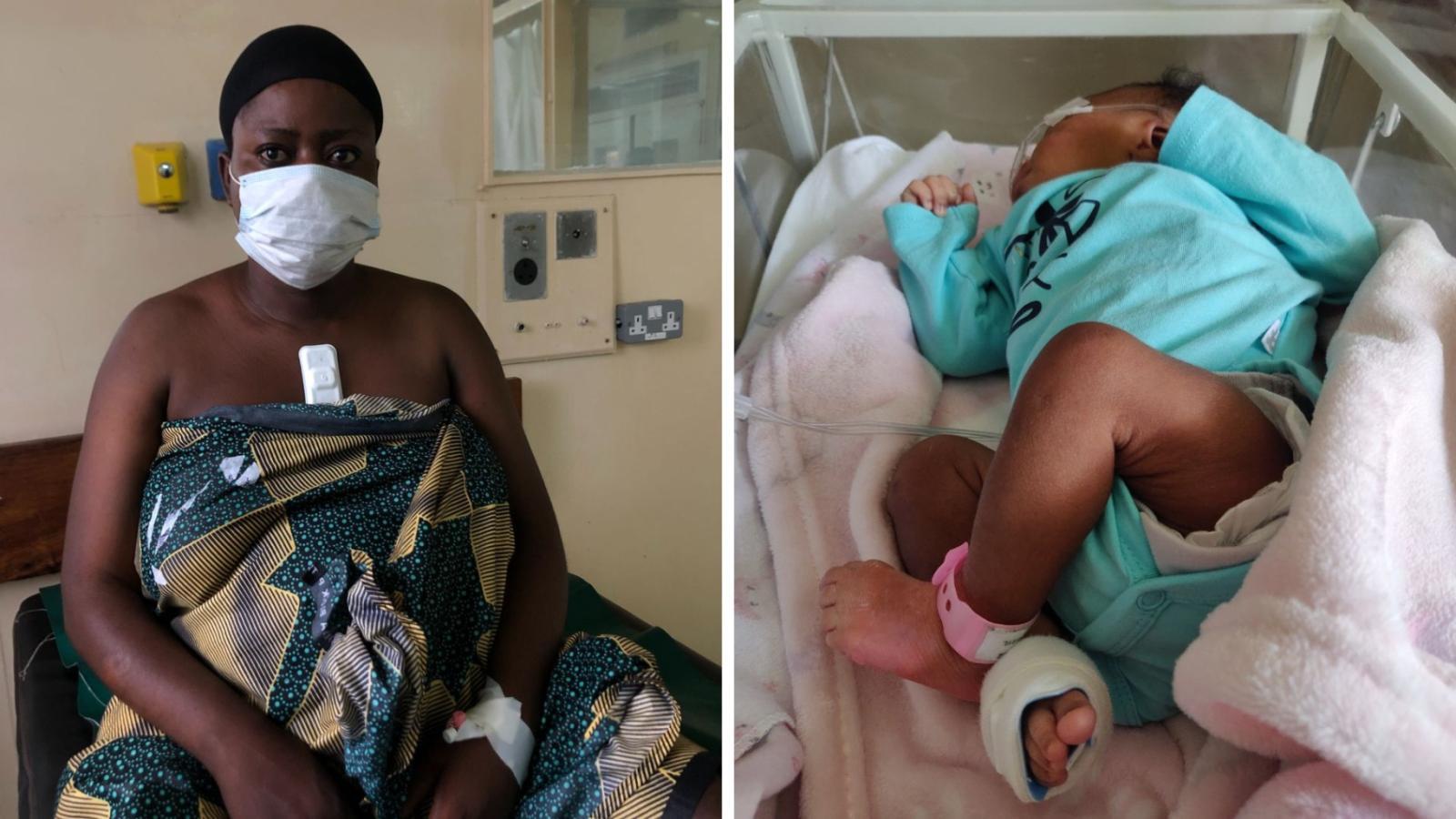
While the original technology developed and deployed at Lurie Children’s Hospital was battery-free, wireless and designed to be used just once, the device developed for deployment in lower- and middle-income countries was slightly bulkier because it came with battery power and needed to be robust enough to be reused hundreds of times or more.
All of the vital signs gathered by the device are displayed and tracked on a smartphone.
While there are some unique materials used to manufacture the monitors, Rogers’ team sources many components from the consumer electronics industry to keep costs down.
Rogers said many of the base components could be found in a typical smartwatch.
“The most important metric is the cost per patient monitoring day, not necessarily the cost of the device itself,” said Rogers.
The devices are reusable and wirelessly rechargeable with no external ports that could be contaminated with bio-fluids, which makes them easy to clean simply by dunking them in an alcohol bath.
“So that’s been the real focus, reuse to hundreds of cycles so you don’t even worry about the cost,” said Rogers.
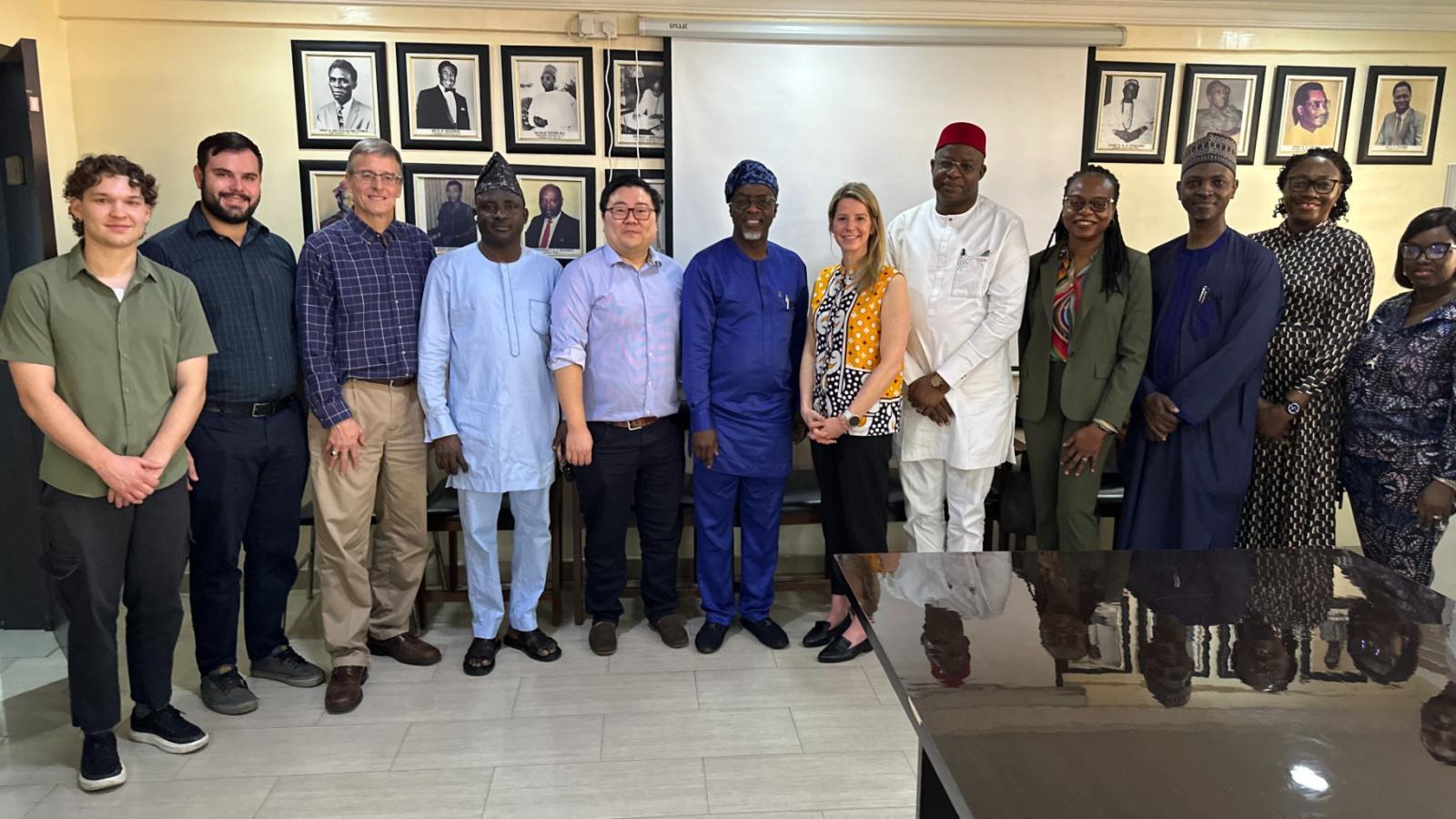
Rogers estimates that so far about 10,000 devices have been deployed that have been used to monitor some 30,000 infants in about 20 countries around the world, including Zambia, Kenya, Ghana, South Africa, India, Pakistan, Brazil and Chile.
Northwestern University professor John Rogers, pictured here with his team in Nigeria, estimates that so far about 10,000 devices have been deployed that have been used to monitor some 30,000 infants in about 20 countries around the world. (Courtesy of John Rogers)
Northwestern University professor John Rogers, pictured here with his team in Nigeria, estimates that so far about 10,000 devices have been deployed that have been used to monitor some 30,000 infants in about 20 countries around the world. (Courtesy of John Rogers)
Northwestern University professor John Rogers estimates that so far about 10,000 devices have been deployed that have been used to monitor some 30,000 infants in about 20 countries around the world. (Courtesy of John Rogers)

The goal, Rogers said, is to get a million devices deployed monitoring a million patients per year.
In a tour of the lab, Banks explained how it can rapidly develop and then evolve new devices.
“We try to make sensors that are low-cost that can be deployed at scale and so that’s really kind of a key thing that we do,” said Banks.
The high-end engineering and manufacturing facilities at the lab allow it to rapidly go from an initial idea to a working prototype, to something ready for deployment.
“You can go from a concept of an idea that you have all the way through the research and development of that idea, to manufacturing and deployment at the medical school downtown,” said Banks. “Which is important because the end goal really is to help people and be able to provide sensors that aren’t available now.”
Banks said many of the lab’s inventions start with a conversation with those working on the frontlines of health care.
“We have a lot of students, a lot of postdocs, myself, John, we’re embedded in the medical community downtown,” said Banks. “And so we’re constantly in and out of the hospitals working with physicians as collaborators, and almost always there’s some need that arises from a conversation that we have — and so that’s usually where the ideas are born.”
One recent invention is the development of a tiny, self-powered pacemaker for babies that dissolves harmlessly in the body when it is no longer needed, negating the need for surgery to extract the device.
“It’s implantable, so getting through the FDA regulatory process will take some years, but this was just published in April, so brand-new technology,” said Rogers.
But while his lab may be creating remarkable devices for the benefit of all, Rogers said his most lasting legacy will be his students.
“Fundamentally I’m a university professor and my No. 1 priority is around my students how to create a rich educational learning environment for them,” said Rogers. “If I think about the longer arc of my career, the largest impact that I’m likely to have is via all of the students who’ve passed through this group and then go on and start their own research groups and join companies and sort of impact the world in that way.”