Arts & Entertainment
Alt-Weekly Chicago Reader Acquired By Seattle-Based Media Company, Months After Being on Brink of Closure
 (Courtesy of The Chicago Reader)
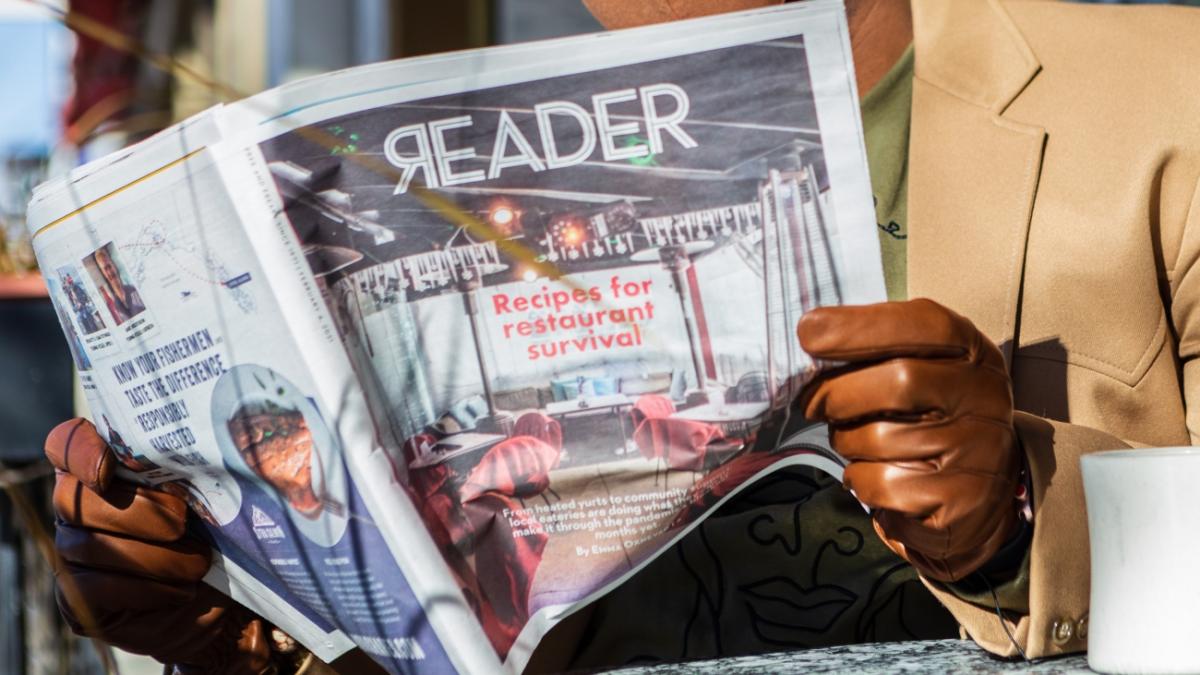
The Chicago Reader is being acquired by the Seattle-based new media company Noisy Creek, the local alternative weekly publication announced Tuesday.
Noisy Creek also owns the alt-weekly publications the Stranger, in Seattle, and the Portland Mercury. The company was founded by Brady Walkinshaw, the former CEO of the nonprofit climate news organization Grist and a former Democratic state legislator in Washington.
Walkinshaw declined to disclose the financial details of the acquisition, but said the deal is closing this week. Noisy Creek was approached by the Reader about two to three months ago, said Walkinshaw, who described the Reader as the “grande dame” of alternative weeklies in the U.S.
“The relationship of audiences to alt weeklies are fundamentally different than how audiences relate to their daily paper, to public radio, to other media outlets,” Walkinshaw said. “It’s a more personal connection, and it’s a connection that I think society wants more of right now, and that local communities are hungry for.”
The Reader announced it would be introducing Noisy Creek’s event discovery platform, EverOut, as well as the entertainment ticketing service Bold Type Tickets to Chicago as a way to help diversify revenue sources, with goals to launch those services early next year.
Noisy Creek describes its business model as a blend of advertising, print subscriptions, ticketing live events and philanthropy to fund and sustain journalism, according to a news release. Walkinshaw said it follows a “hybrid” nonprofit model by getting support from its Fund for Alternative Journalism, alongside the for-profit Noisy Creek.
The Chicago Reader union will continue to be recognized, according to Walkinshaw.
The Reader currently has 17 unionized staff and its non-union staff stands at 12, according to a union representative. The publication had 491 freelancers who contributed over 1,500 articles last year, according to Chicago Reader Chief of Staff Ellen Kaulig.
The Chicago Reader Union said in a statement it is looking forward to working with Noisy Creek and is “hopeful” that Noisy Creek’s acquisition will “allow the Reader to thrive.” But the union said its future “remains uncertain,” with three voluntary buyouts in recent weeks.
“As of today, Noisy Creek intends to lay off additional members of our unit,” the statement reads. “At a time when news outlets in Chicago and around the country are downsizing, these departures would reduce the size of the Reader’s editorial department by more than 25 percent in all.”
In response, Walkinshaw said via email that the buyouts came before Noisy Creek’s arrival.
“We’re just kicking off discussions with the Union on the current staffing model,“ Walkinshaw said in an email. “Just like our other publications, we very much anticipate growth just as we’ve done in Seattle and Portland over the past year.”
The ownership change comes after the Reader announced layoffs earlier this year and was at the brink of closure due to what leaders described as “a combination of financial losses, operational challenges, and external pressures.” The publication’s former CEO and publisher Solomon Lieberman also stepped down at that time.
The Reader joining Noisy Creek will give the publication’s editorial team more resources to expand on their work, according to Kaulig.
“Over the past eight months, we’ve really had to go down to a minimum viable product because we’ve really been in sustainability mode — just survive,” Kaulig said. “What this allows us to do is to go into a thrive mode, so this actually will allow us to get back to deepening that impact.”
As part of the transition under new ownership, Noisy Creek is also launching a national search for an editor-in-chief to lead the Reader’s editorial team, according to a news release.
The Reader has been a cornerstone of Chicago’s cultural and political landscape since it was founded in 1971. The Reader distributes its work as free digital and weekly print publication, with a focus on arts coverage, feature reporting and long-form journalism. The Reader will continue to be offered for free, according to Walkinshaw.
When asked whether the Reader would continue its weekly print publication, Walkinshaw said, “We’ll very much continue in print. I think we’re figuring out the right cadence of publishing, but print publications are absolutely core to our strategy, and we’re very excited to be in print.”
Contact Eunice Alpasan: [email protected]