Politics
At Least 47% of Jobs Charged With Implementing Court-Ordered Police Reforms Are Empty, Another 226 Are Unaccounted For: Records
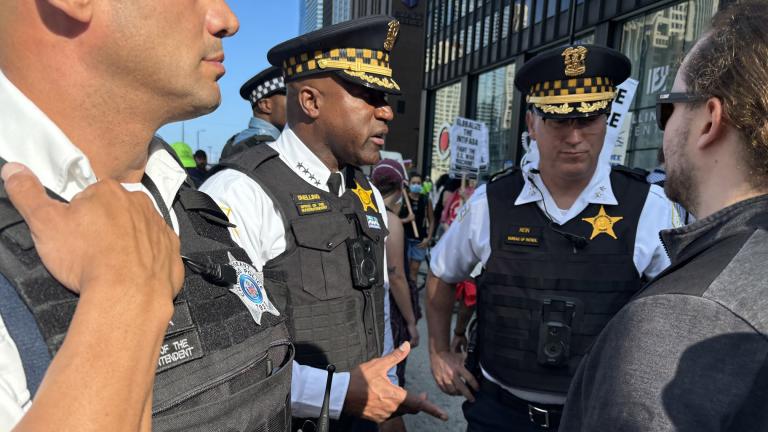
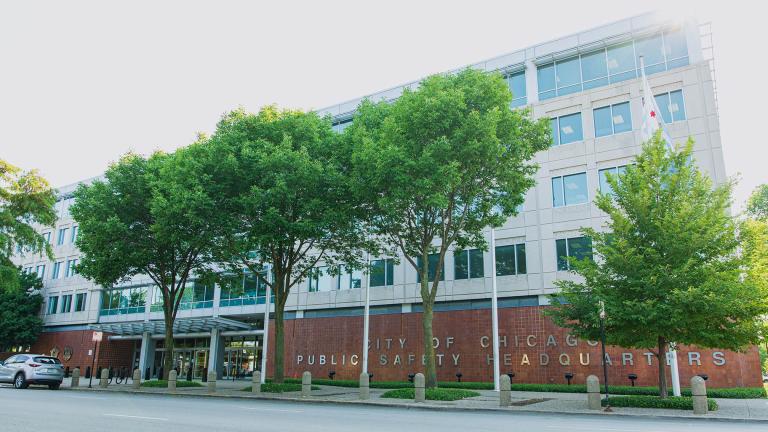
More than 200 positions charged with implementing a court order that requires the Chicago Police Department to stop routinely violating Black and Latino residents’ constitutional rights are vacant, with another 226 positions unaccounted for, according to records obtained by WTTW News.
Of 439 positions in the Chicago Police Department charged with implementing the court order known as the consent decree, 207 positions, or 47%, were empty seven months into 2025, according to a Freedom of Information Act request filed by WTTW News.
CPD officials and representatives of Mayor Brandon Johnson failed to account for another 226 positions that city officials told the federal judge responsible for overseeing the reform effort would be charged with implementing the consent decree designed to reform CPD, which has faced decades of scandals, misconduct and brutality.
“The Chicago Police Department and the Office of Budget and Management are committed to filling vacant positions as CPD continues its efforts to meet consent decree obligations,” according to a statement from the city’s budget office. “Due to the collaborative partnership CPD and OBM have forged, there are currently over 150 positions in the hiring process.”
CPD officials, as well as representatives of the mayor, did not respond to repeated requests from WTTW News asking them to account for all 665 consent decree positions outlined in the city’s 2025 spending plan.
More than eight months ago, lawyers representing the city told U.S. District Court Judge Rebecca Pallmeyer, who is presiding over efforts to enforce the decree, that those employees would step up efforts to comply with the consent decree after she declared the city’s progress “unsatisfying” and called for an “aggressive” reform effort.
Pallmeyer specifically praised Johnson’s decision to reverse the deep cuts to the number of employees charged with implementing the consent decree during a December hearing.
The next hearing in the consent decree case is set to take place virtually at 1 p.m. Tuesday.
CPD had fully complied with just 16% of the consent decree by the end of 2024. The next report is due in October.
When Johnson unveiled his proposed spending plan for 2025, it included 503 positions that would be charged with ensuring constitutional policing and reform, at a cost to taxpayers of $194.6 million. That accounted for 9% of CPD’s $2 billion proposed budget, according to budget documents.
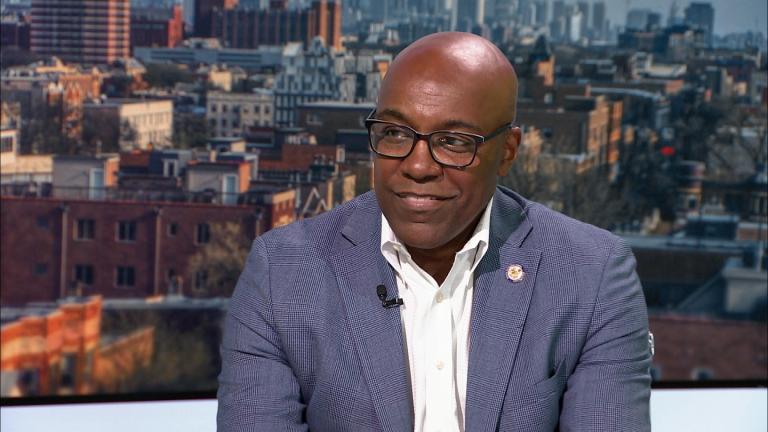
That proposal reflected a 15% cut in the number of positions, and drew immediate condemnation from Illinois Attorney General Kwame Raoul and the team monitoring the city’s compliance with the binding agreement.
Johnson abruptly reversed course after Raoul warned he would seek sanctions against the city if Johnson did not restore those positions, saying it would be impossible for the city to comply with the requirements of the court order without those employees.
The mayor said he would restore 162 consent decree positions to CPD, at a cost of $8.9 million. The city covered that cost by expanding the city’s automated speed camera network into wards where City Council members have requested the cameras and a study by the Chicago Department of Transportation has found a need for speed reductions, officials said.
Those cameras have been switched on during the past several months, officials said.
That meant the 2025 spending plan set aside $203.5 million for the consent decree, on top of $667 million set aside for the reform effort between 2020 and 2024, according to Chicago’s annual budget overviews.
City officials have failed every year since the consent decree was finalized in early 2019 to spend all of that money, according to a WTTW News analysis that compared what the city earmarked for the reform push in its annual budgets with what the city actually spent, as documented by the city’s annual financial reports from 2020 through 2023.
In 2024, those audited reports detailed at least $12.4 million in direct spending on the consent decree across five departments: CPD, the Finance Department, the Office of Public Safety Administration, the Civilian Office of Police Accountability and the Office of Emergency Management and Communications.
That represents a 16.7% decrease, as compared with spending on the consent decree detailed in the city’s 2023 annual financial report.
CPD spent just $4.3 million directly on the consent decree in 2024, even though the city’s budget called for CPD to spend $7.9 million on the consent decree, according to the 2024 report.
CPD spent $8 million on the consent decree in 2023, according to the city’s 2023 annual certified financial report.
With so many positions still vacant seven months into the year, 2025 promises to be no different, even as the consent decree has been in effect for more than six years.
The wide-ranging roadmap for reform stemmed from a 2017 federal investigation prompted by the police murder of Laquan McDonald that found officers routinely violated the constitutional rights of Black and Latino Chicagoans.
The monitoring team — which is made up of lawyers and public safety specialists — has the power to recommend to the judge that the city and CPD be required to step up reform efforts or face sanctions for failing to meet the terms of the consent decree.
The department is in preliminary compliance with approximately 34% of the consent decree’s requirements and secondary compliance with another 42% of the requirements, according to the 11th semiannual report from the monitors.
The monitoring team, led by attorney Maggie Hickey, has billed the city $24.9 million since the consent decree took effect on March 1, 2019. It will be in effect until at least 2027.
The monitoring team had not published any of its monthly city invoices for 2025 until WTTW News inquired about the lack of transparency. It is unclear how much the city owes the monitoring team for its work from April through July.
The next report assessing the city’s compliance with the consent decree is not scheduled to be released until October.
Many of the tasks CPD has yet to complete require the department to be restructured, to allow officers to work with residents to address threats to public safety as part of a reimagined system of community policing.
That plan has yet to be completed.
In addition, a mandatory study of where officers are assigned throughout the city and whether changes would help thwart crime began in November and remains ongoing.
And CPD has yet to implement a system to alert police brass about which officers have been accused of misconduct more than once and might need counseling, retraining or discipline.
That system requires the department to launch a new records management system, parts of which will take another year to complete, according to the report.
WTTW News coverage of policing and police reform is supported by The Joyce Foundation.
Contact Heather Cherone: @HeatherCherone | (773) 569-1863 | [email protected]