Science & Nature
This Weekend’s Rusty Rodeo Is All About Wrangling the Invasive Rusty Crayfish
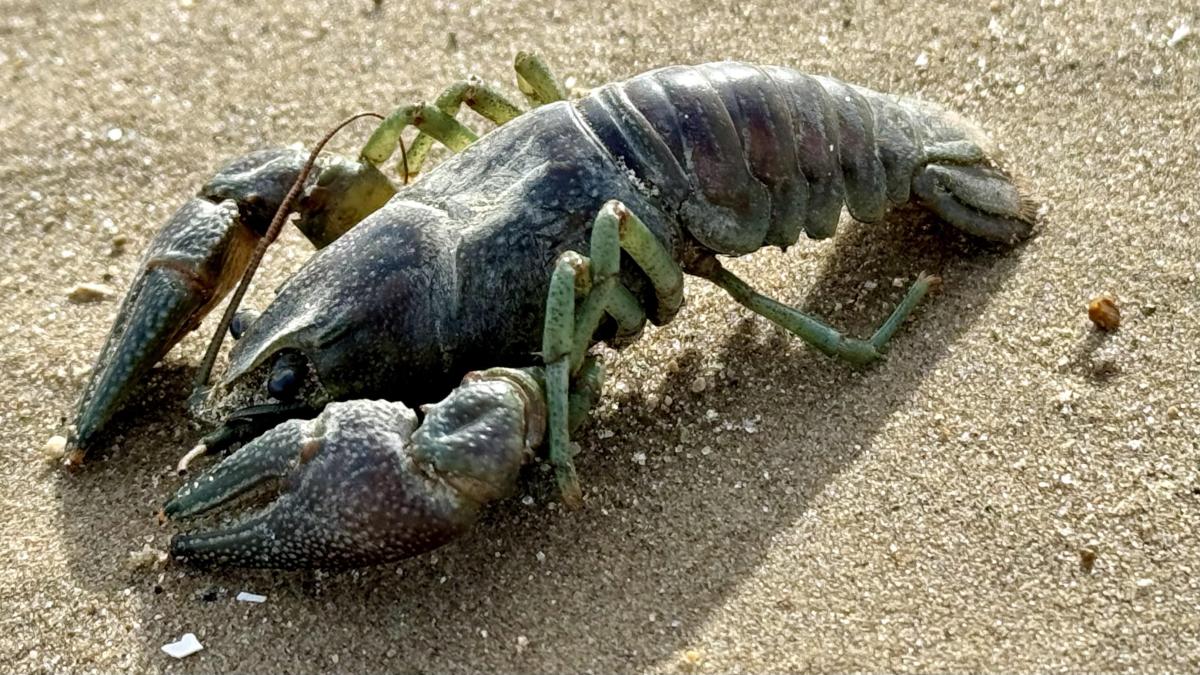 A rusty crayfish that washed up on a Chicago beach in early 2025. (Patty Wetli / WTTW News)
Rodeos aren’t just for cowboys, at least not when it comes to the “Rusty Rodeo” happening this weekend in Kane County.
On Saturday, people of all ages are invited to join the rodeo and wrangle the rusty crayfish, an invasive species that’s infiltrated local waterways, including the Fox River.
Now in its seventh year, the rodeo’s premise is simple: Get people to remove as many rusties as they can from the river. This year’s chosen sites are North Aurora Island Park in North Aurora and Mt. St. Mary’s Park in St. Charles, with the event running from 10 a.m to noon.
Prizes will be awarded for the biggest and smallest rusty collected, as well as the largest number.
Bring your own dip net if you have one, wear closed-toe shoes and prepare to get muddy.
Naturalists will be on hand to help folks identify the rusty.
This rodeo is a partnership among the Forest Preserve District of Kane County, St. Charles Park District, Fox Valley Park District and Friends of the Fox River. All rusty crayfish caught during the event will be used to feed animal ambassadors at the sponsoring agencies’ nature centers.
So why is everyone ganging up on the rusty?
Because it doesn’t play well with our native crayfish species.
 Can you tell them apart? That’s rusty crayfish on the left and the native virile crayfish on the right. (Credit: Flickr Creative Commons)
The rusty crayfish (Orconectes rusticus) belongs in the Ohio River basin and was most likely introduced to these parts as discarded bait. Illinois law now bans the sale and possession of the rusty crayfish.
In just a few decades, the rusty has achieved utter dominance over native crayfish in Lake Michigan’s southern basin. They’re more aggressive than the natives, can reach high population densities and can decimate food sources.
When they’ve exhausted available protein-rich food, like dead fish or snails, rusties will start eating aquatic plants.
“The aquatic plants, they can just disappear, and that in turn leads to declines in populations of fish because the fish need the plants for shelter,” Ruben Keller, a professor at Loyola University Chicago’s School of Environmental Sustainability and an invasive species expert, previously told WTTW News.
Unlike terrestrial invasive species, which can spread across connected landscapes, freshwater invasives are often self-contained unless given a hand — like hitchhiking on a boat from one lake, river or pond to another.
“So that means that preventing the spread of freshwater invaders is something that we can do,” Keller said.
Contact Patty Wetli: [email protected]