Politics
Aldermanic Prerogative Showdown on Tap as City Council Confronts Affordable Housing Shortfall
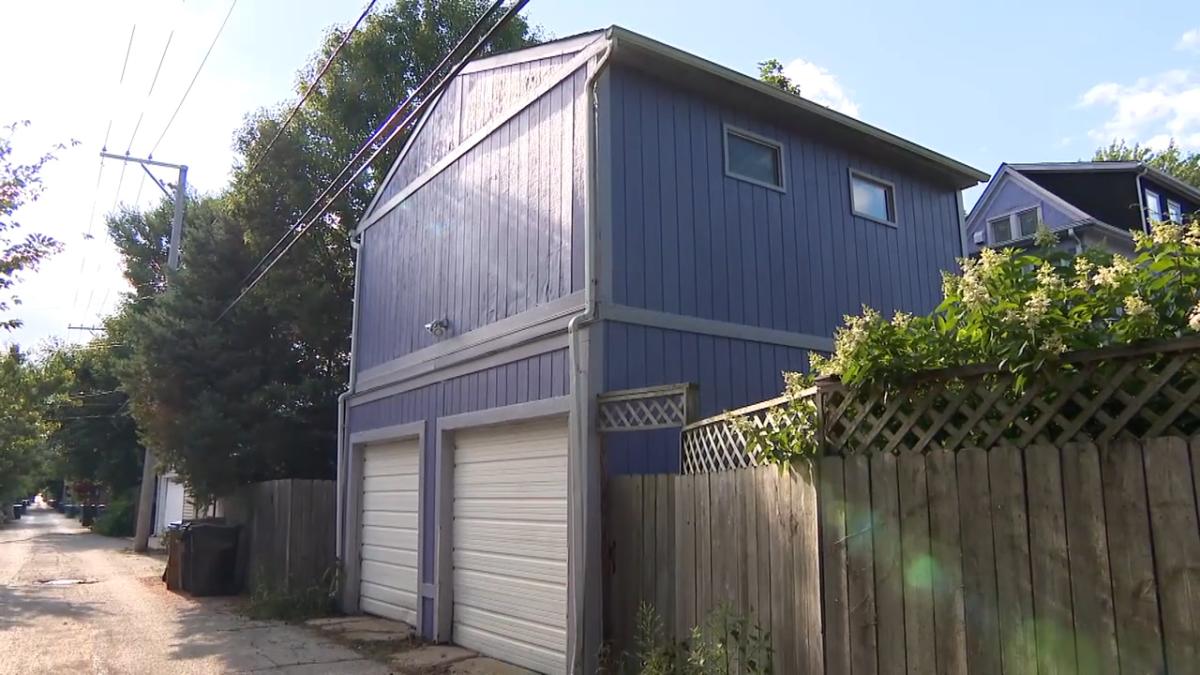 The addition of coach houses, granny flats, in-law apartments and backyard houses will be permitted in certain areas through 2024. (WTTW News)
A key City Council committee will consider weakening the decades-old tradition that gives alderpeople the final authority over housing developments in their own wards as Mayor Brandon Johnson renews his push to reduce Chicago’s massive affordable housing shortfall.
The Zoning Committee is set to take two key votes Tuesday that will serve as a crucial test of whether the City Council has any desire to confront the role aldermanic prerogative has played in fueling segregation in Chicago.
“We need more units, that’s the way we are going to drive the pricing for housing down,” Mayor Brandon Johnson said at a City Hall July 9 news conference. “It’s about creating safe, affordable communities.”
Only once in recent years has the City Council approved a high-profile project over the objection of the local alderperson. That development, in the Far Northwest Side’s 41st Ward, was never built.
It is unclear whether Johnson has enough political muscle to convince at least 25 alderpeople to buck the tradition that calls on them to mind their own business and vote along with the colleague whose ward includes the project.
The first proposal would allow property owners to build basement, attic and coach house dwellings on their property across the city without obtaining special permission from city officials.
In 2021, the City Council approved a limited end to the city’s 64-year ban on tiny homes by permitting the additional dwelling units in five areas of the city, with the approval of those areas’ alderpeople.
Tiny Homes and Granny Flats
Although the city’s staff initially proposed to test the change by allowing tiny homes and so-called granny flats across the city, opposition from now convicted former Ald. Patrick Daley Thompson (11th Ward) forced officials to scale back the program.
After city officials said the pilot program had been a roaring success, an effort to expand it citywide and make it permanent has been pending for more than a year, stalled by opposition from alderpeople who represent wards that have a majority of single-family homes.
To address those concerns, the proposed ordinance would allow that no more than three new units could be built each year on each block in areas zoned for detached, single-family homes.
In addition, owners of single-family homes who want to add a second unit to their property would have to also live on the property, according to the revised proposal.
Supporters of aldermanic prerogative tout it as the best way to ensure that Chicago residents live in neighborhoods governed by one of their own: someone who lives near them, understands their issues and is not only accessible — but also accountable to them on Election Day.
However, a probe by the U.S. Department of Housing and Urban Development found that aldermanic prerogative fuels segregation in Chicago and violates the civil rights of Black and Latino residents by limiting the creation of affordable housing.
Corporation Counsel Mary Richardson Lowry said July 9 that those findings are “the subject of ongoing negotiations” designed to correct the problems identified by federal officials as they investigated a civil rights complaint filed in November 2018 by the Chicago Area Fair Housing Alliance.
It is unclear whether the Trump administration will approve an agreement with the city, Richardson-Lowry said.
“We kept the door open to provide the terms we think are suitable, and we continue to await their decision,” Richardson-Lowry said.
If endorsed by the Zoning Committee, the measure would head to a final vote at the meeting of the full City Council set for Wednesday.
Lincoln Park Towers
The other measure up for a vote Tuesday that would chip away at aldermanic prerogative would invoke a little-known and untested provision of city law in an attempt to win approval for a 615-unit apartment complex in Lincoln Park.
Sterling Bay wants to build two towers — one reaching 25 stories and the other 15 stories — across the north branch of the Chicago River at 1840 N. Marcey St., not far from the planned Lincoln Yards megadevelopment, which has yet to get off the ground.
“After years of extensive community engagement and feedback, we have made many modifications to the project, and the plan is strong,” a spokesperson for Sterling Bay said in a statement to WTTW News. “Chicago has an affordability and housing crisis, and this proposal brings much needed affordable housing units — at zero cost to the city — to one of Chicago’s most expensive North Side neighborhoods.”
Ald. Scott Waguespack, whose 32nd Ward includes the proposed development, contends the development is too dense, too tall, would worsen the area’s perpetual traffic gridlock and does not have the support of nearby residents.
Waguespack said Monday he was trying to find a way to support the development, but had not yet been able to resolve all of his concerns.
Johnson supports the development, which would set aside 124 units for low- and moderate-income Chicagoans in a neighborhood with few affordable units.
As proposed, the project would have 360 parking spaces, despite its proximity to public transit. Sources familiar with the negotiations over the project told WTTW News that number could be reduced by nearly 60% to 147 spots in an effort to win Waguespack’s support.
The City Council’s Zoning Committee voted to reject the development in December 2024.
Normally, that recommendation would have been ratified by the full City Council at its next meeting. But Ald. Walter Burnett (27th Ward), the chair of the Zoning Committee, declined to ask the City Council to do so, prompting an outraged Waguespack to accuse Johnson, Burnett and his allies of violating the City Council’s rules.
Had the City Council voted to confirm the committee’s rejection of the development, it would have been the final nail in its coffin.
But the project is back at the Zoning Committee due to an obscure part of the city’s zoning code. Developers of projects that include affordable units but fail to get an up-or-down vote by the City Council after being approved by the Plan Commission can essentially bypass the Zoning Committee and force the City Council to consider their proposal.
Waguespack said he would ask the Law Department to explain how that is in keeping with the city’s rules.
If the Zoning Committee endorses the proposal, it will head back to the City Council, where it faces an uncertain fate.
In the event of a tie, Johnson could break it, and approve one – or both – proposals.
Contact Heather Cherone: @HeatherCherone | (773) 569-1863 | [email protected]