Science & Nature
This Magical Rooftop Pollinator Garden in Lakeview Is Normally Off Limits. Enjoy a Rare Glimpse
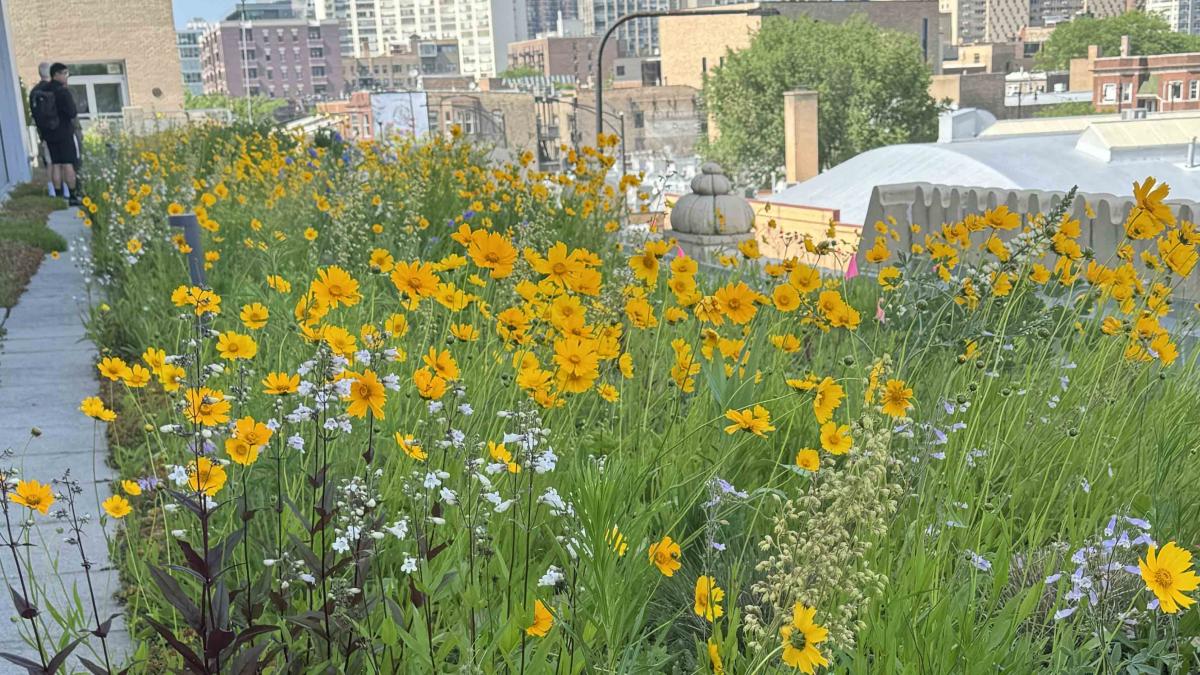 The Center on Halsted's rooftop pollinator garden, June 12, 2025. (Patty Wetli / WTTW News)
Whether it’s a rooftop restaurant or bar, rooftop pool, rooftop shuffleboard courts or, perhaps most famously, Wrigley’s rooftop bleachers, Chicagoans make the most of the city’s verticality, escaping to spaces that take them above and away from the cramped streets below.
Same goes for the city’s non-human residents.
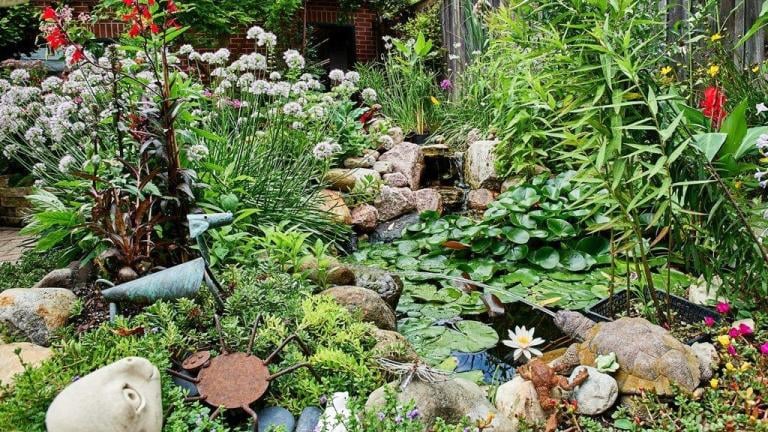
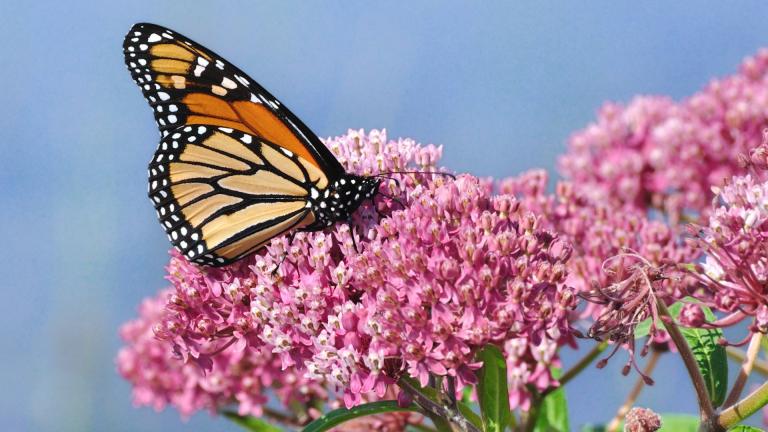
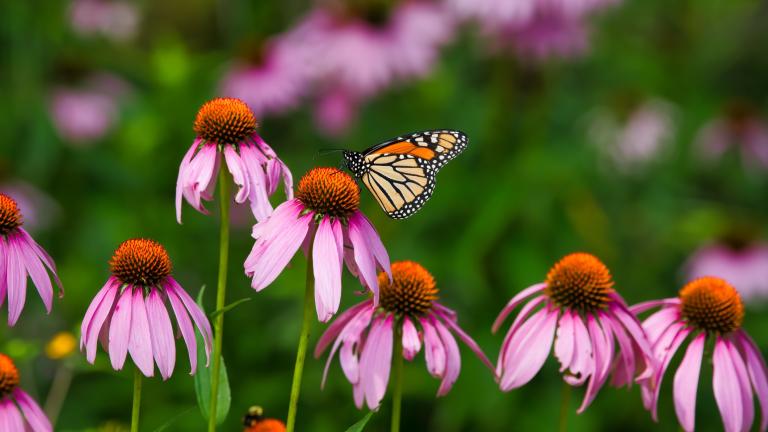
Just a few blocks east of those Wrigley Field perches, bees, butterflies, moths, beetles, flies, birds and other winged creatures are drawn to a building crowned with an oasis for pollinators, an island of native plants amidst a sea of concrete and asphalt.
Here, at the corner of Halsted and Waveland, in a garden atop Center on Halsted and Whole Foods’ shared roof, birds and insects can gorge themselves on the lush plantings’ pollen and nectar — while humans stand on the outside, looking in, from behind a locked fence.
Only a small group of people have access to this enchanting rooftop sanctuary, chief among them Robert and Susan Sullivan, who’ve been the garden’s volunteer stewards since 2019.
Robert oversees the flowering plants, Susan manages the adjacent vegetable garden, and together they’ve created something magical.
Owing to a quirk of the building’s construction — the Center and Whole Foods incorporated a historic facade into their joint development — the garden is rarely ever open to the general public, for lack of a safety railing that can't be added due to preservation stipulations.
But when the weather cooperates, the Sullivans lead occasional guided tours, most recently in mid-June.
Susan showed off her system of raised beds and containers, already bursting with greens. She’d planted seven varieties of heirloom tomatoes, along with a variety of kale, peppers, eggplant and more — produce grown for Center on Halsted’s Silver Fork culinary program, as well as for the neighboring Town Hall Apartments, opened in 2014 as Chicago’s first affordable, LGBTQ+-friendly senior housing.
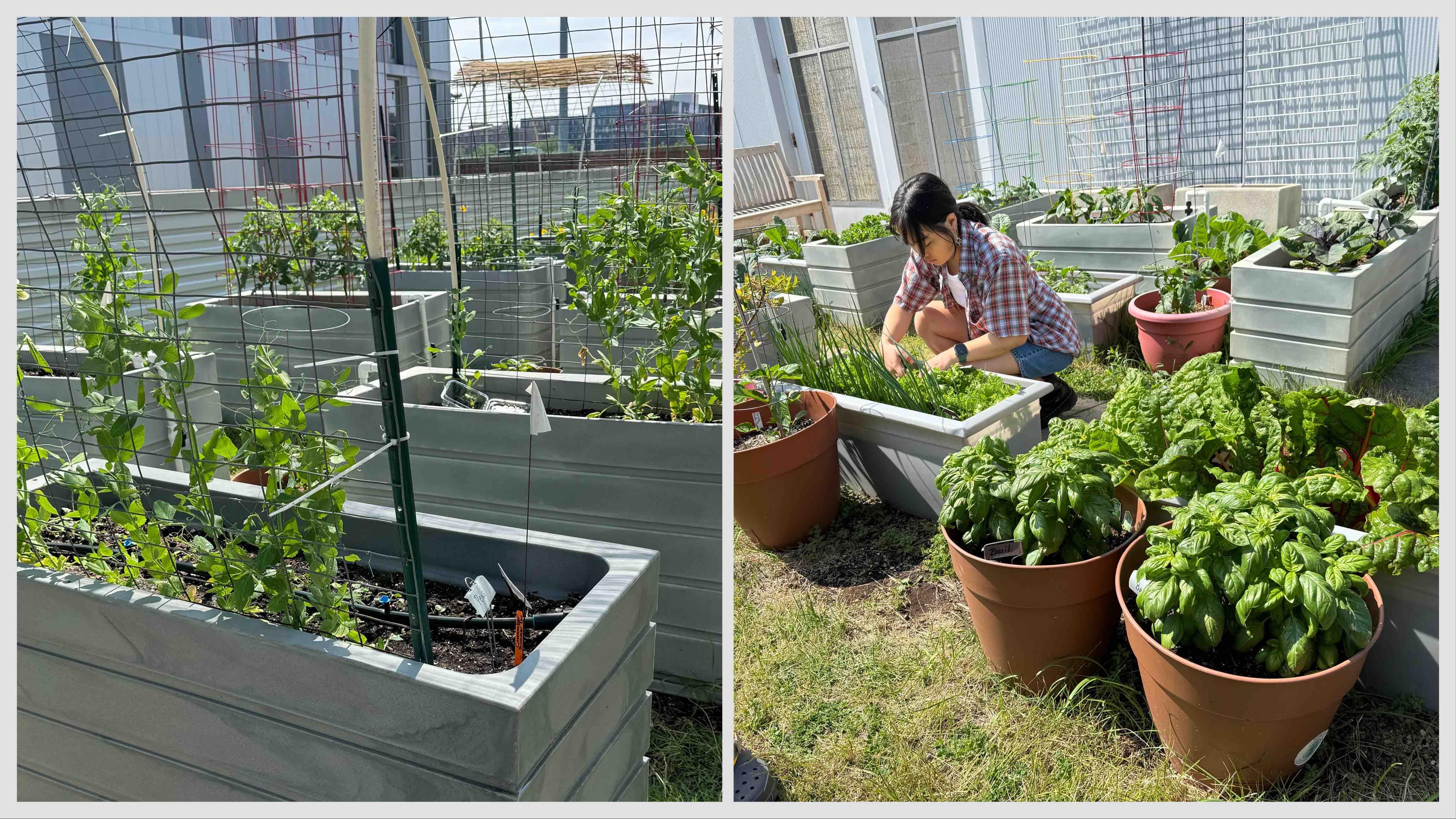 Volunteers pitch in at the Center on Halsted's rooftop vegetable garden. (Patty Wetli / WTTW News)
As for the flower garden, “This is about as good as it gets,” Robert Sullivan said, pointing to the sand coreopsis (Coreopsis lanceolata) in full flower. It created a wave of yellow petals fluttering in the breeze alongside spikes of lavender, spiderwort, pale pink-purple bee balm, as well as varieties of penstemon and baptisia adding pops of white and indigo.
A month earlier, he said, the scene would have been dominated by golden alexander, wild columbine and wild strawberry. These subtler blooms may pack less of a visual punch — to the human eye — but they’re every bit as desirable to the pollinators that rely on these early spring flowers for sustenance.
Sullivan’s intention is to have blooms of different shapes and sizes — suitable for pollinators of different shapes and sizes — available from March into late fall. Think of it as a steady all-you-can-eat buffet in the heart of a highly urbanized setting.
To achieve that level of variety, Sullivan estimates he’s planted at least 100 different species — increasing the diversity exponentially compared with the garden’s original state, dating to 2007.
How many species existed then?
Well, basically one.
‘Can We Go For It?’
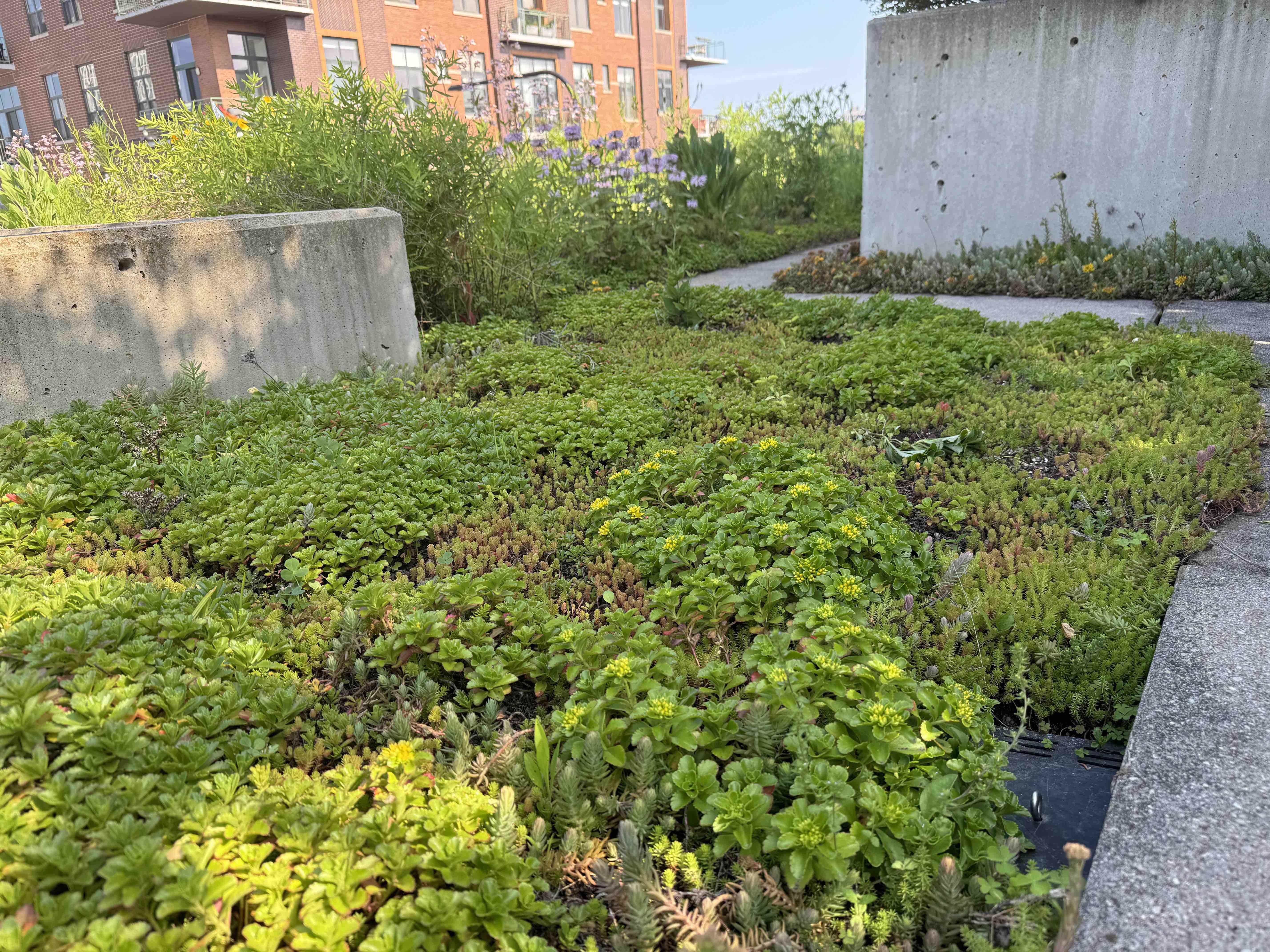 A patch of the Center on Halsted's original sedum green roof. It's typically purchased in two-foot squares and while it does flower, it blooms all at once and then it's done, limiting its value if it's the only plant available, according to Robert Sullivan. (Patty Wetli / WTTW News)
Back in 2019, Sullivan was volunteering at Center on Halsted’s front desk when he heard through the grapevine that the center had a “green team.” He wanted in on the action.
Retired from a 30-year career as an environmental scientist at Argonne National Laboratory, Sullivan was itching to get back to his long dormant roots in horticulture and landscape architecture.
One look at the Center’s existing green roof and Sullivan knew he had project he could dig his hands into.
For those who aren’t familiar with green roofs, they’re a feature developers often incorporate into a building’s design as part of a bid to earn a “green building” rating such as LEED certification or some other eco-friendly/sustainable designation.
The plant of choice for such installations tends to be sedum, a family of low-growing succulents also known as stonecrop. It’s a preference based less on aesthetics or curb appeal — green roofs aren’t usually meant to be seen — and more so on utility: Sedum can thrive in the typically 4 to 6 inches of shallow soil found on roofs, and it’s also tolerant of harsh conditions including sun, wind, heat and drought.
The Center’s roof essentially had been carpeted in sedum — the plant’s small flowers do benefit some pollinators, in a limited capacity, Sullivan noted — but over the years, weeds had blown in on the wind and taken hold.
“I saw this roof and knew it was a mess,” Sullivan said. “They had a contractor who would just weed whack, and that was about it.”
But the garden also had potential as a pollinator haven.
Sullivan approached the Center’s leadership, first for permission to prune a tree and then to add a few plants, at which point he asked, “Can we go for it?”
Approval was granted, and Sullivan hasn’t looked back.
‘Just Sit and Look’
As much as Sullivan has transformed the garden — one year alone, he singlehandedly put in 800 plants — the garden has transformed him.
He’s always had a passion for plants, he said, but his appreciation for native plants has only grown as he’s witnessed their ability to persist in the toughest conditions, to the point where Sullivan moderates the Northern Illinois Native Plant Gardeners Facebook group.
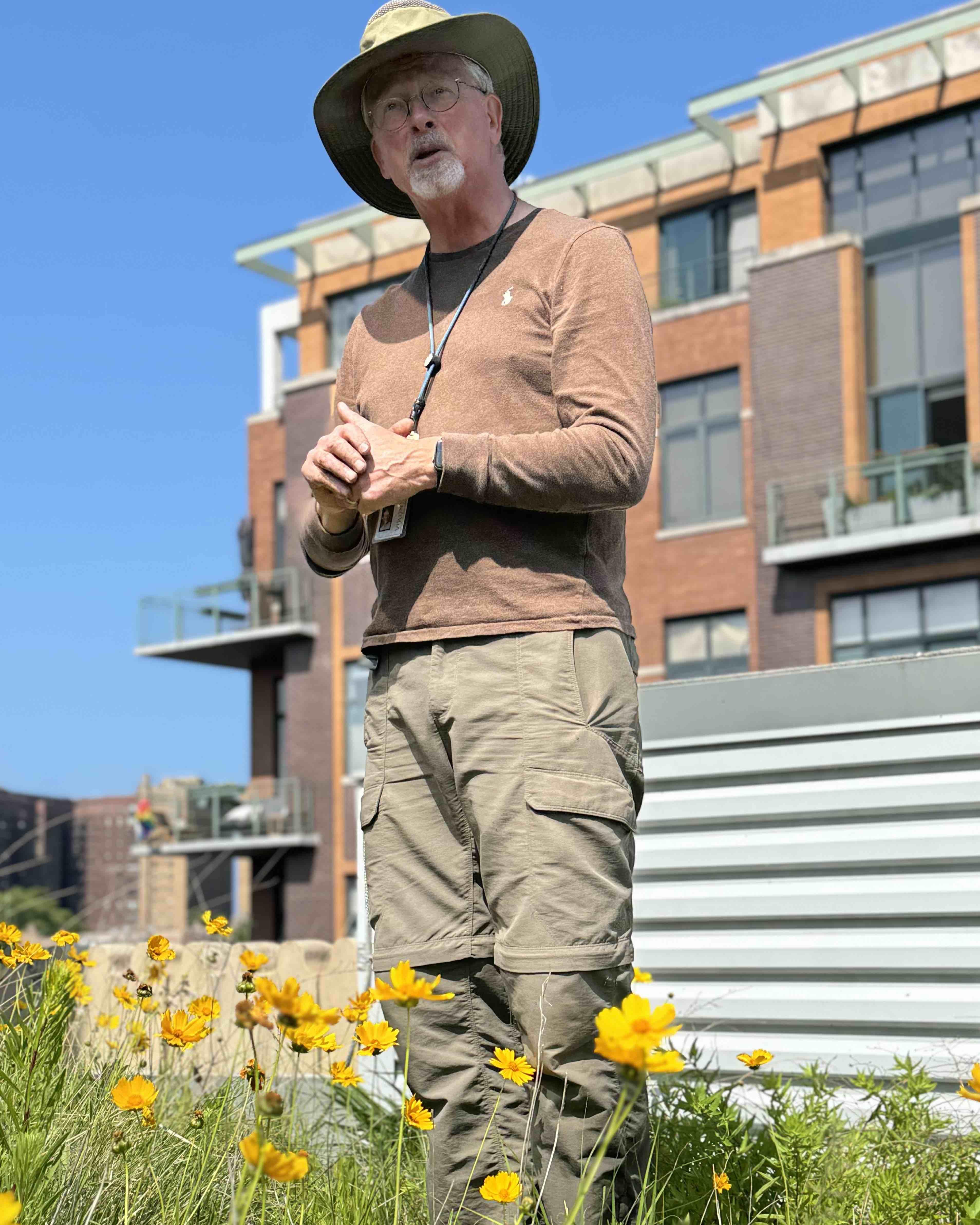 Robert Sullivan leads a tour of the rooftop garden, June 12, 2025. Fun fact: Sullivan said some natives have adapted to the roof's shallow soil by growing their long roots sideways. (Patty Wetli / WTTW News)
But the real gift the garden has given him, Sullivan said, is a greater understanding of insects, including the scope of their numbers and the extent of their remarkable adaptations.
“There are 4,000 species of bees native to the U.S. and there are several hundred that are native to this area. Almost nobody looks and sees them,” Sullivan said. “They are all around, all the time, and if you have a garden and you go out there and you just sit and look, you will find there are all sorts of tiny things flying around.”
Yes, he studied entomology in college, but “I didn’t know much about pollinators at all,” Sullivan admitted. “I did not grasp how critical they are for our ecosystems.”
Today, he’s as likely to bend a listener’s ear about flies — “second most economically important pollinator,” Sullivan marvels — or bumblebees as he is to sing the praises of milkweed.
“If you mention an insect, the first thing people think is how to kill it,” Sullivan said. “But without them, we are up a creek…. Most vegetables and our fruits are insect-pollinated and there’s no replacement. We’d lose one-third of our food.”
Sullivan’s ever-expanding knowledge means that six years on, the Center on Halsted garden remains a work in constant flux.
His latest cause is to increase awareness about the importance of moths — the role they play not only as pollinators but also as a vital food source for birds, which feed the caterpillars to their young.
To support moths, and by extension birds, Sullivan is adding more plants likely to attract them, whether it’s flowers with white petals that moths can see in the dark or species with blooms that open at night.
“I started this kind of as an experiment,” Sullivan said. “It’s been tremendously rewarding.”
The next tour of the Center on Halsted rooftop garden is scheduled for July 26.
Contact Patty Wetli: @pattywetli | (773) 509-5623 | [email protected]