Science & Nature
Chicago's Piping Plover Chick Has a Name, and Is Nearing a Key Milestone
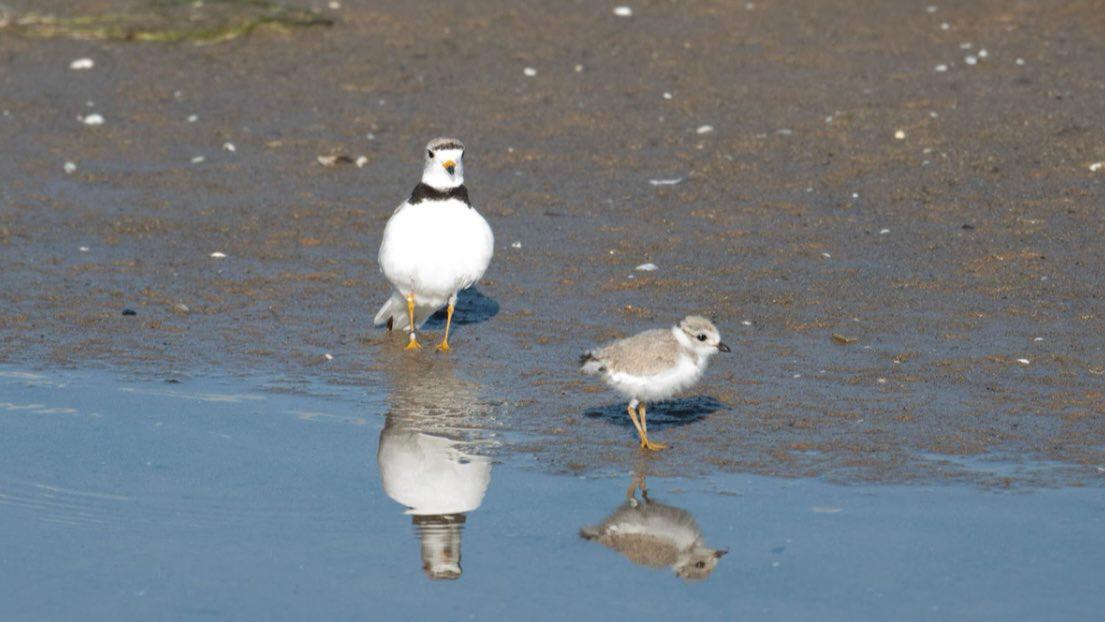 Nagamo at Montrose Beach, under the watchful eye of Imani. (Courtesy of Chicago Piping Plovers)
The little chick that could has a name.
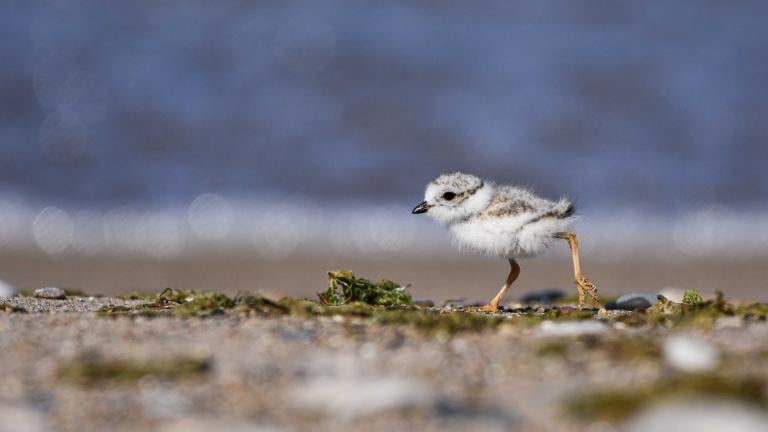
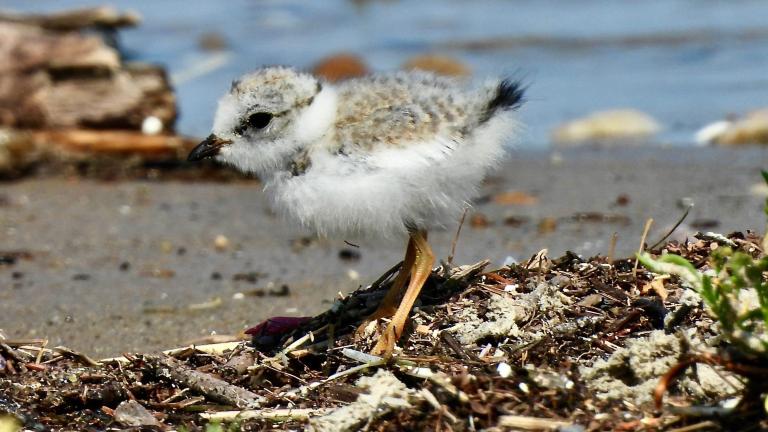
Say hello to Nagamo (Na-GA-mo), the sole surviving piping plover hatchling at Montrose Beach.
Nagamo, which means “he/she sings” in the Ojibwe language, was submitted by Mike Doty and selected by a panel of people representing various nature and environmental organizations in Chicago.
The name is particularly fitting for a piping plover, birds known for their "pip-lo" song — the "piping" in piping plover.
At just three weeks old, Nagamo's resilience has been put to the test.
"The piping plover population in the Great Lakes faces an extensive list of mortality risks," said Brad Semel, endangered species recovery specialist at the Illinois Department of Natural Resources.
These include: predators, both birds and mammals; off-leash dogs; human interference; flooding, storms and extreme temperatures; and bacterial and fungal infections.
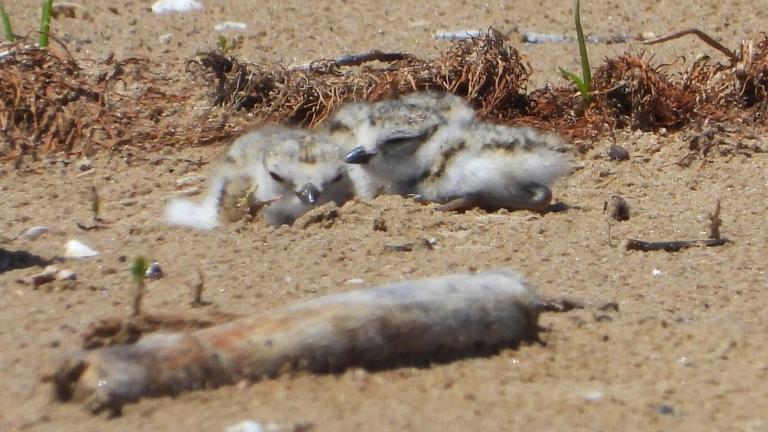
Of the four chicks hatched at Montrose this year — the first to Imani and Searocket — three died of as yet unknown causes.
Nagamo beat the odds and has been gaining strength under the continued watchful eye of Imani and volunteer plover monitors, who are on site at Montrose Beach from sunrise to sunset. (Searocket is believed to have begun her southern migration.)
While Imani teaches Nagamo how to defend territory, spot predators and avoid hazards, monitors make sure the plovers' protected beach is free of humans and dogs, and their presence also discourages predators such as hawks.
This monitoring system, put in place when Monty and Rose (Imani's much-loved parents) first nested at Montrose back in 2019, has provided a wealth of information on the endangered birds.
"Monitoring efforts at Montrose provide an incredible insight into nearly all aspects of plover activities," Semel said. "Nowhere else throughout the range of plovers is this intensive level of monitoring achieved, and it gives us a unique perspective on what is happening during plover nesting and chick rearing."
Monitors also watch for signs of distress in the plovers, which resulted in interventions for two of this year's chicks, though ultimately they weren't able to be saved, Semel said.
On Tuesday, Nagamo is expected to reach a key milestone: At that point, the chick will be considered "officially fledged" by the U.S. Fish and Wildlife Service.
Piping plovers are considered fledged 23 days after hatching, a stage of independence in which they're gaining flight capability and can begin to ward off predators on their own. It's also the point at which a nest is considered a "success," Semel said.
Contact Patty Wetli: @pattywetli | (773) 509-5623 | [email protected]