Politics
Chicago Financial Officials Defend Johnson’s Plan to Hike Corporate Taxes, Borrow $481M to Resolve Police Misconduct Lawsuits
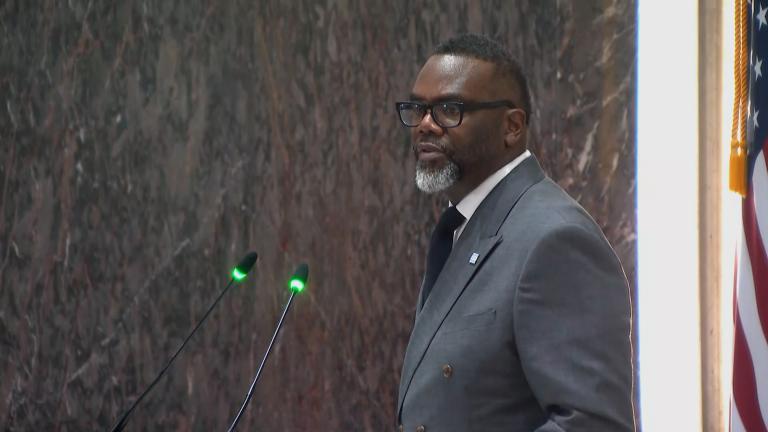
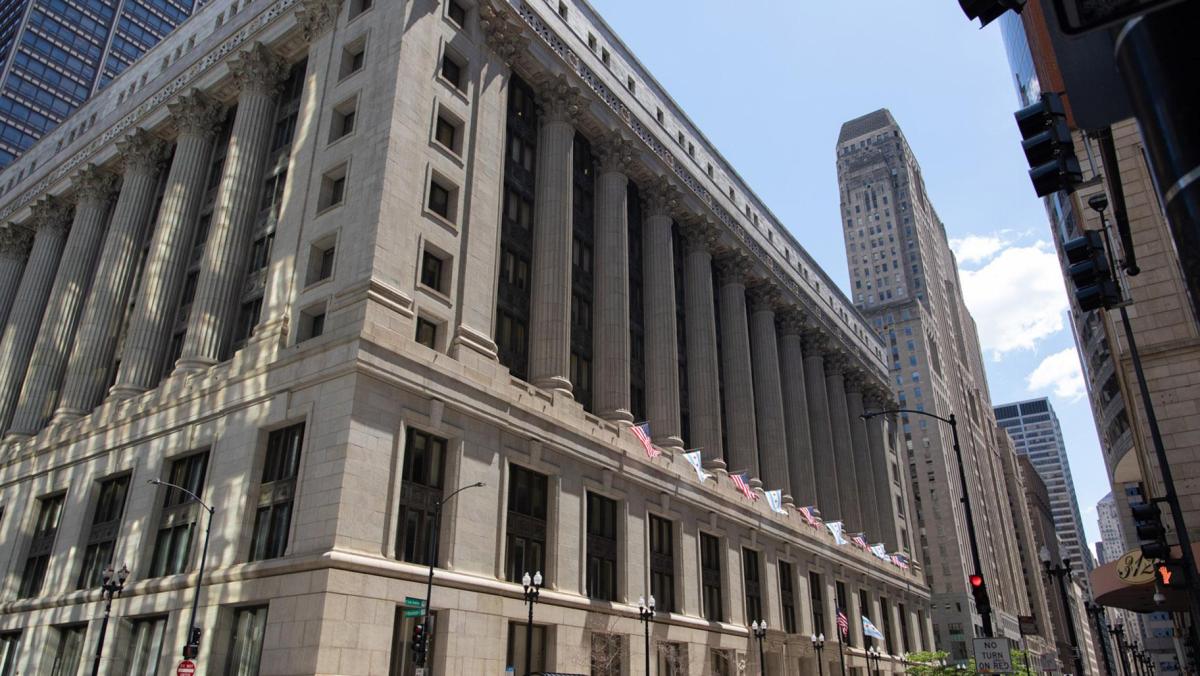 (Michael Izquierdo / WTTW News)
Chicago’s top financial officials on Monday defended Mayor Brandon Johnson’s plan to hike corporate taxes to close the city’s 2027 budget gap while borrowing $481 million to cover the cost of resolving lawsuits alleging police misconduct.
Members of the Chicago City Council’s Budget and Government Operations Committee kicked off weeks of budget hearings by giving Johnson’s proposed $17.6 billion spending plan a stony reception.
Acting Budget Director Jonathan Ernst advocated for Johnson’s plan to reimpose a so-called head tax of $25 per month per employee on all firms that have more than 125 employees, telling alderpeople the city needed new revenue to avoid layoffs or service cuts.
A similar tax was soundly rejected by the City Council a year ago, complicating Johnson’s push to convince the City Council to adopt his budget just months before all 50 alderpeople and the mayor face voters.
“What is your plan B if the head tax doesn’t pass?” Ald. Anthony Beale (9th Ward) asked.
Ernst did not directly answer Beale, a frequent critic of the mayor, but cited the overwhelming number of people surveyed by the mayor’s office who urged officials to tax the city’s largest corporations to bridge the city’s budget gap.
“This year’s budget arrives at an inflection point for Chicago,” Ernst said.
City officials said in September that Chicago’s deficit was $882.4 million, marking another year the city’s finances remain structurally unbalanced, pinched by soaring pension costs, spiraling personnel costs and a massive amount of debt.
By deciding to borrow $230 million included in that projected deficit to cover the cost of resolving police misconduct lawsuits, Johnson’s team only had to close a gap of approximately $652.5 million, records show.
When he unveiled his budget, Johnson and administration officials said 76% of the budget gap would be closed with structural fixes that would bring expenses in line with revenues.
But the decision to borrow to cover the cost of resolving police misconduct lawsuit changed that calculation, reducing the amount of the gap closed with revenue the city can count on in future years to just 56%, Chief Financial Officer Ashlee Gabrysch told alderpeople.
Plans call for the city to borrow $350 million in 2027 and another $131 million in 2028, Gabrysch said, pledging to ensure that the city borrows that money in the “most fiscally responsible manner possible.”
At current rates, the city expects to pay $190 million in interest to borrow $350 million in 2027 and pay it off during the next seven years, Gabrysch said.
“I have grave concerns,” Ald. Samantha Nugent (39th Ward) said.
The spending plan sets aside an additional $90 million to resolve police misconduct lawsuits, records show.
Comptroller Michael Belsky said the city had no choice but to borrow to cover the “extraordinary costs.”
“We don’t want this liability, nobody does,” Belsky said. “But the best way to deal with that, without crowding out a lot of services ... and affecting the quality of life in Chicago, the only option you have is to finance it ... and you hope that going into the future, these things dissipate, so you don’t have to face that floating liability every year.”
Gabrysch, who came to the city from Fitch Ratings, told alderpeople her office would begin to provide the Finance Committee with more information about how, and when, the city borrows more money in the future.
Earlier this month, Johnson vetoed an ordinance that would have required 30 votes from the City Council to take on new debt.
If the City Council agrees to borrow money for the second year in a row to cover operational costs and to close the budget gap with one-time solutions, it could alarm Wall Street ratings agencies and trigger another ratings downgrade, making it more expensive for the city to borrow the money it needs to operate.
Johnson’s finance team also championed the mayor’s proposal to hike personal property lease taxes from 15% to 20% to generate $234 million. That tax, which gets added to car and equipment rentals as well as cloud-based software, was just 9% in 2020.
There is no evidence of companies leaving Chicago because of the increase in that tax, according to the mayor’s office.
Johnson often touts that as a tax on “big tech.” Records showing that Amazon, Google, Salesforce and Bloomberg have paid the lion’s share of the $737.6 million it has generated so far this year, according to the mayor’s office.
The tax rate would remain 15% for vehicle rentals, while equipment and facilities leased for motion picture productions would be taxed at just 11%, according to the proposal.
Ald. Nicole Lee (11th Ward) called the proposed increase “insane” and warned that it would push businesses out of Chicago.
“I have a big concern about what this is going to do to our ability to grow,” Lee said. “I believe that we need to grow our way out of this problem, not spend our way out of it.”
There is no evidence of companies leaving Chicago because of the increase in the lease tax, according to the mayor’s office.
The only other tax that the City Council has the power to raise without the approval of state lawmakers that could generate hundreds of millions of dollars is the property tax, and no elected official wants to propose such a hike just a few months before facing voters.
Johnson’s budget includes $131.5 million in new spending, including enough money to reopen another mental health clinic closed by former Mayor Rahm Emanuel and to expand the program that sends social workers and counselors to those experiencing a mental health crisis rather than police officers.
In addition, Johnson wants to spend $24 million to add 7,000 youth jobs — both major campaign promises from Johnson during the 2023 campaign.
The mayor also wants to spend an additional $15 million on homelessness services, $13 million in rental assistance and $2 million on a program designed to care for those experiencing homelessness.
An additional $30.9 million would be earmarked for Chicago’s libraries and $7 million would be used to expand an early childcare program, according to the proposal.
Another $7 million would be used to expand the city’s violence prevention programs and add 390 outreach workers. In all, Johnson wants to spend approximately $41 million on those efforts, which he credits with reducing Chicago’s homicide rate to a 60-year low.
Contact Heather Cherone: @HeatherCherone | (773) 569-1863 | [email protected]