Politics
Faith Leaders React to Trump’s Religious Liberty Commission Targeting Separation of Church and State
A report from the Presidential Religious Liberty Commission calls for a clawback of the separation of church and state, a fundamental American legal principle for more than two centuries.
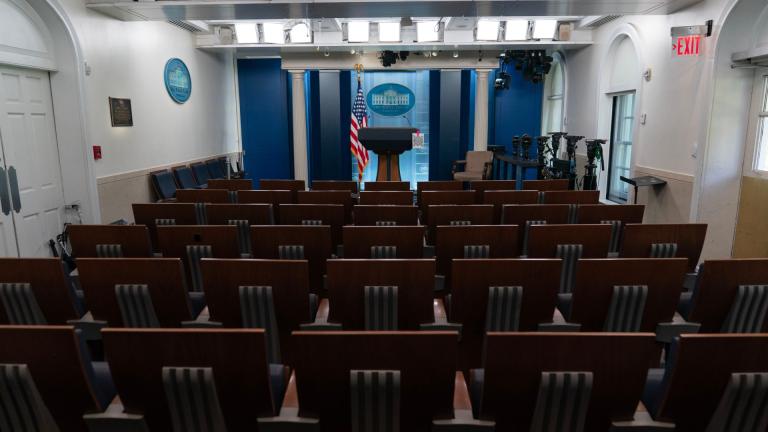
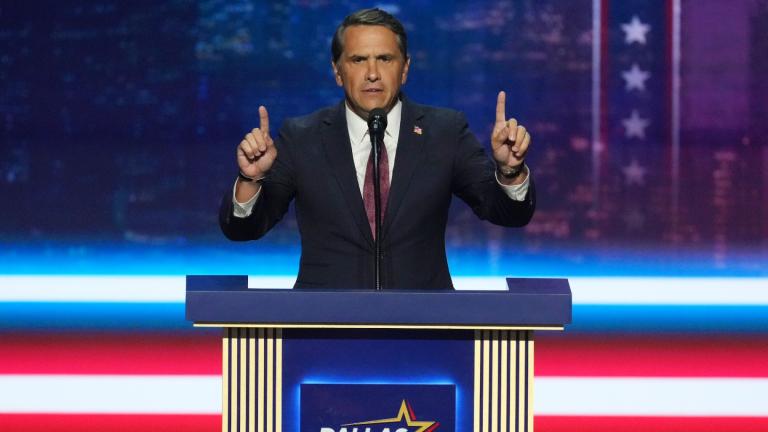
Speaking at the White House Friday, Texas Lt. Gov. and Commission Chair Dan Patrick said the separation of church and state is not in the U.S. Constitution.
“The separation of church and state is not in the Constitution,” Patrick said. “And from this day forward, if anyone says that to you and they’re in public office or serve in any agency, in any official capacity, they have to point out exactly where you have violated the Constitution, because you have not. And from this day forward, that phrase should have no power over people of all faiths ever again in America.”
President Donald Trump created the commission via executive order last May. Composed almost entirely of White Christians, the commission made a series of policy recommendations based on the underlying assertion that religious Americans have suffered discrimination for expressing their beliefs in public settings.
Recommendations include creating a Presidential Medal of Religious Liberty, establishing a hotline for individuals experiencing religious discrimination and confirming “federal judges with the courage to decide religious liberty cases on the merits.”
The commission also recommends repealing the Johnson Amendment, which prevents tax-exempt organizations, including houses of worship, from making political endorsements.
Critics say adopting the recommendations would bring the government dangerously close to endorsing Christianity, while also failing to account for discrimination against other religions like Islam.
Quincy Worthington, a pastor at the Highland Park Presbyterian Church, said the commission’s report is part of a larger shift toward the government tolerating only certain religions.
“I think we gotta be careful about this. We already see the Department of Defense, taking 200 different known religions and narrowing it down and saying, ‘We’re only gonna accept 30,’” Worthington said, referring to a Pentagon policy change from last month.
Hassan Aly, an Islamic scholar and founder of the Qiam Institute, a nonprofit dedicated to promoting Islamic values through education, said he admires the American Constitution for preventing the adoption of a state religion.
“I think that the genius of the American constitutional system is that it allows each citizen who lives in this country to practice their own religion with freedom and dignity, but at the same time prevents the state from advocating or adopting one religion over another,” Aly said. “It’s very obvious in everyday American life.”
The report mentions Islam sparingly relative to Christianity and Judaism. Aly said he wishes Muslims and practitioners of other religions outside Christianity were represented better on the commission.
“We’re (Muslims) not the only religion that has no representation in this commission,” Aly said. “We have a lot of other religions in America — minorities, people who practice their own religions. They have temples. They have places of worship, and they have children who go to public schools. To have even a discussion about something as fundamental as faith communities, we have to have representation.”
Much of the report’s 224 pages focus on how religion has operated inside the classroom. The commission argues that students are being forced to suppress their religious beliefs for the sake of a certain curriculum or school policy.
The report mentions the case of 12-year-old Shea Encinas from California, who said he was forced to read a book about changing genders to a classmate despite his Christian faith.
“The book said you can choose your gender based on feelings instead of how God made us,” Encinas said at a commission hearing in September 2025, with Trump in attendance. “I knew this was not right, but I was afraid of getting into trouble.”
Worthington said students should be able to express their faith, but that the Trump administration should be careful where it draws the line.
“In this case, it’s a matter of students being able to freely express their religion, but then when you bring in teachers and people in power, you run the risk of them enforcing or promoting a religion onto students,” Worthington said. “I think that’s where the danger comes from, allowing people to express religion without having religion forced upon them.”
The commission’s report comes on the heels of a Texas state law that made Bible verses required reading across Texas public schools. Texas also requires the Ten Commandments to be displayed in classrooms.
Josh Weiner is the chief advocacy officer at the North American Values Institute, a nonprofit that says it’s focused on combating extremism and antisemitism in K-12 schools. He said America must grapple with its relationship to Christianity, which can be traced back to the founding.
“I do think that it’s important that we do have a conversation about this country’s founding and how woven religion is into that founding,” Weiner said. “The Declaration of Independence talks about being endowed by our creator — life, liberty and the pursuit of happiness. These are things that do come from hebraic, biblical text. I think teaching that history is important.”
But he added that students should not be told what to believe by their schools.
“Having the Ten Commandments in the classroom could amount to implying that the school actually endorses the Ten Commandments,” Weiner said. “We certainly need to be careful about straying into indoctrinating students with a belief that ‘This is what you need to believe because the school is telling you to.’”