Business
Chicago Fed President Talks Inflation, Central Bank Changes
New data released this week showed inflation cooled slightly in June. But there’s still uncertainty around what comes next for this issue, which has been a thorn in the side of many Americans for the past five years.
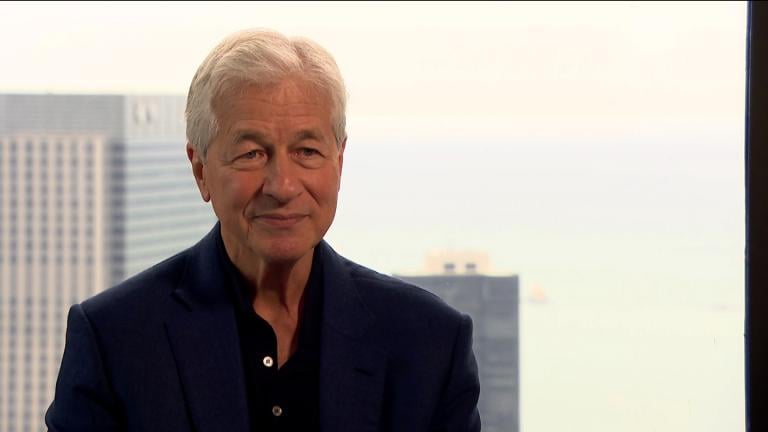
“You never want to make too much hay out of any one number,” said Austan Goolsbee, president of the Federal Reserve Bank of Chicago.
While one month of promising data may be a welcome sign, it will take more time to see the full picture of where prices are headed.
And just two months after the confirmation of new Federal Reserve chair Kevin Warsh, the central bank — tasked with keeping prices stable, and jobs plentiful — has a lot to navigate.
After several months of inflation “going the wrong way,” according to Goolsbee, the annual inflation rate for all items dropped to 3.5% in June. Excluding food and energy, inflation sat at 3%.
Still, consumer confidence is weak. There’s uncertainty related to the Iran war, and some of its ripple effects are still to be felt.
Months more of the conflict could start to disrupt broader supply chains. But just the spike in energy prices is enough to spill over into logistics and transportation, ultimately raising prices for goods.
“The impact of higher energy prices is most directly felt at the gas pump, or flying,” Goolsbee said. “But then, you will likely see (that increase) work its way through the economy.”
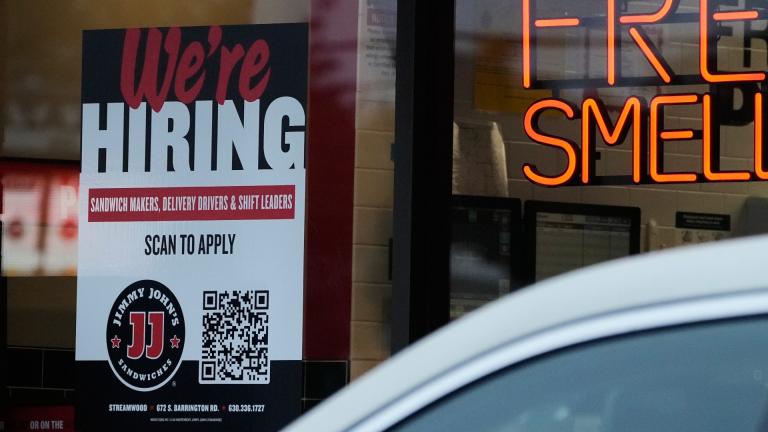
Market uncertainty could be affecting the job market in the Midwest region. The hiring rate is as low as what would be expected during a recession, while the layoff rate is as low as would be expected during an economic boom.
“We’re still trying to wrap our heads around this labor market, where those two things are happening simultaneously,” Goolsbee said. “It’s very unusual.”
Now, the central bank is navigating this landscape with a new leader.
Goolsbee is no stranger to Warsh, who was confirmed by Congress in May. When Warsh was a Federal Reserve governor during the global financial crisis in 2009, Goolsbee was a member of then-President Barack Obama’s Council of Economic Advisers.
“I saw his (Warsh’s) actions in a moment of real stress in the economy, in 2009, ‘10, ‘11. He was real level-headed, so I’m optimistic” about his tenure as chair, Goolsbee said.
Among the changes Warsh is proposing for the central bank is an end to forward guidance, or the forecasting of upcoming interest rate changes before they are finalized. That has been common since the 2000s, but Goolsbee sees the new change as a welcome one.
“Any time the central bank is saying, ‘We think we’re going to do X,’ you don’t know what the conditions are going to be,” Goolsbee said. “And then if you end up not doing it, the market and the public say, ‘They made us a promise, and they didn’t carry it out,’ so your credibility takes a hit.”
Beyond this change, the Fed announced five task forces to overhaul monetary policy. These range from how the bank measures and responds to inflation, to how it assesses the impact of artificial intelligence on the job market.
“It’s helpful to have some new re-thinks,” Goolsbee said. “Let’s have a discussion about reforming the way the Fed does business.”