Crime & Law
How Latina Leaders Are Responding to Cesar Chavez Sexual Abuse Accusations
Chicagoans are reacting to sexual abuse accusations made against the late labor leader Cesar Chavez.
A recent New York Times investigation found that Chavez sexually abused both young girls who worked in his movement and union co-founder Dolores Huerta.
In a statement, the 95-year-old Huerta said she kept her silence for 60 years out of fear of harming the movement.
Huerta described two sexual encounters with Chavez, one where she was “manipulated and pressured” and another where she was “forced against my will.”
“I carried this secret for as long as I did because building the movement and securing farmworker rights was life’s work,” Huerta said. “The formation of a union was the only vehicle to accomplish and secure those rights, and I wasn’t going to let Cesar or anyone else get in the way.”
Huerta said she did not know that Chavez hurt other women and condemned his actions but reminded readers that the farm worker movement is bigger than one person.
In response to the allegations, cities across the country — including Chicago — have begun grappling with removing his name from parks, schools and other landmarks.
Three local Latina leaders joined “Chicago Tonight” to reflect on the investigation, what it means for the United Farm Workers movement and what justice could look like for the women involved.
Angela Anderson Guerrero
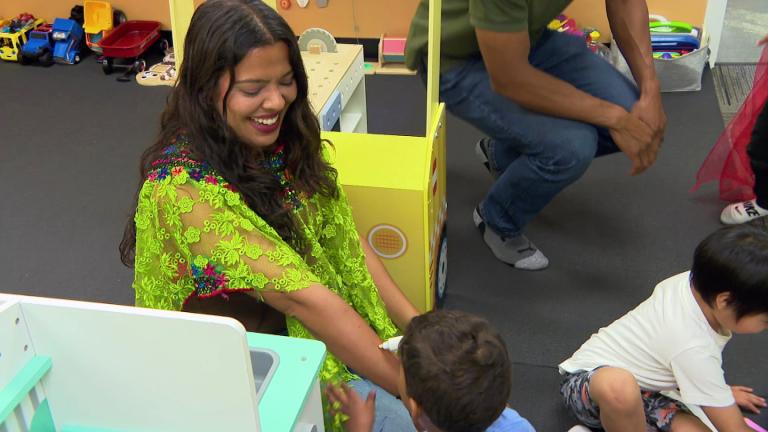
Angela Anderson Guerrero has been president of Mujeres Latinas en Acción for a little over five months.
The organization offers a 24-hour hotline for victims of domestic violence and sexual assault, while providing resources to empower those in the Latina community.
For Anderson Guerrero, whose work is focused on supporting women, the news was devastating — though unfortunately — not uncommon.
The World Health Organization estimates nearly one in three women and girls worldwide, aged 15 and older, have been subjected to physical and/or sexual intimate partner violence, non-partner sexual violence or both at least once in their lifetime. An estimated 263 million girls and women, aged 15 and older, report experiencing sexual violence from someone other than a partner at least once in their lifetime.
Anderson Guerrero’s attention remains with those who brought forth the allegations.
“We’re devastated and you know we’re really thinking about the survivors,” Anderson Guerrero said. “We’re thinking about Debra; we’re thinking about Dolores; we’re thinking about everybody else who had to be silent.”
Anderson Guerrero said many Latinas grow up in communities where survivors are forced to remain silent due to the risk of retaliation.
As a result, many women fail to have models to show them how to navigate the experience of being harmed. She said she believes through education and resources there is a way to bridge that gap.
When sexual violence is perpetuated, Anderson Guerrero questions whether justice for the survivors is possible.
“I don’t believe there is justice for the survivors,” Anderson Guerrero said. “They must live with the wound for the rest of their lives. I think if we have to look at it through the lens of justice — I think how do we work with our legal system, so they (survivors) have more rights and resources available to them? Also how do we put into question the behavior and patterns of men who’ve been sort of, you know, in condition by patriarchy.”
She continued: “How do we get past healing while we’re being wounded at the same time? And I think when we get past that, we can kind of look at a broader horizon.”
Samantha Royal
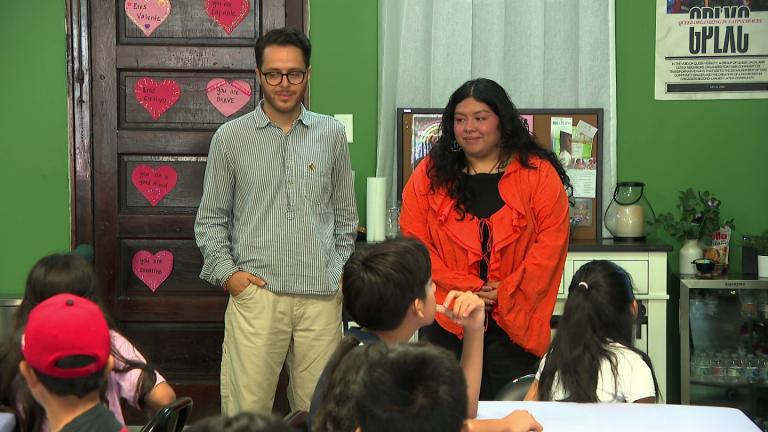
As director of institutional advancement with the Latino Union, Samantha Royal works to support day laborers, household workers and other contracted workers in Illinois.
Often, she works with people who experience sexual violence in a domestic and/or professional environment. She said this kind of violence can be easily perpetuated through a variety of social and cultural factors.
“It’s also the disrespect that historically has been against women — we live in a society that is oppressive of women, women’s rights, women’s health,” Royal said. “And so all of that is part of the problem that puts women in this position of being vulnerable.”
These factors are prevalent in the Latiné community. According to the Latina and LGBTQ+ advocacy group Esperanza United, roughly one in three Latinas will experience intimate partner violence in their lifetime with one in 12 experiencing it in the last 12 months.
The organization cites gender role expectations, religion, economic factors and immigration as just some of the social contributions to gender-based and sexual violence in Latiné community.
However, despite the allegations against Chavez, Royal believes it is still important to understand the monumental role the United Farm Workers movement had for Latinés in the United States.
“The power is not only led by one person," Royal said. “The movement is not only led by one person. It’s collective power. The union of different leaders — it’s not about exposing and leading the movement to the side, it’s about individuals damaging the movement.”
Norma Hernandez
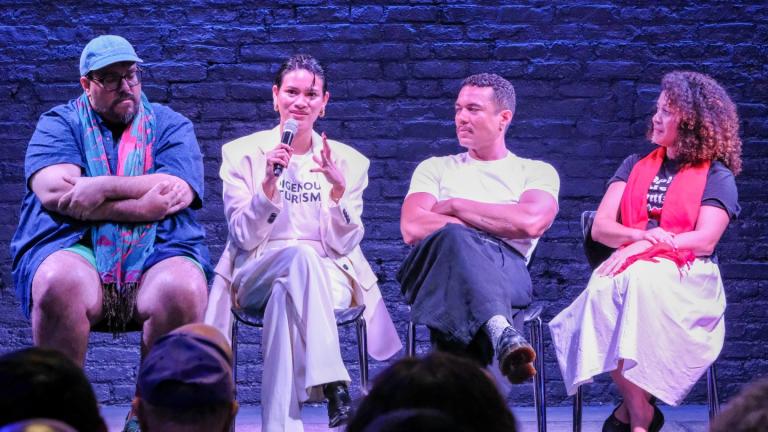
State Rep. Norma Hernandez (D-Melrose Park) said the Times’ investigation will impact Chavez’s legacy, though “I also believe that one person doesn’t mean the entire movement.”
Hernandez said there are new leaders who are doing amazing work and contributing to a much larger legacy saying, “the movement comes from many.”
She said when she first heard the news, she was shocked, not necessarily by the details of the accusations made against Chavez, but instead by how long it took for these women to hold their stories in silence to protect the movement.
“Women are always having to suffer in silence and I’m just grateful that they are now being able to open and use their voice for this moment,” Hernandez said.
She added that often women of color are often put in positions where they are responsible for protecting others above protecting themselves.
Officials at Chicago Public Schools’ Cesar E. Chavez Multicultural Academic Center have begun a process that could lead to the elementary school changing its name.
A CPS spokesperson confirmed to WTTW News that school leaders have started soliciting feedback from the school community on the decision to consider a school name change after the multiple reported allegations of abuse came to light.
Hernandez said she believes the growing removal of Chavez from monuments, murals, parks and schools signifies some accountability. She drew comparisons to similar conversations about controversial public monuments during the 2020 Black Lives Matter protests.
The Associated Press and Matt Masterson contributed to this article.